The world is fun of bright and interesting colors, and as your little one steps into his or her toddler years, the time is ripe for learning what all those different shades are. So, when should toddlers know their colors? Around 18 months of age is when toddlers begin to notice everything around them has different colors, shapes and sizes, making that a perfect time to start introducing your toddler to colors through play. Two years of age to three is when toddlers begin to grasp the different colors and are able to identify them. Teaching toddlers colors should be a fun and exciting experience, without relying on the use of flashcards. There are an abundance of cool ways to teach toddlers colors that are pleasurable for both you and your toddler.
Be verbal
A straightforward way to draw a toddler’s attention to colors is to talk about them. Tell your toddler the shirt is red as you put it on in the morning or that the duckie in the bathtub is yellow. Mealtime is also an ideal opportunity to point out colors. Make it a point to identify the colors of the foods your toddler is eating at each meal. For example, red apples, a yellow banana or an orange clementine. Doing this throughout the day helps young children learn to identify the different colors in their daily environment.

Books
Reading daily to toddlers works to develop speech and other important developmental milestones, including color recognition. Add a few color-oriented books to titles you read together and make them available at home or in the car. Rereading books is a definite do with toddlers. As they become familiar with the text, toddlers will imitate it, which is a pre-reading milestone. Here are some fun color books to share with your toddler.
- Brown Bear, Brown Bear What Do You See? by Bill Martin Jr. and Eric Carle
- The Day The Crayons Quit by Drew Daywalt
- Dr. Seuss’s Book of Colors
- Planting a Rainbow by Lois Ehlert
- Blue Hat, Green Hat by Sandra Boynton
Puzzles
Color puzzles specifically designed for toddler hands are a perfect pick for getting toddlers to recognize colors. The puzzle pieces are large enough so you don’t have to worry about toddlers choking. Wooden puzzles can easily be manipulated by toddlers. While completing the puzzle, verbally identify the colors as your toddler puts in each piece. Jumbo floor puzzles with colors on them are another method to get toddlers thinking about colors as they working fine and gross motor skills.
Sorting objects by color
A wonderful hands-on activity to get toddler hands moving and working with colors is sorting. Sorting toys are a fun way to teach colors, but you can also do sorting activities with other objects around the house, especially food. Fruit Loops are yummy to eat and useful to sort by color before snacking. After grocery shopping, toddlers can help organize the fruits and veggies by color before the foods get put away. Play food can also be used for sorting. Rainbow bears are a preschool and early childhood classroom mainstay. The colorful bears are used to teach children colors, counting, and basic addition and subtraction. The bears are helpful to use at home for color sorting activities, too, but a parent or caregiver should be nearby because toddlers still like to put toys in their mouths.
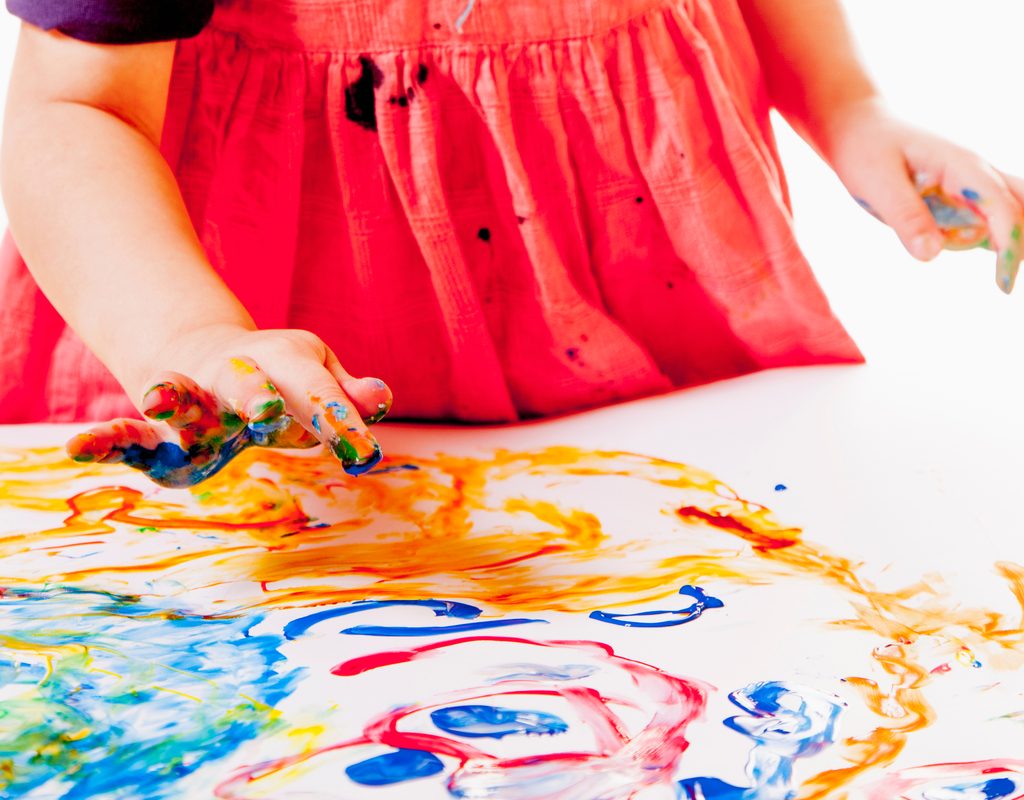
Finger painting
Sure, finger painting with toddlers is messy, but it is an awesome way to get little fingers working and bring colors to the forefront for kids. Finger painting outside makes for easier cleanup, as does covering surfaces with newspaper and giving your child a smock.
Easel
An easel specifically designed for toddlers is a super fun way to get toddlers drawing and creating with colors. Many two-sided easels have a chalkboard on one side and a whiteboard on the other. Stick with different colored dry erase markers and chalk. Larger sizes are easier for toddlers to grasp.
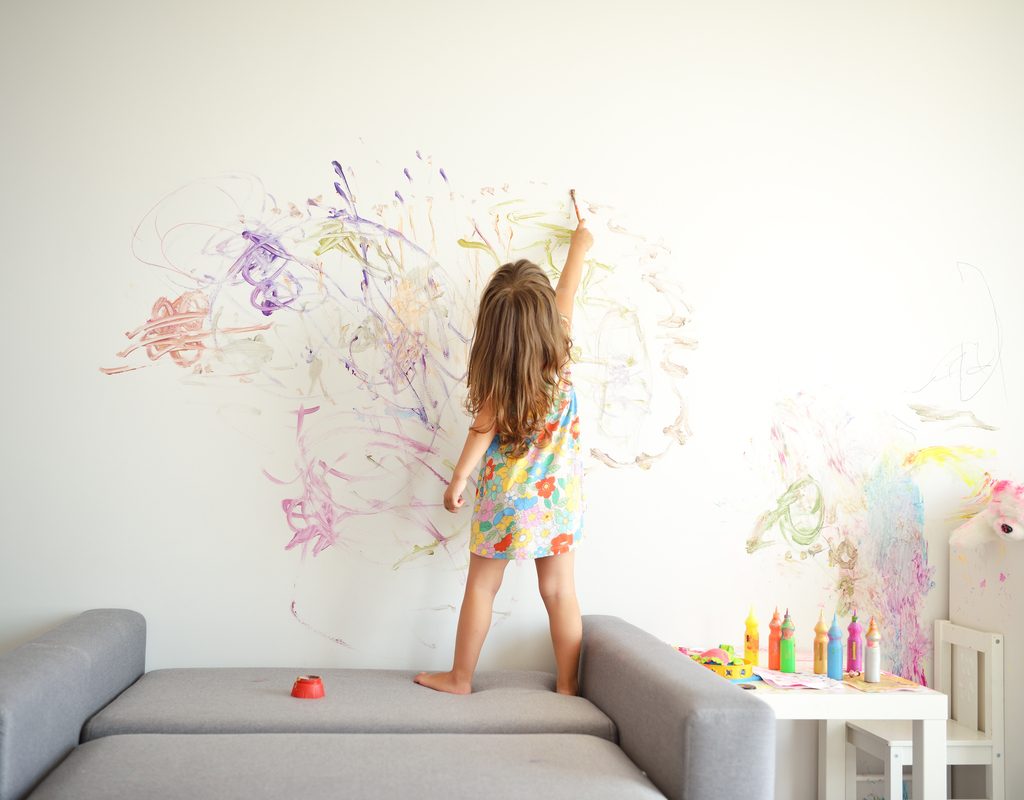
Sidewalk chalk, markers and crayons
Your toddler’s crayons won’t quit, and crayons and markers are fantastic for teaching colors and developing fine motor skills. Don’t bother with coloring books unless your child shows an interest. Toddlers mostly like experimenting with markers and crayons on paper. Make sure the markers and crayons are larger for little hands and non-toxic. Have a supply of different scrap paper and construction paper for your toddler to draw on. It’s probably not a good idea to leave toddlers alone with markers or crayons unless you want their latest masterpiece on your wall or furniture. Keep a supply of paper and crayons in a go-bag. It’s a great activity while waiting in restaurants. When the weather is pleasant, head outside to the driveway or sidewalk and let toddlers have fun with sidewalk chalk. While your toddler is drawing, be sure to identify the different colors.
Once your child reaches about 18 months, the world he or she sees starts to open up as toddlers begin to recognize colors, shapes, texture and the differences in the world around them. Toddlers love to explore and learn. Teaching toddlers about colors is fun for kids and parents. As you and your toddler move through the day, talk about the colors of familiar objects. This helps to develop color recognition skills. Books, toys, food, puzzles and other everyday objects are a lesson in color right at your fingertips.