
Let’s be honest: Your bikini-ready six-pack is not going to look quite the same with a burgeoning baby bump (although, we know you will look absolutely adorable in that itty-bitty two-piece ensemble!). To be brutally honest, that strong core of yours might take a bit of a hit in light of that ever-expanding midsection. No doubt about it: Pregnancy takes a toll on your abs — and labor and delivery will definitely activate that muscle group in a unique and challenging way (you know, to put it mildly).
The good news? Keeping them engaged throughout those long nine months will keep your feeling fit and active and potentially even support your postpartum recovery. Still, not all ab exercises are safe when you are expecting, so you will want to be extra cautious and listen to your body at all times. If something does not feel right, stop or modify your movement. In the meantime, you can try doing these five core exercises for pregnancy.
Try some modified planks
Yes, you can keep on planking when you are pregnant. (We are not sure if you will consider this good or bad news, but there you have it.) Either way, you will want to modify these endurance-testing exercises to make sure you feel balanced and remain steady.
If you want to move through your plank, begin on your hands and knees. Lift one hand across your body and touch the opposite side shoulder. Alternate sides, and repeat 10 to 15 times.
Want to stay static? Assume a push-up position, keeping your feet together, and hold for 30 seconds.
Slowly squat to engage the core and open up the pelvic muscles
Stand hip-width apart and assume a sitting position. You can go as far down as you want. Bending down into a squat can help to open up your pelvis — so it is great practice for labor and delivery. If you feel unstable on your feet, you can try squatting up against a wall for extra support.
Activate your abs and glutes with bridges
Lie on the ground with your knees up and your hands at your sides. Press your hands into the floor and gently lift your pelvis off the ground without raising your back. Hold the position and slowly release your glutes back down. Less is more — keep this movement controlled, subtle, and gradual.
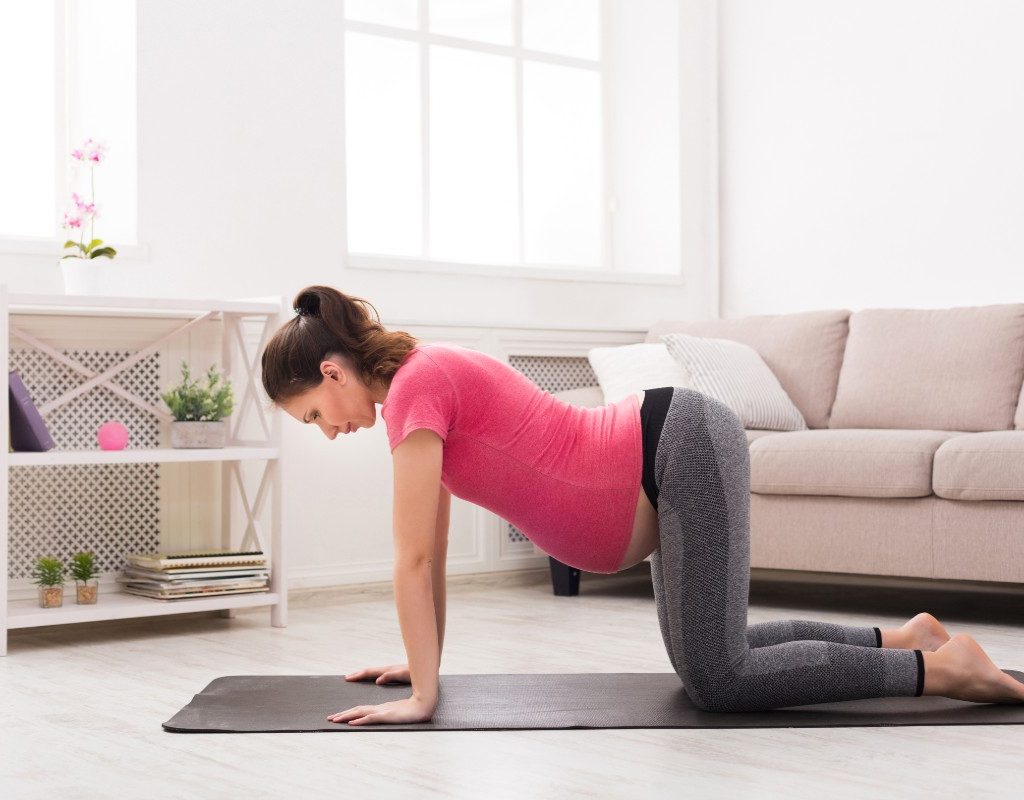
Transition with cat-cow poses and slow pelvic rotations
This yoga pose can help to strengthen the core and relieve the back. Position your hands and knees shoulder-width apart. Slowly arch your back up and then release it down, pointing your head upward. Just be mindful not to stretch your midsection too far and stop immediately if you feel any discomfort, pulling, or pain.
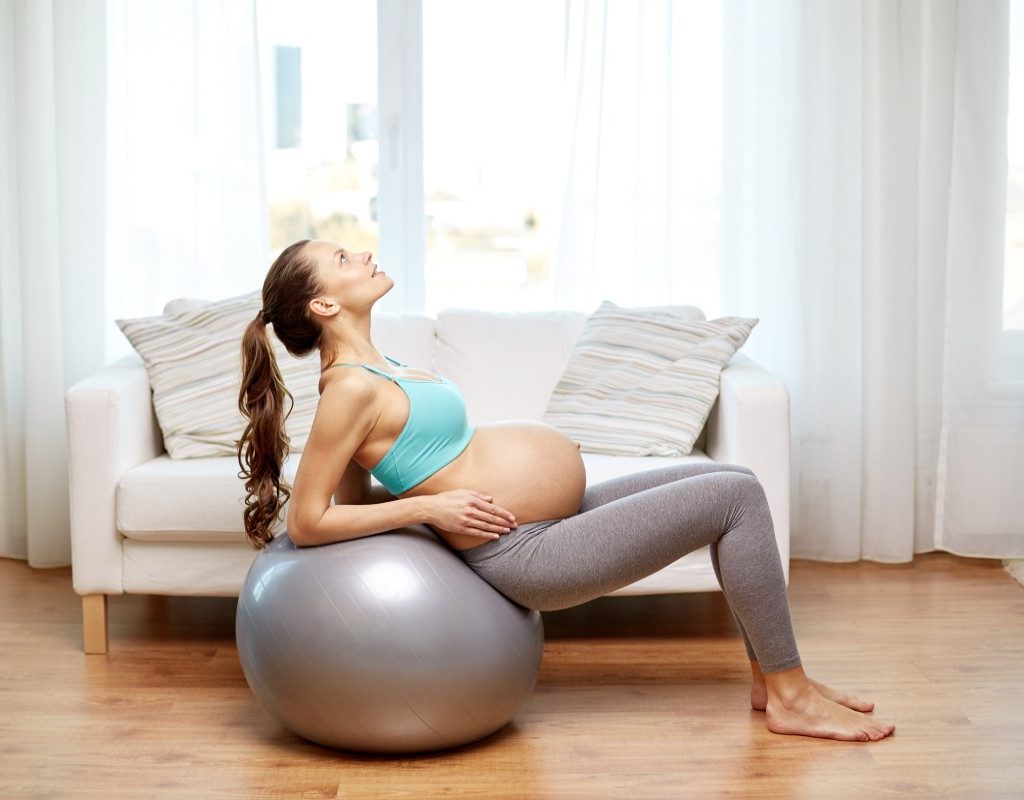
You can also stay in this starting position and rotate the pelvis in a round movement. FYI, this is a great exercise to try during the early stages of labor. Similarly, you can perform these spinal and pelvic rotations while sitting on a birthing ball.
Swap out sit-ups for standing crunches
You will want to avoid lying flat on your back after the first trimester, so traditional crunches are not going to be an option. You can perform them standing, though. Simply stand with your feet apart. With your hands behind your head, try to bring your belly button toward your spine and crunch forward.
If you were active before your pregnancy, you can remain so during the long and physically taxing three trimesters of pregnancy. And if you keep working to maintain a strong and engaged core by doing abs exercises while pregnant, you just may find relief from common aches and pains, have an easier time with labor and delivery, and experience a more rapid postpartum recovery.
Of course, none of these movements are miracle workers; you can’t expect your core to rebound the second after you give birth, but every little bit of prep and practice can help. Just remember to stay in tune with your body and be kind to yourself. If anything feels uncomfortable or awkward, stop and reposition your body. Talk to your doctor before starting any new exercise regimen. Your safety — and that of your baby’s — is of the utmost importance.