Moving to a new town or city has its challenges. You have to get used to a new neighborhood, new job and new potential friends. For children, this situation may present a lot of obstacles and produce much anxiety. However, when you take certain steps to help your child adjust to a new school, you’ll pave the way for a successful transition. These are just a few measures you can take to make the change easier for everyone involved.
How to help your child adjust to a new school
The weeks leading up to the beginning of the school year often prove to be a crucial time for getting information that’s needed to help your child adjust to the new school. As with anything that takes some getting used to, knowledge is power. Thus, the more your child knows about the school, its procedures and classes, and its extracurricular activities, the more confident they will feel on the first day.
As an example, you can involve your child in the process by following the school day schedule before the first day, starting with the bus stop, going through a tour of the building with a faculty member or principal (depending on the school’s procedures for visitors), and then returning home. During the tour itself, your child can find their locker if attending a secondary level school. Similarly, for an elementary school, a staff member can walk you and your child through the schedule from the assembly area at the beginning of the day to the classroom and gym for P.E., to the restrooms, to the cafeteria, and then the meeting place for pick-up after school or the room where after-school care takes place. Gaining an awareness of these details makes a difference in a child’s feeling of security. It may not eliminate the nervousness altogether, but at least it will take the edge off since your child will have an idea of how the teachers and students operate on a daily basis.
In addition to a tour and walk-through of a typical day, you can bring your child to the open house, which usually takes place during the first week or right before the first day. This event gives you and your student a chance to meet other families whose children are in the same grade or even the same classroom as well as your child’s teacher(s).
In the meantime, if you relocated during the summer, and there’s still time before school starts, you can also sign your child up for various activities such as:
- Day camps
- Storytime at the local library
- Classes for art, music, dance, STEM, and so on
Also, you can take your children to a nearby park or the school’s playground to meet other kids in the area. Basically, getting out into the community will help your child to adjust to a new school.
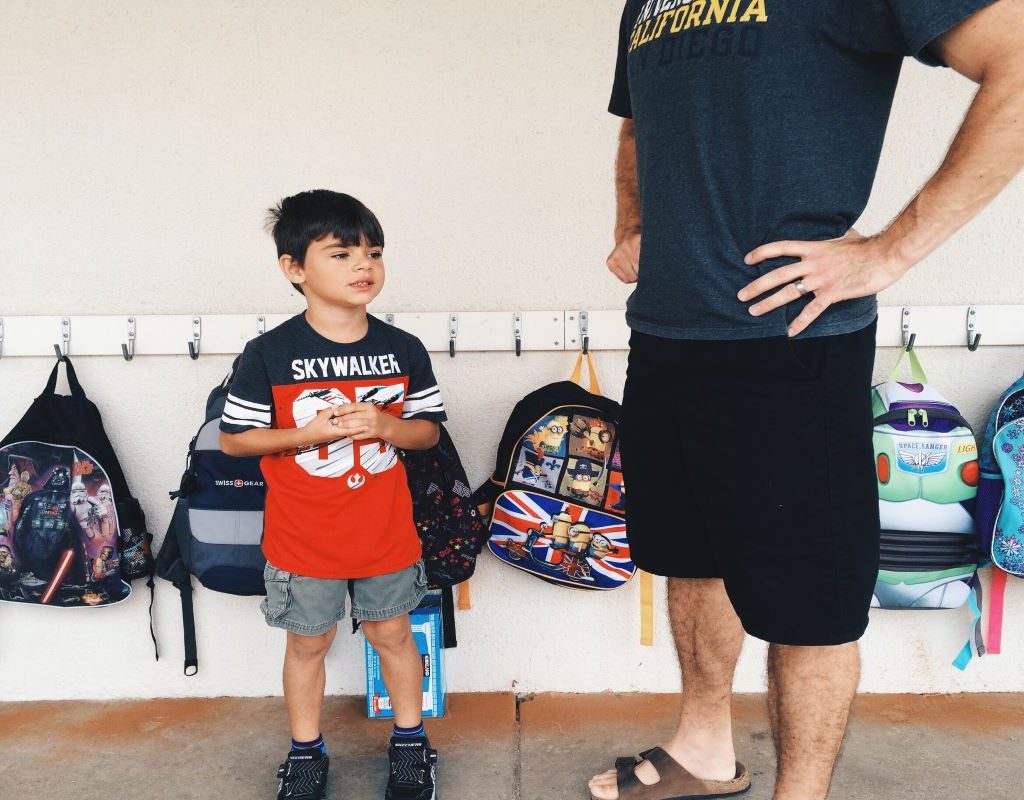
Dealing with a challenging first month
Once the term has started and you’ve settled your child in the new school, you can expect some bumps in the road during the first few weeks. There’s no need to panic. Every child responds differently to a new environment. Some children might “tune out” during instruction, or they might become withdrawn. Others might try to be social when the timing is not appropriate. Regardless of how the stress manifests itself, the acting-out phase will pass.
One idea is to work with your child’s teacher and the school counselor to provide the best support possible. Staying in consistent communication with school personnel lets your child know that you’re there for them. Plus, you’re extending an offer of cooperation to the faculty in regard to your child’s education.

Encouragement of participation
One sure way to help your child in a new school is to encourage involvement in extracurricular activities. Clubs, sports, and after-school programs provide a fun and safe environment for your child to meet people and make new friends. Does your community have a youth or recreational center? These places often offer classes for a variety of hobbies, such as martial arts, painting, photography, and many others. Having a pastime outside of school often translates into higher academic performance. Additionally, your child will feel more connected with other students who share similar interests.
Plus, another way to encourage school and community involvement is for you to volunteer. This doesn’t necessarily mean that you’ll be hovering at every practice or meeting, but instead, you’ll let your child know that when it comes to adapting to a new place, the both of you are in it together.
When you help your child adjust to a new school, you’re also teaching one of the most important life skills, and that’s resilience. Learning to navigate a new life in a new place is never easy, but the situation can be a positive adventure for your child to gain some lifelong friends and some life lessons that can be applied in all stages of life. After all, there’s still college to look forward to.


