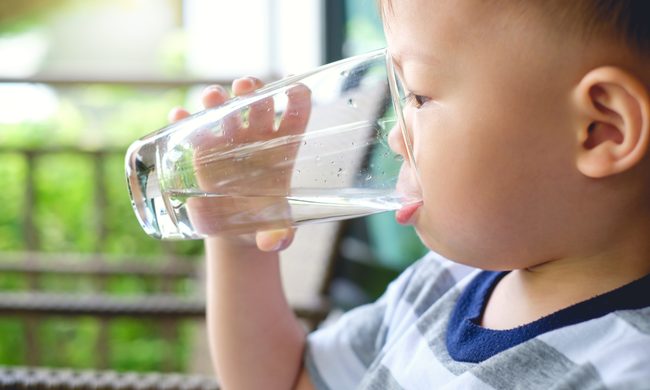
Splish splash, you’ve got a little fishie on your hands! It’s great to foster your baby’s love for the water and instill swim safety from an early age. If you have a pool or live near a body of water, it can be especially important to start ’em young. But how soon is too soon, and what type of program is best suited for your kicking, floating cutie? We are sharing some swim-lesson tips and considerations.
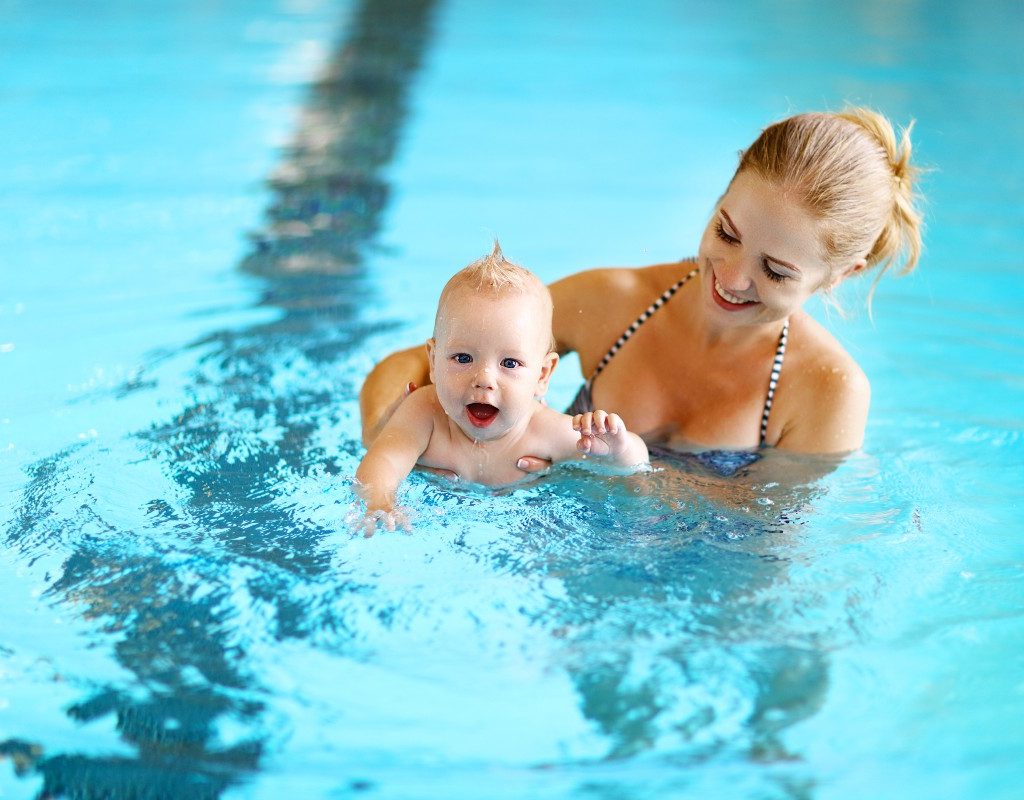
Are swimming lessons for infants a good idea?
The American Academy of Pediatrics suggests starting swim lessons around 1 year of age to instill basic safety and reduce the risk of drowning. However, many parents decide to start even sooner. Either way, you want your wee one to get comfortable in the water — and to have the basic skills to keep themselves afloat.
Types of swim-lesson programs
There are a few different types of swim lessons. You have to find what works for you and your little one — and prioritize what’s most important to you. Do you have a backyard pool and need a class that helps your child learn water survival skills? Or do you want to more gently encourage a love for the water? These are some things to consider when browsing options:
- Parent-baby swim lessons: Swim safety can be a family-friendly affair — and pretty fun activity to boot. This type of group class enables caregivers to be a part of the instruction. It’s often used as an introduction to water play and movement.
- Self-rescue lessons: These intense one-on-one classes teach your baby to self-rescue and survive in the water. A highly qualified instructor teaches your infant to float to the top of the water when submerged. A hearty warning is that these classes are not necessarily fun, per se. Your infant will cry — and you might, too. But really, you will be blown away by your child’s quick and adaptive response, and their ability to use their minds and bodies proactively.
- A compromise between the two: Basic one-on-one instructor-led swim lessons strike a balance between the vibe of a casual parent-child class and a strict survival-oriented option.
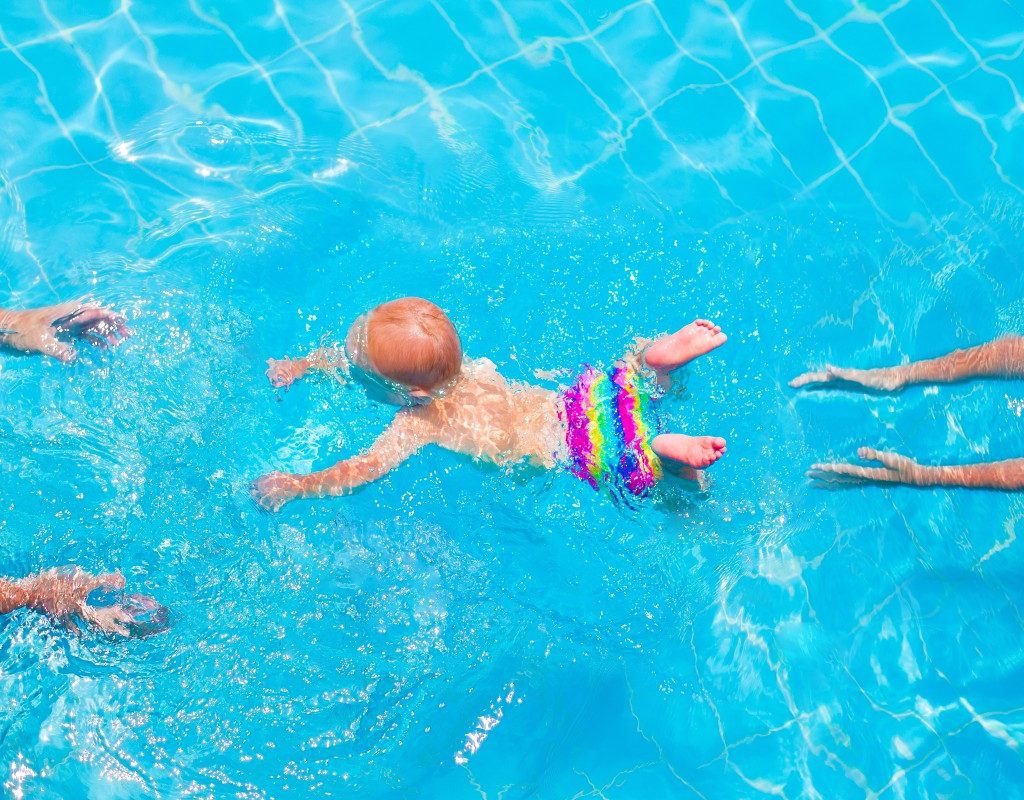
What are the benefits and risks?
Swim lessons are great in theory, but, in practice, they’re not always easy on Mom, Dad, and Baby. Here are some of the top benefits and the most common drawbacks:
- Pro: If your little one knows the basics of water safety and swimming competency, there is a reduced risk of drowning.
- Con: Swim lessons can also provide a false sense of security for adults. Even if your baby knows how to help themself, a grown-up still needs to stand guard and keep a watchful eye.
- Pro: Getting in the pool with your baby can be a bonding activity. What’s more, as your child gets older, this simple skill can evolve into a hobby, passion, and sport.
- Con: Some babies are terrified of getting in the pool. It can be heartbreaking to watch your baby in the water — especially if you opt for a self-rescue type class. Keep in mind that your babe will be fine — even if you feel temporarily traumatized. Ultimately, you are doing this for their own good.
Other considerations
When choosing swim lessons for your infant, you will want to consider a few more options. Here are some factors to keep in mind:
- Make sure your swim instructor is certified in both CPR and first aid.
- Lessons for infants should take place at a swim facility that heats the pool (ideally around the high 80s), and the instruction should be no more than 30 minutes.
- Note that, while some swim classes might occasionally utilize floaties, noodles, or safety rafts, they don’t replace supervision ever.
- Follow the “arm’s length” rule. If you are in the water with your baby, make sure they are always no more than an arm’s distance away from you.
Learning to swim is an important skill to master as kids get older. If you want to get a leg up, you can start your infant as early as 1 — or even sooner! Some babes will take to the water like guppies. Others? Not so much. If your teeny weeny is less than enthused by the water, you have options. You know your child best and have to decide what works for them. Either way, infant swim lessons are a smart investment in safety — so keep calm and float on!