
It happens fast: One day, you have a tiny, helpless little blob of a baby, the next a scooting, crawling mischief-making little monster, er, monkey. Yes, around six or seven months, you may have a mover on your hands, and that means you can’t babyproof quickly enough. That curious creature of yours will soon be taking off for the races, so you better get ahead of the game and start focusing on safety ASAP.
One of the most important items in your arsenal? A baby gate — or make that, baby gates. You will want to have a few to block key areas, siphon off rooms, and create a safer space for your mini explorer. While pressure-mounted gates can be moved around as needed, auto-closing baby gates are usually mounted and attached to your walls with hardware — providing both stability and peace of mind. Want to know more about this must-have gear? Read on for some important tips and safety considerations.
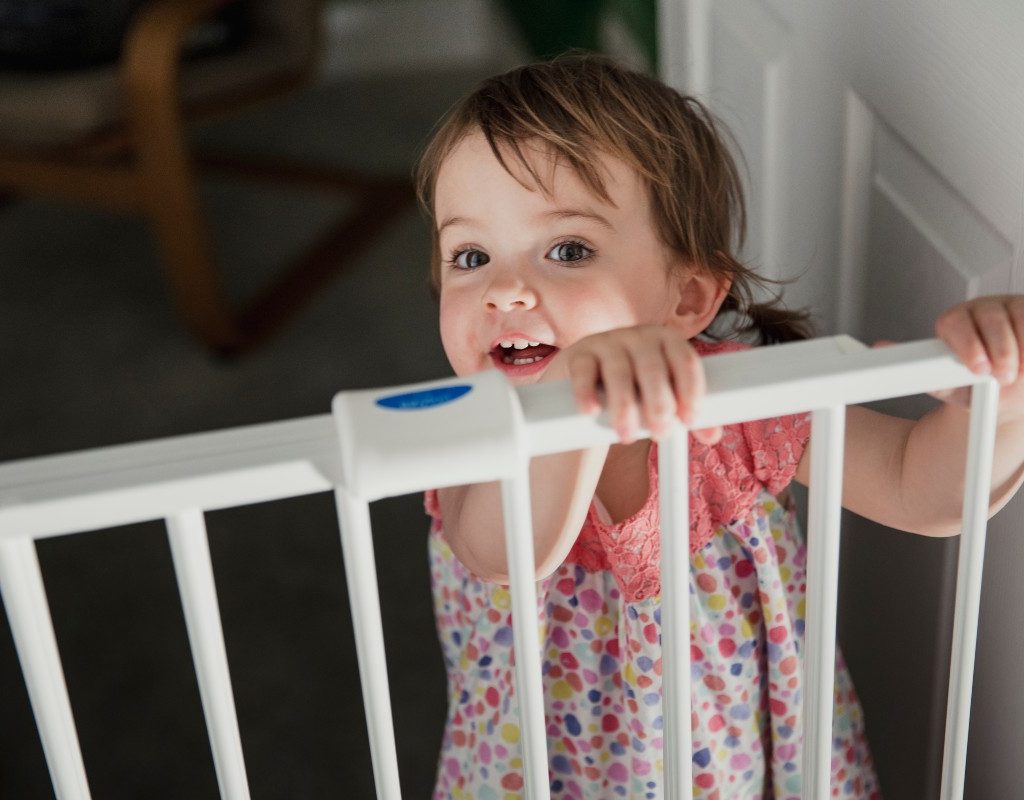
How do auto-closing baby gates work?
It is fairly simple. Some gates require you, the parent, to close the door and click to lock. Auto-closing baby gates, however, have a built-in mechanism (i.e., a magnet) that self-latches. This may sound unnecessary, but it can be incredibly helpful when you have your hands full — and let’s be honest, most of the time parents are juggling toddlers and sippy cups and toys and diapers and more.
Essentially, an auto-closing baby gate is one less thing to worry about. When you are busy and overtired (hello, parent life!) and worried about the safety of your wee one, it can offer a bit of convenience, reassurance, and peace of mind.
Where should I put auto-closing baby gates?
You can use an auto-closing baby gate anywhere. They generally attach to walls with hardware, making them extra sturdy and secure. (Note though that not all hardware-mounted baby gates are auto-closing options.) One area you might consider using an auto-closing baby gate: Your stairway.
Since stairways can pose one of the biggest dangers in the home to a young baby or toddler, having a secure gate that is reliably latched is incredibly important. Just be sure that the gate you choose for blocking stairs opens in one direction only — you want it to open away from the stairs. Many auto-closing gates open both ways, but some come with one-way stop hardware you can utilize to solve this particular problem.
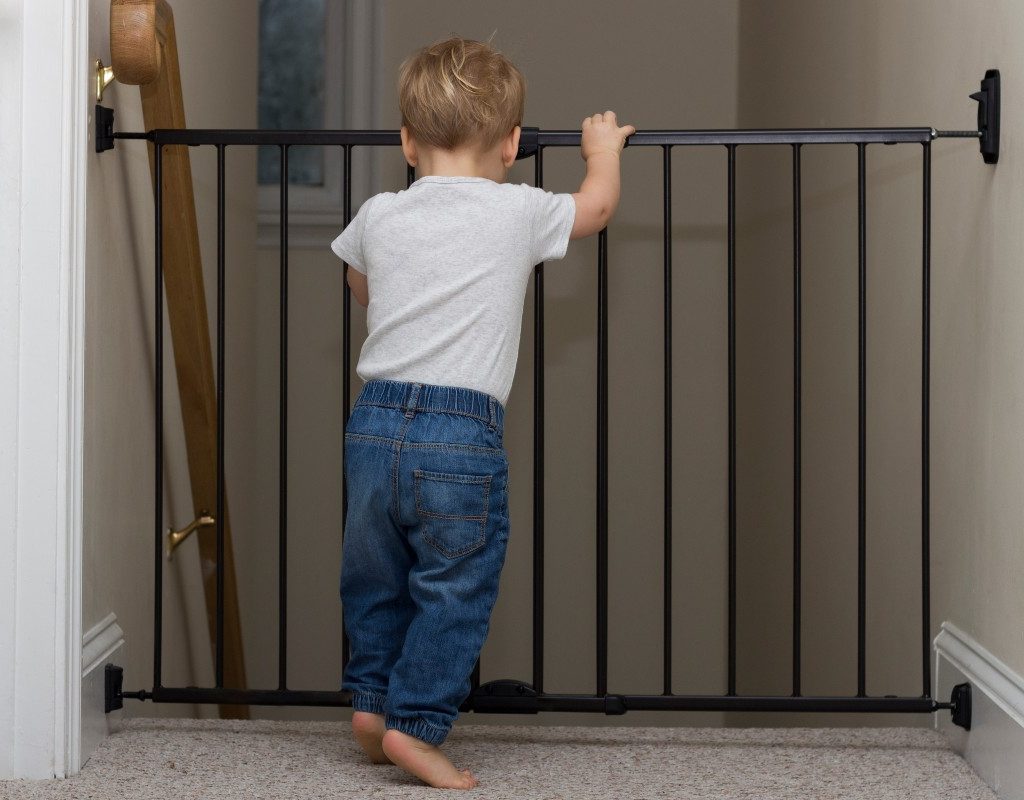
Other safety issues to consider
Is your little one already raring to go? If you are ready to start browsing baby-gate options, there are a few additional considerations and tips to keep in mind:
- Consider using a baby gate at the top of the stairs and the bottom, even if your little one does not express interest in climbing just yet. You will want to get a head start on this babyproofing task — or one day, you may look over and find that little risk-taker of yours making the big ascent.
- Per the Juvenile Products Manufacturers Association (JPMA), any baby gate should measure at a minimum of 22 inches high. Additionally, the vertical gap between the floor and gate should be small enough that it can’t fit a child’s head or neck leading to potential entrapment. With this in mind, be sure to install the gate closer to the ground.
- Have an old pet gate in storage? It might be tempting to pull this puppy out (get it?) and save some money, but designated baby gates go through more thorough testing. In that vein, make sure your baby gates are JPMA certified.
- While you do not necessarily have to choose an auto-closing gate, you will definitely want to opt for a hardware-mounted gate for the top of your stairs. A pressure-mounted gate is more likely to shift or fall.
Baby gates will make life with your on-the-go cutie-pie a little easier. When used properly, you can feel better knowing your baby is securely contained in a babyproofed zone. And when you go back and forth from room to room or upstairs to downstairs, you can be more confident knowing that your auto-closing gate will quickly self-latch, no hands necessary — because your hands are already pretty full.