As parents imagine what their baby will look like, they often wonder what color eyes they will have. Will they have the same color eyes as their mother or father, or will they surprise everyone and have a color different from most people in the family? Parents-to-be wonder about many of their child’s traits, and eye color is no different. Do you know what the rarest eye color is? How about the colors eyes can be? Will your baby have a rare eye color? Is there any way to know what color eyes your baby will have?
Think back to those high school biology lessons. Scientists now know that what determines a baby’s eye color is a bit more involved than those dominant and recessive genes we learned about in biology. A pigment called melanin is what gives a person his or her eye, hair, and skin color.
With a baby on the way, parents are, of course,e super excited to know what color their eyes will be. Today, thanks to baby eye color predictors, parents-to-be can get a glimpse into what color eyes their baby may have. What exactly is a baby eye color predictor, though, and should you use one?
Common questions
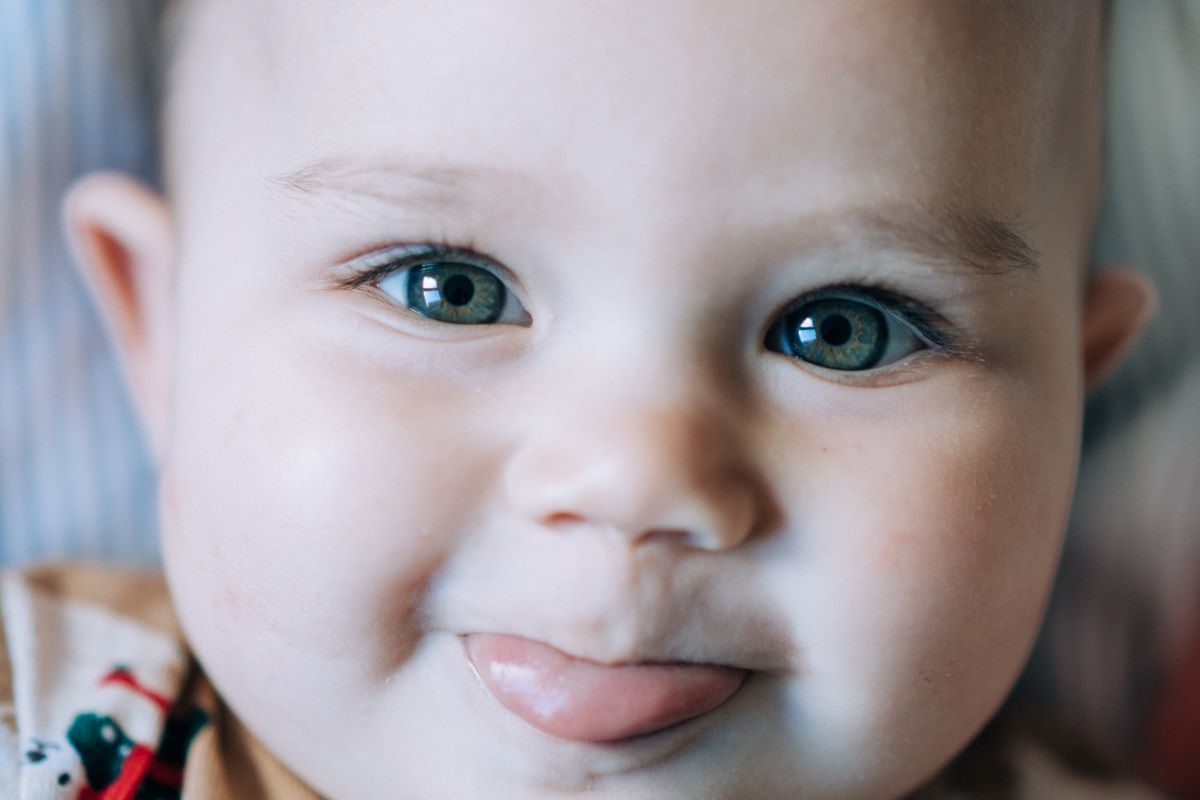
At one time the four main eye colors were brown, blue, hazel, and green. In the past, amber was often combined with hazel, and grey was often categorized with blue but now many are recognizing grey as its own eye color. Grey is the most rare eye color, with experts suggesting less than 1% of those in the U.S. have gray eyes, while only around 18% have green eyes. About 27% of the population have blue eyes, and 45% of those in the U.S. have brown eyes, while that number jumps to 70% worldwide.
If your child has red hair and blue eyes, they have the rarest combination in the world, with red hair and green eyes a close second. The odds of having red hair and blue eyes are about 0.17%, as only about 1-2% of the population has red hair.
Baby eye color predictor
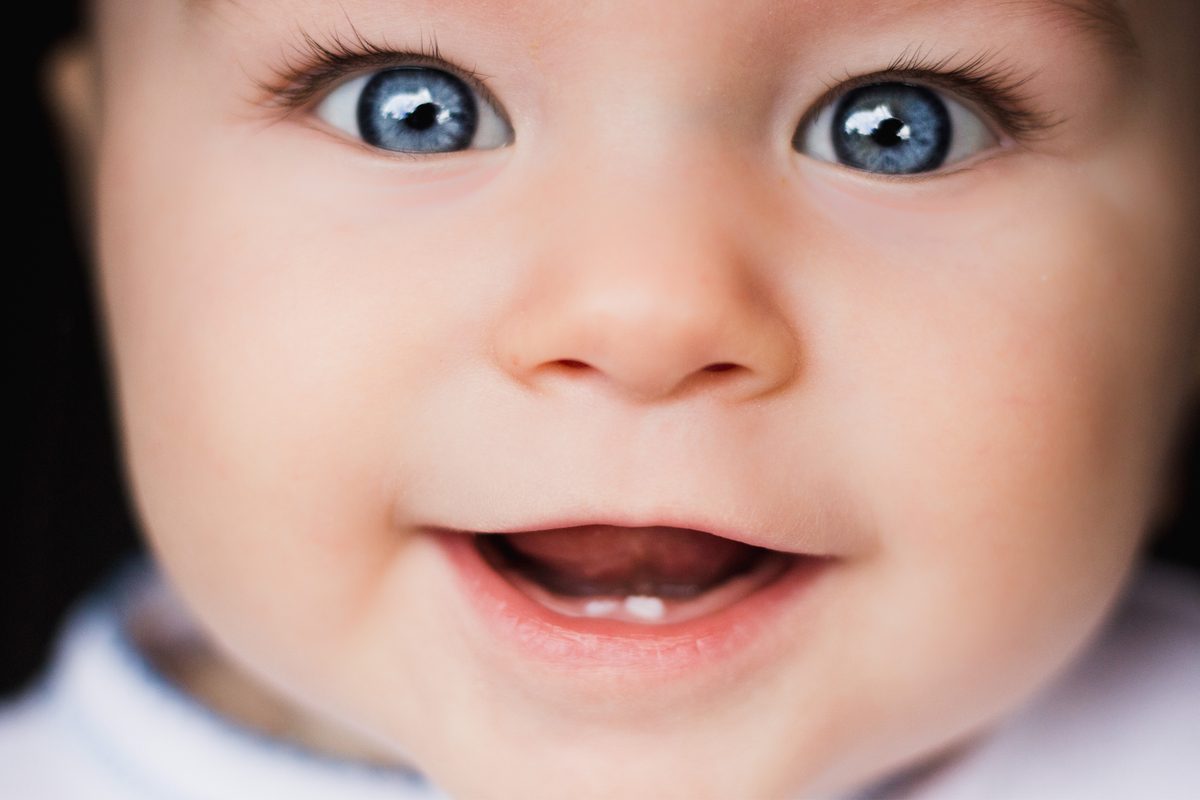
A baby eye color predictor is an online calculator predicting the likelihood of your baby’s eye color based on the eye color of each parent. An online baby eye color calculator is much like a high school biology lesson where eye color is predicted based on parental eye color. Are baby eye color predictors accurate? An eye color calculator cannot tell you whether your baby will definitely have blue eyes or brown eyes. What it can predict is the percentage surrounding the possibility of a baby’s eye color.
For example, according to MomJunction’s baby eye predictor, if both parents have brown eyes, there is a 75% chance their baby will also have brown eyes. There is also an 18.75% chance the little guy or gal will have green eyes and only a 6.25% chance the baby will have blue eyes. Two blue-eyed parents are most likely to have a blue-eyed child as well with little or no chance the child will have brown eyes. If both parents have green eyes, there is a 99% chance the baby will, too. The same is true if both mom and dad have hazel eyes. Whether or not a baby has hazel, amber, or gray eyes tends to remain a bit of a scientific gene mystery.
Are babies born with blue eyes?
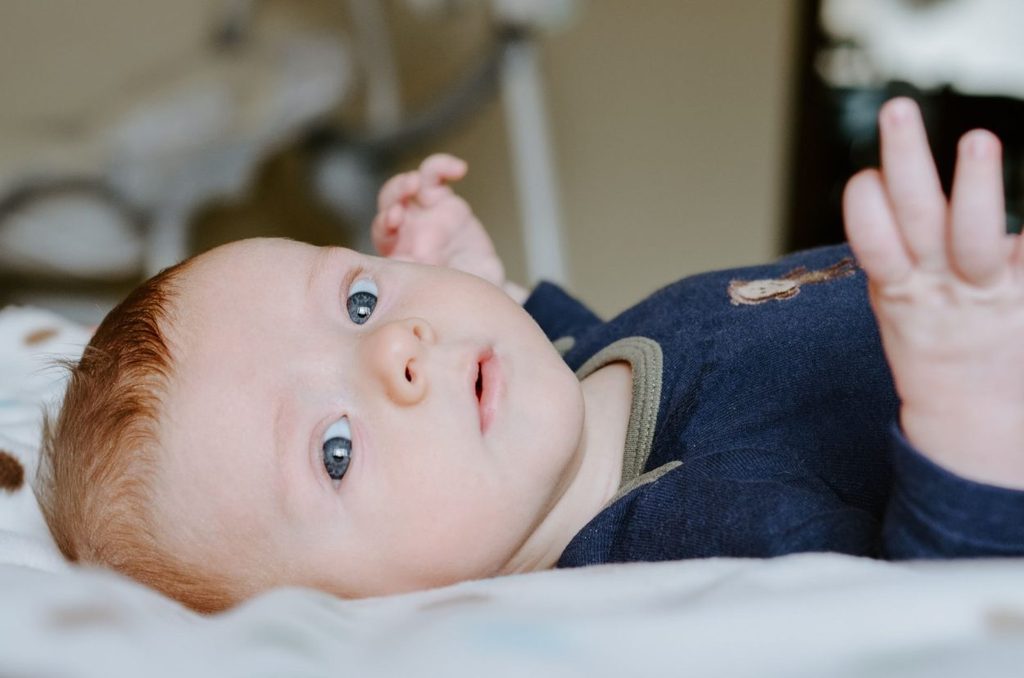
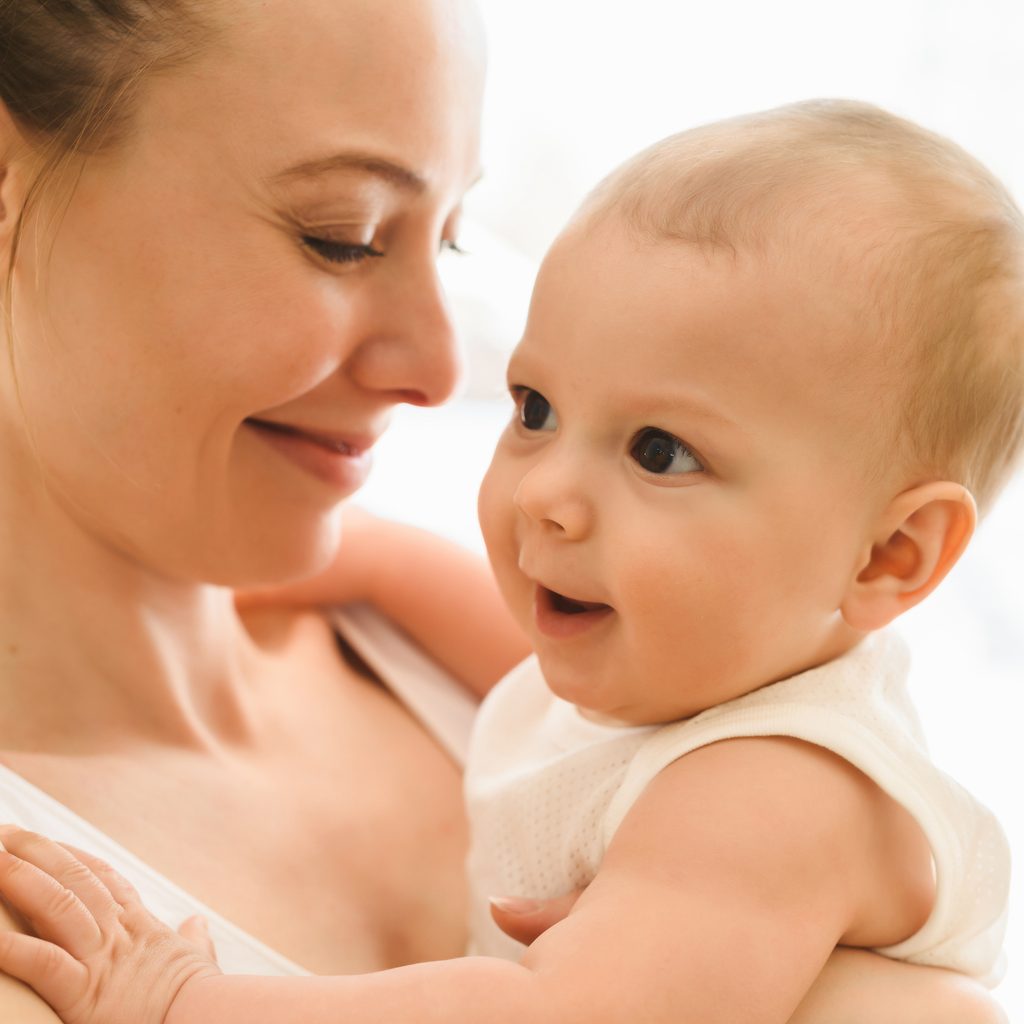
Many babies are indeed born with blue eyes. That is because the melanin which determines a baby’s eye color is produced over time. The iris begins manufacturing melanin after birth. A baby’s eyes start to change color at around six months of age when the melanin begins to take hold. By age 3, a baby’s eye color will have changed to its permanent color. The baby’s eyes will typically remain blue if both parents have blue eyes.
Genetic factors that determine a baby’s eye color
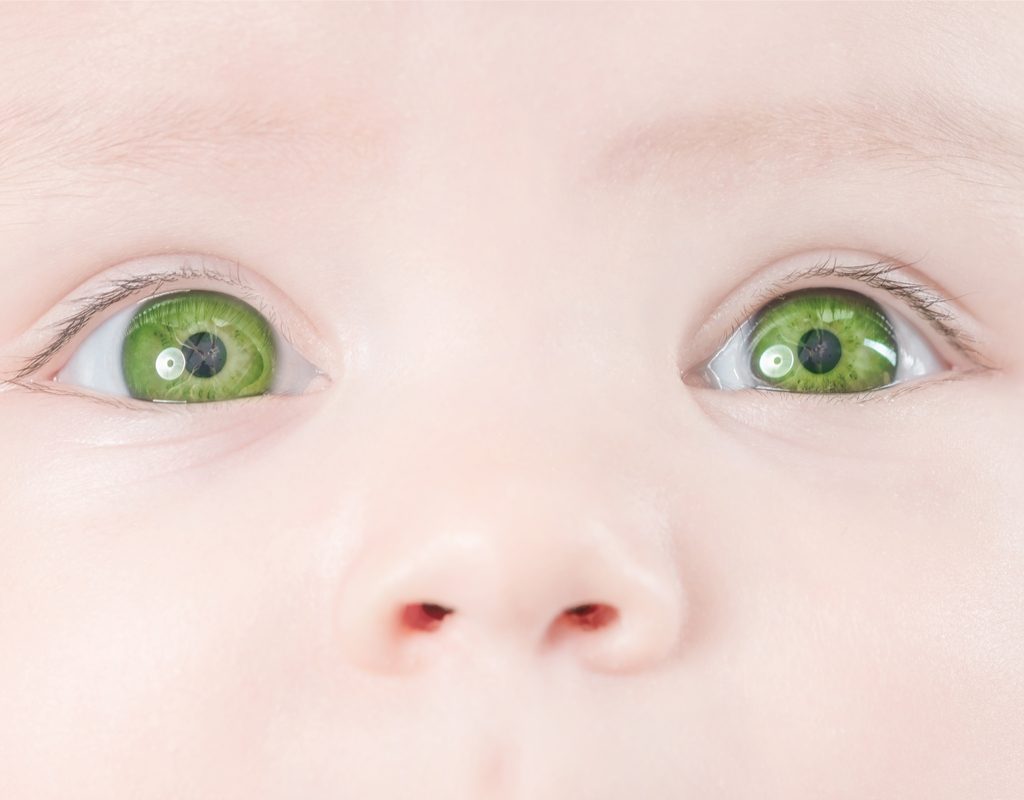
Determining eye color is based on the genes of the parents just like you learned in high school biology. A baby gets 50% of their genes from their mom, and 50% from their dad. Homozygous and heterozygous are two types of genes. If two genes are homozygous, they match, and if they are heterozygous, the two genes are recessive. Brown and green are thought to be dominant genes, while blue is recessive. A genotype is how two genes combine to form a trait.
Eye color is a trait, just like hair color. Once a trait is formed, it is considered a phenotype, or in this case ,the color of your baby’s eyes. Baby eye color predictors consider the gene factors of dominant and recessive genes to come up with the probability of a baby’s eye color. Scientists now know that there are more than just those dominant and recessive genes at work when it comes to determining eye color. That’s the main reason why baby eye calculators cannot predict a baby’s eye color with 100% certainty.
Can a person have two eye colors?
Yes, it is rare, but a person can have two different eye colors. When this happens, it is referred to as heterochromia. Heterochromia can happen at birth and is often attributed to certain medical conditions. If it happens later in life, it is usually because of an illness or injury.
Is there such a thing as red eyes?
Most people have temporarily experienced red eyes caused by allergens or an infection like pink eye, but some people can be born with red eyes. Red eyes can occur with albinism. A person with albinism is missing pigment in hair, skin, and eye color. In this case, the eyes have a light shade of red or pink because of the absence of pigment.
BabyMed and MomJunction offer online baby eye color predictors. Both rely on the color of the parents’ eyes to predict the probability of your baby’s eye color. PregnantChicken adds in the color of the maternal and paternal grandparents to try and predict a baby’s eye color. Whether or not you use a baby eye color predictor is totally up to you. They’re fun and can give you a glimpse into what your baby’s eye color might be. Just remember, the result won’t be 100% accurate and only time will tell you what your baby’s eye color will be.