Birth control isn’t always the very first thing a new mom thinks about, especially as her body is recovering from labor and her focus is on obsessing over her new bundle of joy. Many women find themselves wondering if they can get pregnant while exclusively breastfeeding, or if they need to be practicing another form of birth control just in case.
There tends to be a lot of conflicting information regarding the effectiveness of exclusively breastfeeding when it comes to birth control, so many women err on the safe side and use alternate means of contraception, which may be the best way to ensure they aren’t getting pregnant again before they’re ready. So, can you get pregnant while breastfeeding? Although exclusively breastfeeding can prevent pregnancy, you should definitely be careful and know the facts.

Can you get pregnant while breastfeeding even with no period?
Although exclusively breastfeeding is a pretty effective form of birth control, it is possible that you could still become pregnant during that time. According to Healthline, using breastfeeding as a form of birth control is called the lactational amenorrhea method, or LAM. The Alberta Department of Health notes that this method is 98% effective in preventing pregnancy (basically the same as using the birth control pill) as long as certain criteria are followed. The mother must be exclusively, or almost exclusively breastfeeding, the woman should have no period whatsoever (not even spotting), and this method is only effective up until the baby is six months old. If all three of these criteria are not met there is an increased chance of getting pregnant if you’re not practicing any other form of birth control.
Breastfeeding exclusively helps prevent the body from ovulating, but that doesn’t mean it works 100% of the time. And since you can ovulate before you get your first post-pregnancy period, there is a chance that you could begin to ovulate without realizing it, increasing your chances of conceiving.
How soon after giving birth can you get pregnant while breastfeeding?
Your body can technically get pregnant after childbirth as soon as you begin to ovulate. While every woman is different, ovulation tends to begin between 45 and 94 days after giving birth, according to Medical News Today. And that means that if you’re not practicing any form of birth control, including LAM, you could become pregnant. NHS writes that a postpartum woman can technically get pregnant as soon as three weeks after delivery. Although that’s unlikely if you’re practicing LAM, there is still a chance of pregnancy if you’re non-exclusively breastfeeding even if you didn’t realize that you had begun to ovulate.
When is LAM not as effective?
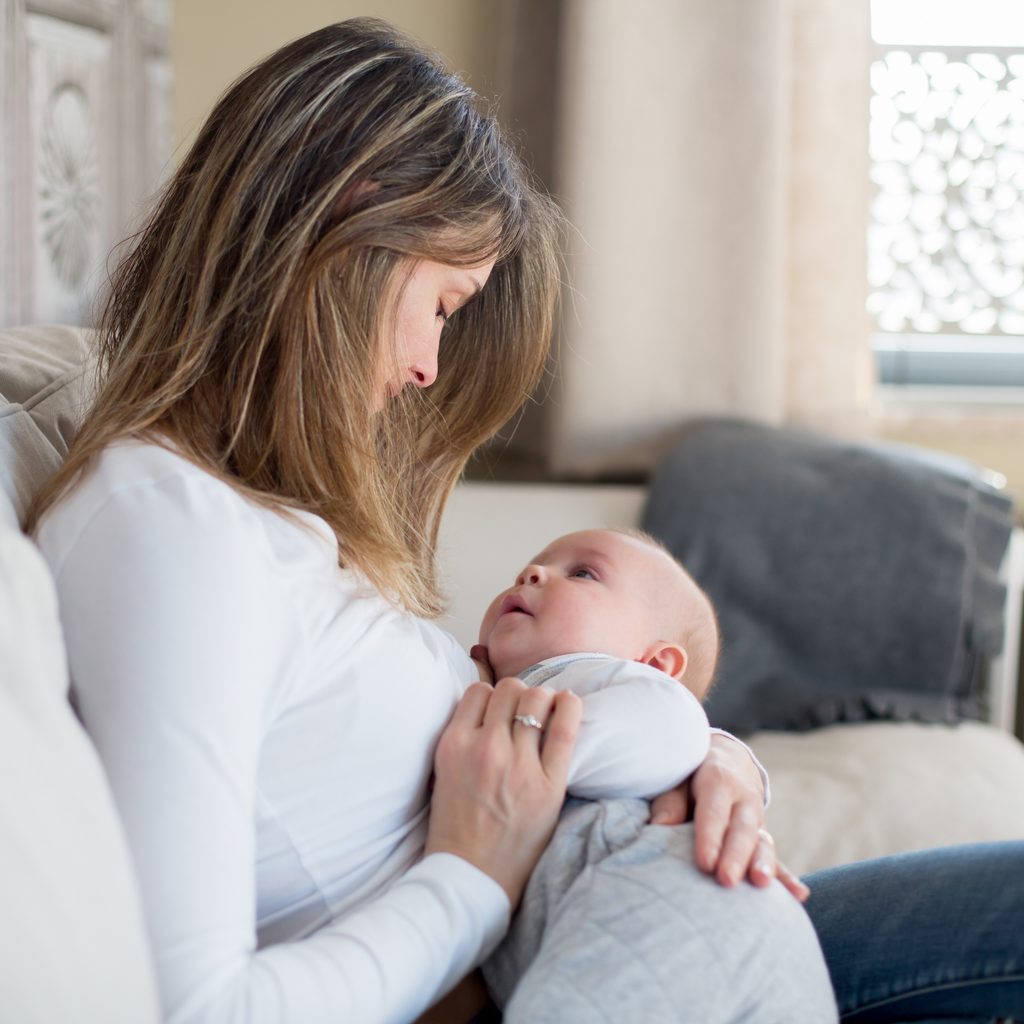
For LAM to truly be effective as a method of birth control, the mother must exclusively breastfeed her baby every 4 to 6 hours, as the frequent suckling prevents the mother from ovulating by reducing the hormones that cause ovulation. Supplementing with formula or even water can reduce the effectiveness of this method, as can using a soother. The method is only recommended until the baby turns 6 months old because at that time, solids are typically introduced, which can contribute to a woman’s body beginning to ovulate. The woman must have no period during this time, including spotting. If the period returns, LAM is no longer as effective as it was before.
Birth control options if you’re breastfeeding
In addition to LAM, there are many other safe birth control options for a woman who is still breastfeeding. Women have the option of using the Depo-Provera shot, a contraceptive implant, an IUD (although your doctor may wish for you to wait a certain amount of time post-partum before insertion), and condoms. The mini-pill, which is a birth control pill that contains only the hormone progestin is also an option. Traditional birth control pills contain both estrogen and progestin, but many feel that estrogen can have a negative impact on a woman’s milk supply so if you’re breastfeeding the mini-pill is a better option. Again, as with other birth control pills, these do take a few weeks before becoming effective so it’s important to speak to your doctor about which method of birth control is right for you.
So, while exclusively breastfeeding does act as a very effective method of birth control if practiced correctly, there is a slim margin of possibility that you can still get pregnant, especially as your baby gets a bit older. If you are looking to prevent pregnancy it’s always best to speak to your doctor about what contraceptive method is right for you before you leave the hospital or even before your baby is due. Although it is recommended that new mothers abstain until six weeks post-partum, that doesn’t always happen so it’s best to ensure you are fully protected to avoid any surprises!