
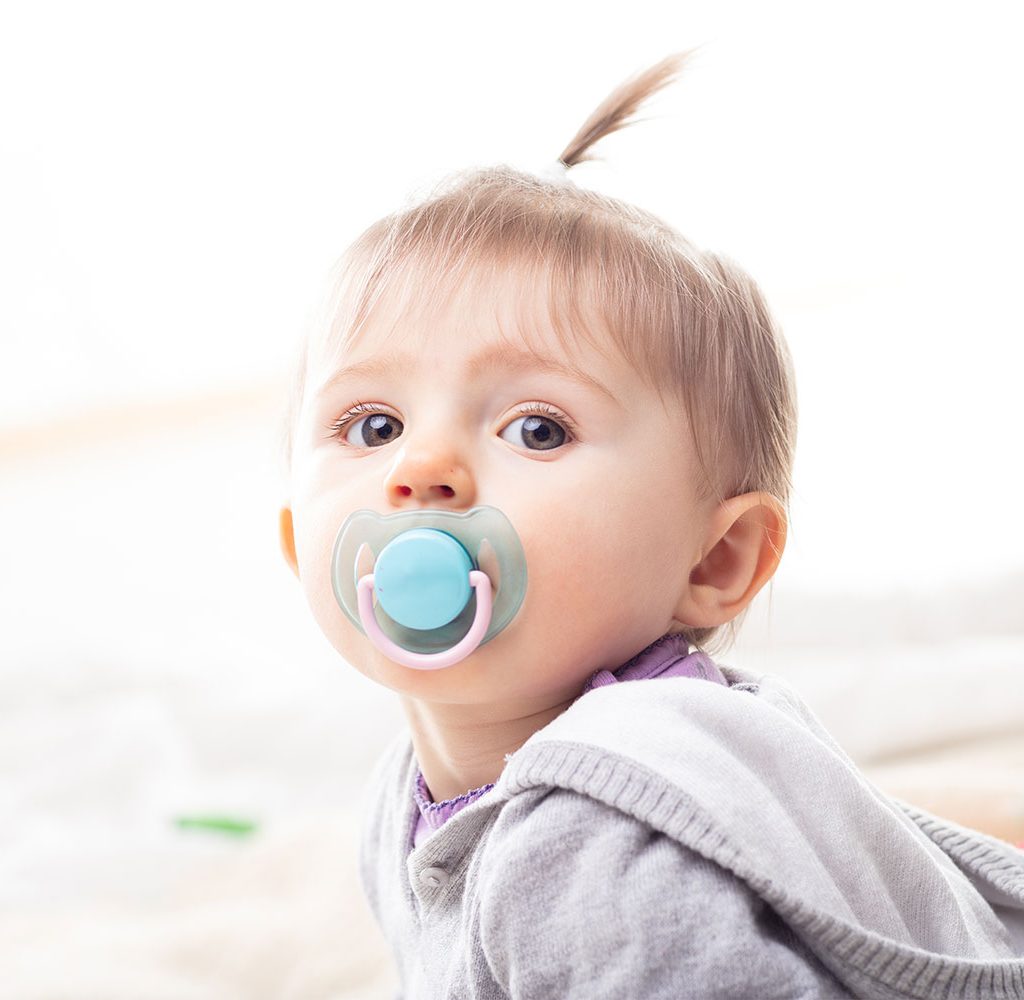
Pacifiers — some babies love them, others prefer soft blankets or rocking chairs. But there comes a time when you must start removing your baby’s pacifier. Fortunately, the American Academy of Pediatrics gives the OK for pacifiers up until about 2 years old when dental development and pacifiers may not go well together. But don’t stress: Here are four of the best ways you can try to get your baby to part ways with their binky.
The classic approach: Cut off the top
This one is popular among parents because it’s easy especially if your baby is toddler age. Simply cut off the tip of their pacifier and let them discover that their binky mysteriously doesn’t work anymore. If they’re unfazed and determined to keep using their comfort object, snip a little more off the top until there’s no more pacifier to suck on. By the end of the week, it’s pretty much unusable.
Most babies will lose interest once they realize it’s no longer the wonderful binky that used to help them sleep, calm down, or pass the time. Offer your little one the chance to throw away their binky because it’s broken. This gives them the power and choice of saying goodbye to their pacifier on their own terms — kind of!

The extra comforting approach: Substitute with blankie or a toy
One of the biggest reasons why babies need pacifiers in the first place is comfort. If your baby uses their pacifier mainly to help them sleep or de-stress, offer them a snuggly blanket or stuffed toy instead. However, here’s a gentle reminder that younger babies should be supervised when going to bed with a blanket or stuffed toy.
This method is best for older kids who need a stand-in for their favorite pacifier. Giving your little one a different comfort toy also breaks the association between their binky and sleep, so in time they’ll stop asking for it when they want to doze off.
The slow and steady approach: Gradual weaning
This particular method can be combined with other approaches on this list. The idea is simple: Slowly decrease your baby’s dependence on their pacifier by offering it to them only during critical times like naptime or when they’re going through a stressful time like sickness or sleep regression.
A good starting point if your baby uses the pacifier everywhere is by letting them use it at home only. This means no pacifier in the car or in their stroller. Once you’ve narrowed down their pacifier time to a few times a day at home, try to drop it to a few times a week and in a span of a month or so, your house will be binky free.
The creative approach: Send the pacifier off to Binkyland
An ingenious way many parents have said goodbye to their baby’s binky is by inviting the pacifier fairy to their home. There are lots of great books and videos with the pacifier fairy that can help explain to your little one why they don’t need their binky anymore. Like the good old tooth fairy, the pacifier fairy comes and takes their prized possession in exchange for a small reward.
But of course, the reward is completely up to you! The fairy can leave a simple thank you note or a snack. The main thing is your little one feels safe knowing that their binky is in good hands and that they’re mature enough to say goodbye.
The bold approach: Quit cold turkey
We get it. Sometimes you don’t have mental or physical energy or time in your schedule for gradual weaning. In this case, going cold turkey might be the best bet for your baby. Stash away their binky someplace safe and explain that their binky is no longer here. You can say that the binky must have gotten lost and that you’re sorry, but you both just have to move on.
In time, your little one will forget and stop looking for it. Chances are they will cry, beg, and give you irresistible puppy dog eyes, but do resist! It will take at least a week or two, but soon they’ll grow out of their pacifier days.
If your little one took a pacifier when they were young, they’ll be ready to let it go anytime between the ages of 1 to 3 years old. If your baby uses their binky throughout the day and night for comfort, you’ll need to step in and try any of the weaning methods we went over above. Luckily, you’ll be there to support them and give them words of encouragement during this transition.