
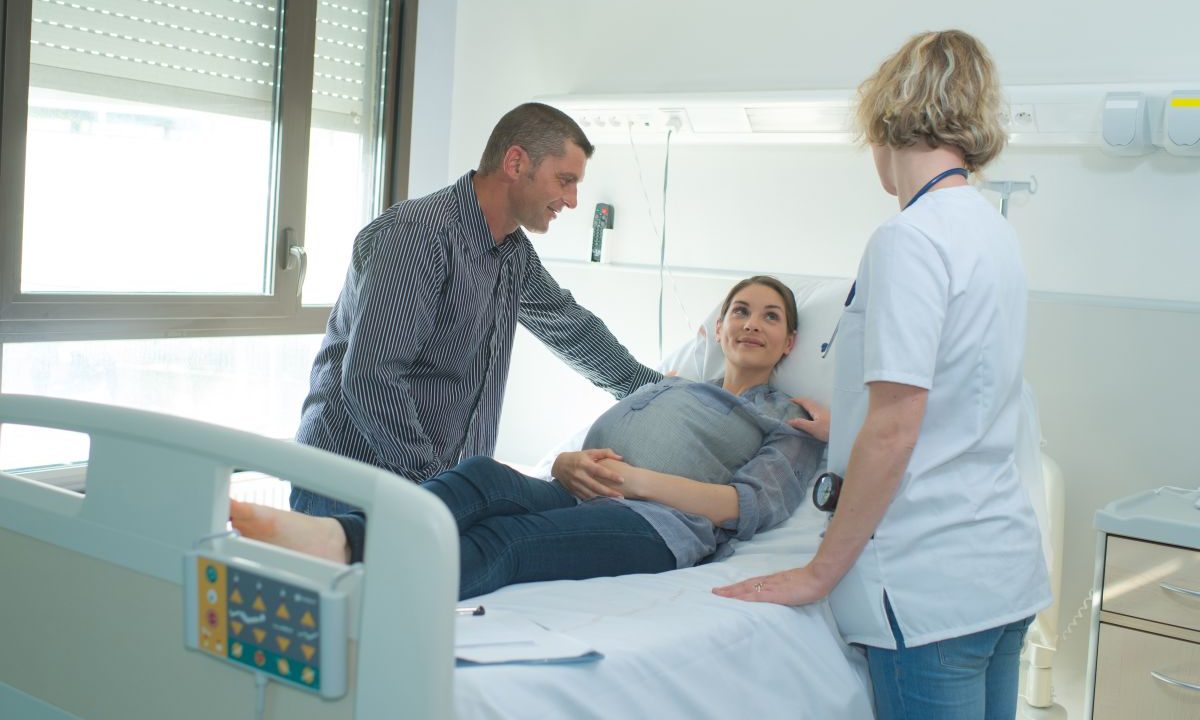
Being pregnant is a beautiful, gorgeous, and amazing experience — until you get to the end. By then, all you care about is when the baby will be born. It doesn’t matter if your baby is a week away from their due date or pushing a week overdue; you want to know the signs that labor is near. Even if you have given birth before, things could be different each time, even if you’re having the same gender you already have. These are the signs labor is near, so you can be as prepared as possible.
Early signs of labor

The earlier signs of labor might be hit or miss, but it’s better to know them than for any to sneak up on you.
The belly drop
You may wake up one day and notice your belly isn’t in the same place it was the day before. Your baby is getting into position to be born, and that means your stomach will shift. This lets you know the countdown is on and birth may only be a few weeks away.
The urge to nest
When women are at the end of pregnancy, they get an urge to nest. They want to start all kinds of home projects, clean out clutter, maybe redo the nursery for the third time, or repack the birth bag again. Nesting takes place in the last trimester, up to a couple of weeks before baby arrives.
Baby brain
The last trimester is full of baby brain moments. A hormone called relaxin gets released, triggering your body to loosen up. As your ligaments relax, you also experience a bit of clumsiness and forgetfulness.
Weight levels out
At your weekly end-of-pregnancy checks, pay attention to your weight gain. If you have leveled out or even lost weight, baby is done growing inside your belly and ready to get bigger on the outside.
Signs labor is near

These are the usual suspects most women experience at the start of labor.
Back pain
We know if you’re pregnant, your back is probably hurting more often than it feels good. But intense back pain is a clear sign of labor. The pain will feel a little different than how it hurts when you try to put on your shoes. It could start in your neck, upper back, lower back, or middle back, so pay attention to how the whole backside of you feels.
Leg and belly pain
When your whole body starts to hurt, flares should go up that you could go into labor soon. Different from contractions, pain in your legs and cramping in your stomach means your body is pushing and moving things around to prepare for the birth.
Diarrhea
It’s not a fun symptom, but diarrhea is a sign you are getting ready to go into labor. Having a bit of diarrhea is the body’s way to clear things out to make it ready for birth. You may have already been experiencing interesting bathroom patterns for a while now, but if you are near the end, it could be a signal your body is ready to kick that baby out.
Contractions
Yes, a big giveaway is the start of contractions. Sometimes confused with Braxton Hicks (false contractions), the real deal is a sign of labor. To tell the difference, time the length of the contraction, the time in between contractions, and pay attention to how strong they are and how strong they become.
Other signs to notice labor is on the way
Here are a few more signals your body is letting you know your bundle is about to make their entrance.
Water breaking
A woman’s water breaking is not like they show in the movies. Not every woman has her water break outside of the delivery room. It’s more common for your water to break when you are already in the hospital laboring. But if it does break while out and about, be ready to get to the hospital.
Dilation starts
One of the longest waits for a pregnant woman is waiting to become fully dilated. Toward the end of pregnancy, there will be regular, weekly cervical checks to see if dilation has started. Once it has, be ready to meet your little one soon.
Ruptured membranes or increased discharges
If you notice a bloody, reddish, brownish discharge, that is your mucus plug. It keeps bacteria out of your cervix and helps protect the baby. This discharge happens between weeks 37 and 40, so the countdown will be on.
Not all signs of labor are pleasant, but at least they let you know you are about to go from not sleeping because your baby is pushing on your bladder to not being able to sleep because your baby is here. If you experience any combination of labor signals, make sure your hospital bag is ready to go.