
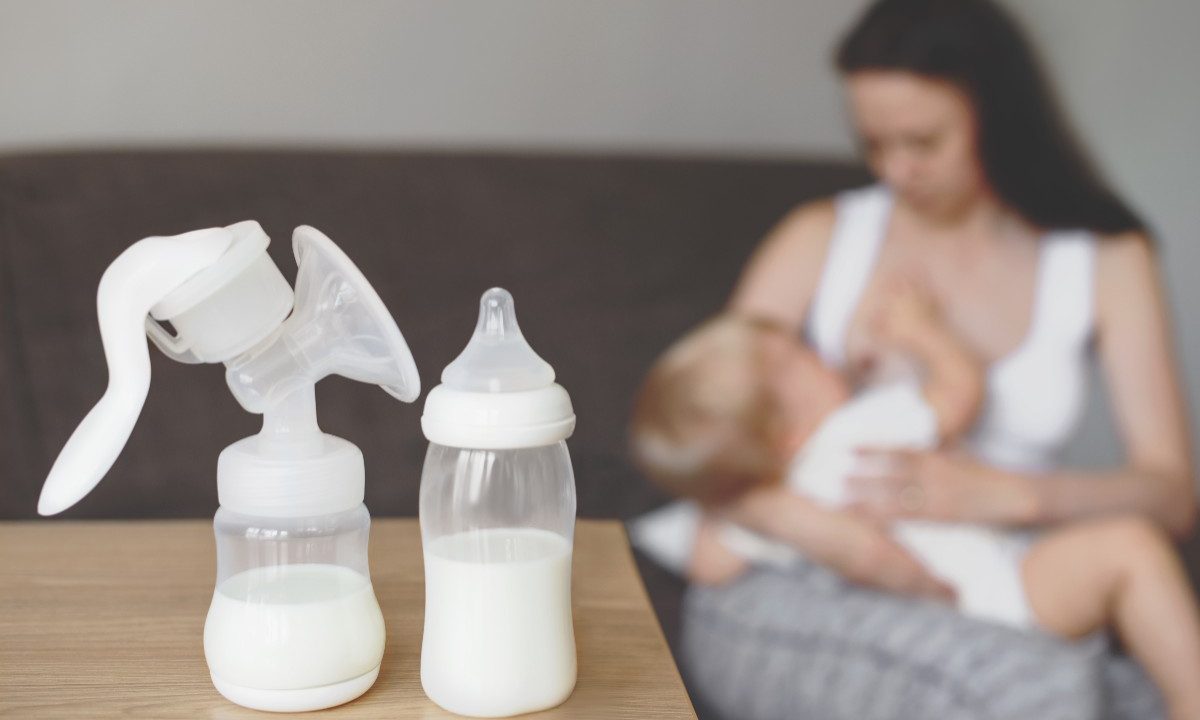
We're not going to sugarcoat it: Pumping breast milk for your little one can sometimes feel like a full-time job. On top of breastfeeding on demand, you also want to feel confident that you've stocked up enough liquid gold to keep your baby happily fed, especially if you're going to be away for a few hours, an entire day, or (dare we dream?) a whole weekend.
Thankfully, there are lots of different breastfeeding pump options to accommodate everyone. Double electric pumps or hands-free hidden options are just a few of the fancy milk-extracting gadgets and gizmos you may have in your arsenal.
However, if you are rarely out of your infant's sight and love that skin-on-skin time, a simple manual breast pump might suffice. It takes a bit more work and time, but you will still be rewarded with the fruits, or rather, milk, of your labor. Want to know more about the role of a breastfeeding hand pump? Here's why you might want one, how to use it properly, and when you might decide to upgrade.

How to use a manual breast pump
A manual breast pump requires no electricity. It's compact and portable, but it calls for a bit more effort on your part. While electric options do the work for you, a manual pump has to be physically pressed or squeezed.
Step 1: Most manual pumps on the market have a few easy-to-put-together pieces. Before using it, you should take the time to thoroughly clean each piece and assure that you assemble it properly.
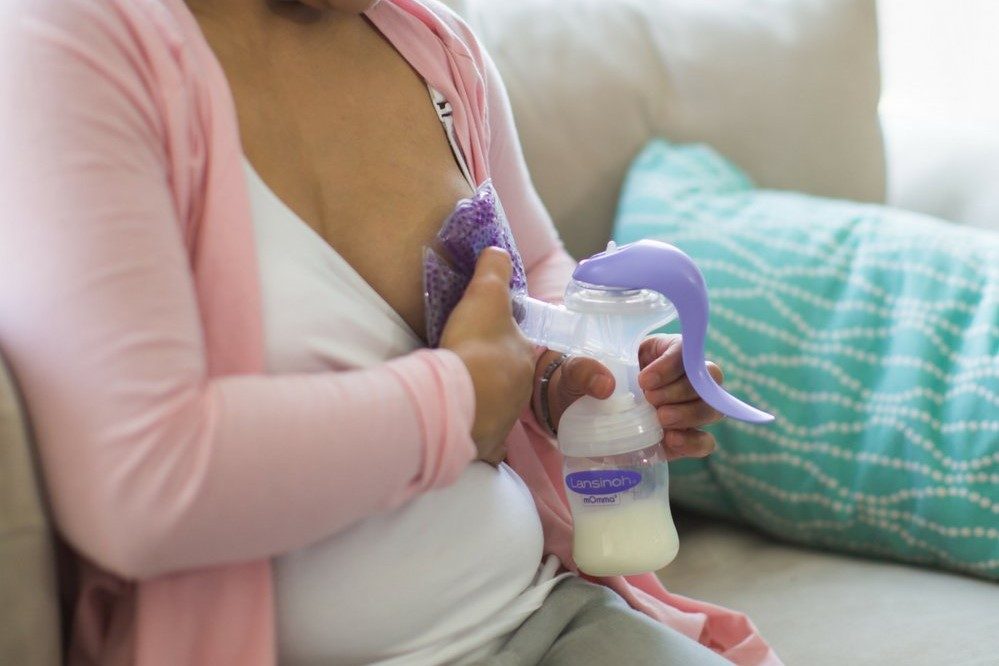
Step 2: Once it's clean and properly assembled, simply place the nipple shield over your breast and begin pumping the handle. It's important to note that it might take a minute or two for milk to start flowing. Unlike an electric pump, it might take a while to accumulate; you are not a machine, after all, and your hand might get tired.
Step 3: After a few minutes, you should switch to your other breast and begin again.
Choose the breast pump that's right for you
Both the Medela Harmony hand pump and the Lansinoh manual breast pump have a lever you push. They are effective at drawing out your milk, but won't necessarily do it speedily — slow and steady win the race.
Another option is the Haakaa manual pump.
Step 1: Hold this one to your breast and let the natural suction do its thing.
Step 2: Gently squeeze the silicone bottle, and massaging the breast may help.
Step 3: You can also use this while nursing to collect milk from the breast not in use.

The benefits of a manual breast pump
There's no perfect breast pump for every mom — just the right one to fit your individual needs. If you are exclusively pumping, you are likely to want a high-efficiency double-electric breast pump that gets the job done quickly and efficiently. To that end, a portable breast pump probably isn't going to cut it.
However, it's a smart backup option in every nursing mom's arsenal. And if you only pump on occasion, it might be the only one you need. Here are some of the best uses for a manual pump — plus, some benefits you won't get with more tech-driven options.

Low-cost option
Breast pumps can be incredibly expensive. Your health insurance may cover some options, but if you are paying out of pocket, you could be shelling out top dollar for top models. Manual pumps are generally priced between $30 and $50.

Low-tech option
No electricity? No problem. A manual breast pump doesn't require a plug or a charge. As long as you've got a free hand, you can extract milk. So whether you're on a long road trip and can't stop to plug and pump or are experiencing a blackout, you can still get the job done.

Good backup
If you're going to be away for just a wee bit and don't feel like dragging your large pump along, a manual option is a discreet, small, and portable alternative. Similarly, if you just plan on pumping a little bit to give yourself relief from engorgement, a hand pump will do the trick.

What to look for in a manual breast pump
Not all manual breast pumps are created equal so there are a few things you should pay attention to before purchasing. First, you'll want to make sure your breast pump works with your bottles. You don't want to have to worry about buying new bottles that fit your pump or struggle with pumping into one size bottle and then transferring into another. Check to make sure the type of bottles you use fit on your manual breast pump. You'll also want to ensure a comfortable fit when using your breast pump as well as when you'll be planning to use it. If you think you'll be using your pump more when traveling or on the go, try to look for more compact options.

The drawbacks to a manual breast pump
Of course, there are a few less-than-ideal drawbacks to using a manual pump, too.

It takes more effort
We're not going to lie. If you strive to get enough ounces to feed your babe, your pumping hand is going to get quite a workout. (A little carpal tunnel is a small price to pay for breast milk, though.)

It takes more time
Hope you're not in a rush — pumping with a manual option takes time and patience. An electric pump, on the other hand, expedites the process. To this end, if you're planning to go back to work and need to pump regularly, a manual option probably won't help much.
Pumping can be taxing, but the right equipment can make it a little bit easier. While a breastfeeding hand pump is not as efficient as electric options, it can come in handy at key moments. Whether you are heading out of town for a weekend away (woo-hoo!) or relieving your full breasts in the middle of the night, a manual pump can give you peace of mind — you can have some freedom and flexibility, and baby will still have a full and happy tummy.