
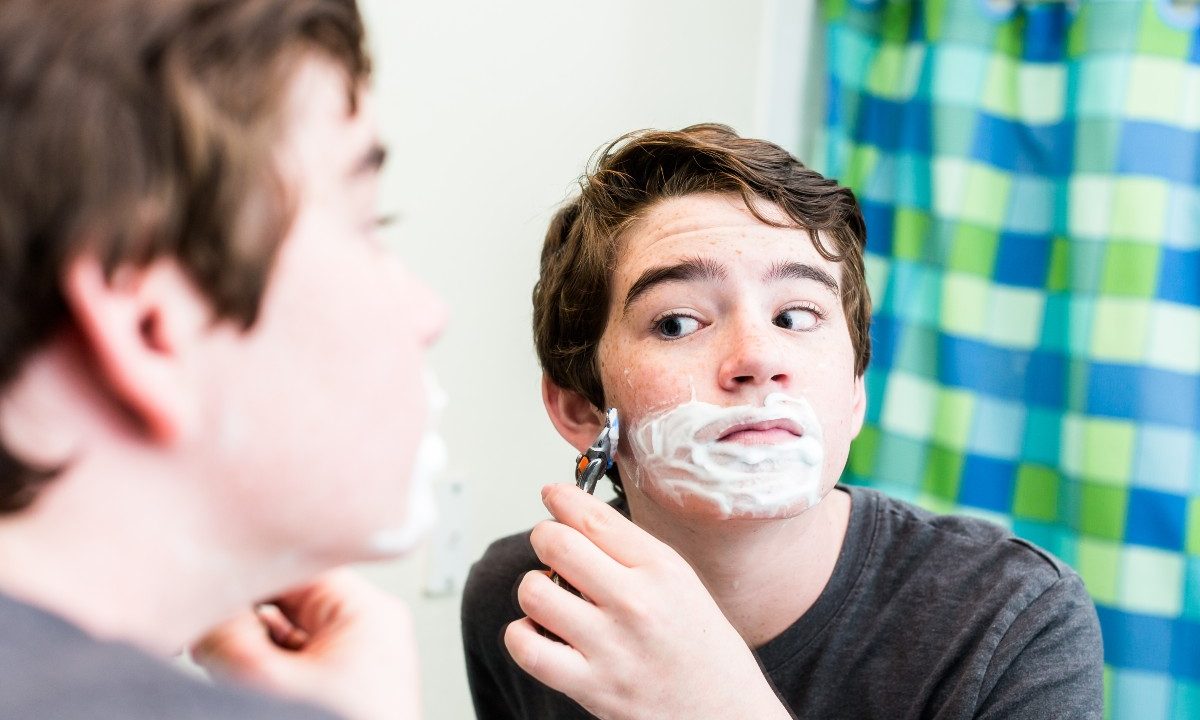
Puberty strikes boys at different ages. It can happen any time between ages 8 through 15. One of the signs of puberty is facial hair. It's one of the signals that your son is growing up. Other signs his body is changing may include his voice cracking, noticeable mood swings, pimples, and weight gain. Facial hair is definitely a big milestone for teens. When should he start shaving? Well, that depends on the teen.
Puberty is different for every boy. Some may begin to have facial hair on their lip and chin early on during puberty, while others won't experience facial hair growth until they officially become a teenager. Many boys won't get anything more than a bit of occasional peach fuzz. Others may get a subtle mustache or sideburns, or they might begin to grow an actual beard.
Many boys are excited about this rite of passage, but others; not so much. Some boys may be embarrassed or uncomfortable with facial hair and want to shave. The best time to teach a teenage boy to shave is when he asks. It's important to be involved so teens learn about proper facial hair removal, hygiene, and grooming. Here is how you can help your teenage boy learn to shave the right way.

Choose a razor
Before you can teach a teenage boy to shave, you need to decide on the type of razor to use. The choice comes down to electric or blade. Electric razors eliminate the risk of nicks and cuts. So, if your child is nervous about cutting himself, this could be the way to go. Of course, electric razors can be a bit more expensive.
If he’d rather actively shave his face with a razor and cream, consider opting for a high-quality or disposable option with multiple blades. These will provide a soft, fresh finish without the use of too much pressure, reducing the risk of cuts and accidents.
Step 1: Pick out a good beginner razor. The three options are:
- Electric razor
- High-quality razor with replaceable blades
- Disposable razor
Step 2: Let your son check out each style and find the one that he feels most comfortable with. In the beginning you may end up trying all three before your teen finds what works best for him.

Wash your face
Hygiene is an important part of shaving. Sometimes a warm shower or bath beforehand can help open up the pores and cut down on nicks. If your son is also experiencing puberty-related acne, shaving can be even more challenging. In this situation, taking care of the skin before, during, and after shaving becomes more important.
Step 1: Before you have your son begin shaving, have him wash his face with a gentle cleanser. This smoothens the skin and softens the facial hair.
Step 2: Look for gentle cleansers without fragrances or alcohol, and those with plant-based ingredients and moisturizers. This will help to cut down on skin irritation.

Prep the skin
Shaving should never be a rush job, especially when you are just starting out. Make sure your son understands that you have to prepare the skin first.
Step 1: Hydrate the skin first with warm water and then some shave gel or foam. Try the shaving gel or foam first on a small part of skin to make sure the product doesn't irritate the skin.
Step 2: Smooth the shaving gel or foam out over the face evenly and generously. This will help your kiddo get a better shave and prevent injury.

Practice technique
Getting the technique of shaving your face isn't easy. It's a good idea to have your son take a few practice strokes before diving in.
Step 1: When using disposable or reusable razors, remember, they're sharp. Before you hand over a brand, new blade, have your son practice the shave stroke with a clean toothbrush.
Step 2: Instruct him to move with short strokes in the direction of the hair growth, which keeps it simple and predictable, while also preventing nicks and painful ingrown hairs.

Graduate to the blade
Let your son practice the shaving technique with a clean toothbrush for a bit. When he seems to have the hang of it, it's time to try shaving with an actual blade.
Step 1: When the practice period is over, have him reapply the shaving cream or gel.
Step 2: Now, it's time to try shaving slowly with the blade in hand. It may take him a few tries to feel comfortable with the blade in his hand. If his hair is a bit thicker, he can try shaving against the grain, which will give him a closer and smoother shave. That shouldn't be done though until he appears to be confident with his shaving strokes.

Tap and rinse the blade
Your son should learn to rinse and gently tap excess hair and shaving cream off the blade every few strokes.

Rinse, pat dry, and moisturize
Using a moisturizer is always a good idea, but make sure it’s formulated with sensitive ingredients that take any skin issues into account. Moreover, tread lightly. Aftershave and other products can irritate skin that’s new to shaving. Less is best when it comes to moisturizer and aftershave.
Step 1: Instruct him to rinse his face with warm to cool water.
Step 2: Pat the face dry with a clean towel.
Step 3: Apply a moisturizer as needed.

Clean the razor
Razor care is an important part of learning to shave. Whether you son is using a razor blade or electric razor, teach him to clean it following a shave.
Step 1: Once your son is done shaving, teach him to give the razor a proper and thorough rinse. He can gently pat the razor but should not rub it against a towel. Allow it to air dry.
Step 2: Make sure he understands how to properly and safely store the razor so it’s ready for next time.

More teen boy shaving tips
Teaching a teenage boy to shave is a big milestone. Here are a few more things to take into consideration while helping your son master the difficult and important art of shaving.
Step 1: Have your son shave in front of the mirror so he can see his brushstrokes and take note of key spots. Once he becomes more comfortable, suggest he try shaving in the shower, as the moist air helps improve the experience and outcome.
Step 2: Get your son to relax, hold the razor gently, and let it do its thing. Boys might be nervous about shaving the first few times. As a result, they may use excessive pressure on their face and cause irritation.
Step 3: Talk about hygiene. Make sure he’s aware that he should never give his razor to a friend or borrow someone else's personal item. Sharing razors results in cross-contamination, infection, and other issues.
Step 4: Have your son start slow. He might be eager and excited about this new routine, but it shouldn’t be an everyday affair. Tweens and teens should only shave as needed. Remember, teenage skin is fickle, and he doesn’t want to risk irritation, pimple outbreaks, or ingrown hairs.
Step 5: Make sure your son keeps track of how often he’s used a disposable razor before moving on to the next one. Overuse can dull out the blade, resulting in a rougher shave, and it can increase the risk of injury.
Step 6: Electric razors need upkeep too. If your son is using an electric razor, make sure he understands what he needs to do for cleaning, maintenance, and storage.
There is a learning curve to shaving and for that matter, for growing up and going through puberty altogether. It’ll take time for your son to get the hang of it, but eventually, he’ll be a shaving pro. In the meantime, with your support and savvy tips and techniques, you'll help him get through this stage mostly unscathed.