  1. Home
  2. Activities
  3. Evergreens

4 amazing science podcasts your 4th grader will love

Add as a preferred source on Google

Keeping all kids interested in the sciences is important for their future, no matter what field or career they eventually go into. The insights they learn from being involved with science at a young age are crucial. It helps their relationship with the world around them become stronger. They will have more confidence, be better communicators, and have a much better sense of the world around them than kids that aren’t involved in science.

Kids who love science early on are also more likely to keep that curiosity throughout their life, even if they don’t stick to the sciences. Those problems solving skills kids learn in science class will help them throughout their whole life.

Recommended Videos

So to get (or keep) your child’s love of science strong, let’s check out 4 of the best science podcasts out there.

A group of grade schoolers doing a science class.
Image used with permission by copyright holder

Tumble

We see this one everywhere as the go-to science podcast for kids, parents, the whole family, and teachers. This podcast wants kids (and adults) to know that in science, as in life, there will be mistakes. It will take trial and error. Things will not go as planned. Science is a whole process, and not a “get it right on the first try” sort of thing. We love that.

It’s not all complicated scientific topics, either. Cute topics like “what if a fish had legs?” and a kid favorite “the science of candy land.” With an interactive website to go along with the podcast, there’s plenty to keeps interested and learning at the same time.

But why

If this doesn’t scream what your child asks you about 300 times daily, then we don’t know what else to tell you. If your child loves to ask you questions that you have no idea what the answers are or how they even came up with them, then you need to get them started on this podcast immediately.

That curious child you know will love to learn why dogs have tails and why baby teeth fall out. One of the cutest parts is that they are always taking questions from kids. So if you have a little one that loves to ask you questions that stump you, you can send it to them and they can take care of it.

Not only will that question-asking child keep their mind constantly learning with this podcast, but parents can learn quite a bit as well and maybe have an answer for the next time they are asked.

Brains on!

If you want your kid to embrace his or her curiosity, then this is the podcast for them. What’s awesome about this podcast is that every week, there is a new episode that answers the most awesome kid-inspired questions.

There is always a kid co-host, so it is definitely geared towards keeping kids entertained. But just because there’s a kid guest doesn’t mean only children will learn from this podcast. They also love when you send in questions or ideas. Kids can have their parents send in any requests.

From talking about annoying siblings to why kids have more energy than their parents (seriously, why do they?) to all there is to know about boogers, kids will have over 400 podcasts to listen to and learn from.

Two grade school kids doing a fun science experiment.
Image used with permission by copyright holder

Wow in the world

This is a podcast that also mixes in activities for your child to do. Anything to keep their brains active and their hands busy while learning, right? We love that it was created by parents, so the involvement of kid/parent interaction is at an all-time high with this podcast.

We also adore how easy it is to search by grade, topic, or a specific type of science you want to learn about. Or if you want to scroll through them all to find one that catches your eye, you can do that, too. You can also search by what kind of podcast you want – be it an experiment, a game, or a lesson. We love the organizational skills that went into setting this podcast up. Your kids will have plenty to keep them learning about the world around them.

While there are so many awesome podcasts for kids to listen to out there, we really think that if you want your child to stay actively interested in science, that these four amazing science podcasts should be on their radar. You can listen along and learn with your child or let your kid tell you all about what they learned.

As long as you are keeping the love of science and technology alive in your young one, whichever podcast they decide is their favorite is a perfect choice.
Experts weigh in: Why YouTube isn’t great for kids
You may rethink screen time after you know what experts say about kids watching YouTube
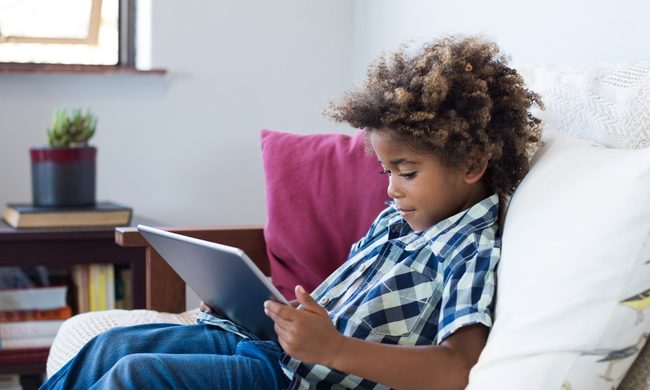
Young boy on an iPad

It's a parenting tale as old as time. You have things to get done around the house, but a small person who says they're bored is competing with your to-do list. And so, you do what many parents do in this stretched-thin situation. You turn on the television, hand over a cellphone, or put on YouTube. But when it comes to kids watching YouTube, is it doing more harm than good?

Screens can be "addictive," as noted by Dr. David Greenfield, founder and clinical director of The Center for Internet and Technology Addiction. He explains that they have a dopamine-producing effect, and many realistic pediatric experts agree that, while screens are a part of our modern lifestyle, moderation should be enforced, and limitations be set. Parents need to learn why they should be mindful of children watching YouTube and how to lay down the screen time law at home. We'll share some tips and words of wisdom from experts in the know.
Why screen time could be negative

Read more
The best low-stimulation movies for calming toddlers
Make sure movie time does keep your toddler awake
Cute toddler watching a movie on a laptop

Screen time isn't always a bad thing for toddlers. Sometimes, when your little one isn't feeling well, watching a soothing movie is a perfect pick. Low-stimulation movies for toddlers offer better quality screen time than movies that are loud and packed with action. Sure, those are fun and can be super exciting for kids, but the impact on their cognitive development is often negative. Those overstimulating movies can be too much for toddlers, leading to tantrums, meltdowns, and an inability to fall asleep.

Think about how difficult it is to fall asleep after watching a horror or suspense movie right before going to bed. Your mind is going in different directions, making it hard to relax and drift off to sleep. Well, it's the same for toddlers. So, what are the best low-stimulation movies for toddlers to watch and what exactly are they?
Best low-stimulation movies for toddlers

Read more
When should your baby be able to stack blocks? Here’s what to know
Know when babies can nest cups and balance blocks by themselves
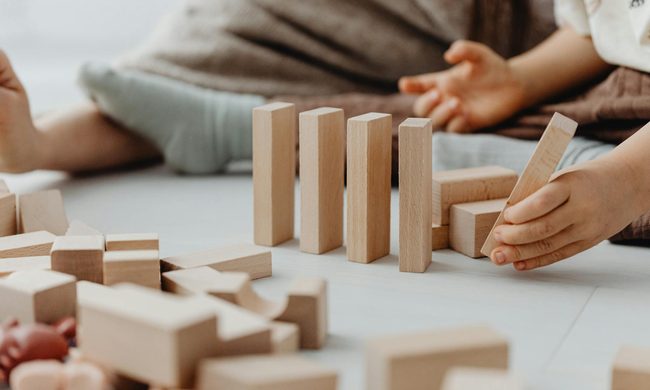
A child playing with stacking blocks

When you’re a new parent, the moment someone gifts your child their first set of blocks, you become obsessed with baby learning and when they should be able to turn the blocks into beautiful creations of their imagination. While stacking blocks are an important developmental milestone for babies, it’s also one of those things that evolves with time and practice. Sitting down to play blocks with your little one is an open-ended game that teaches children physics, resilience, and fun. When can a baby stack blocks and nest cups on their own without your help? Here are some general guidelines so you know how to measure your child’s development with their gift of stacking blocks and how to help your child get the hang of it on their own.
When can a baby stack blocks and nest cups? By age

By 6 months old
At this age, your baby might not be ready to stack blocks the way you want them to, and that's okay. This doesn't mean you can't play blocks with your child or that you shouldn't let your child have fun figuring out what the blocks are. It’s perfectly normal for your 6-month-old to gnaw on blocks or simply hold one, just don't expect them to build the Eiffel Tower just yet.
By 12 months old
This is the stage of banging items against each other and blocks or cups are no the exception. If you offer your child blocks, there may still not be a lot of creativity yet. But keep in mind that knocking things down is a favorite activity of 1-year-olds, so your child is right on track if that's all they do. More likely than not, they’ll be happy to destroy any block tower you build. If your little one can’t get enough of knocking down a stack of blocks, rest assured that they’re right on schedule.
By 18 months old
When can babies nest cups? By a year and a half, stacking is the name of the game. After all, your little one is now officially a toddler and proud of it. If you haven’t done so already, this is a great time to introduce baby blocks. At this point, most kiddos are able to stack two or three blocks on top of each other with ease.
By 2 years old
Don’t be surprised if your baby’s block masterpieces start to get taller by age 2. With improved coordination, your child shows better stacking skills and may be able to balance up to seven blocks on top of each other. This is the beginning of sorting for many young children. If they’re now stacking masters, go ahead and challenge your budding genius to sort their blocks by color or separate them in groups.
By 3 years old
Free play takes a life of its own by age 3. At this point, blocks are much more than meets the adult eye. Your child’s imagination is flourishing, and they’ll start to build tunnels, bridges, or forts with just a few blocks. This is the perfect moment to introduce your toddler to teamwork. If the two of you work together, it’s easier to build tall towers and solve construction problems. Get your child's imagination to full speed and see what they create with blocks of all colors and shapes.
The benefits of stacking blocks

Read more