  1. Home
  2. Activities
  3. Stages
  4. Evergreens

4 classic toys every baby should have

Add as a preferred source on Google

As a parent, you probably have fond memories of some of your favorite childhood toys, and it only makes sense that you’d want to bring that same joy to your kids. While the industry is constantly evolving, classics toys for kids and babies have lasted the test of time — and for a good reason.

Here are four classics that should be staples in your child’s nursery.

Recommended Videos

Building blocks

Mother with child playing with building blocks
Oksana Kuzmina / Shutterstock

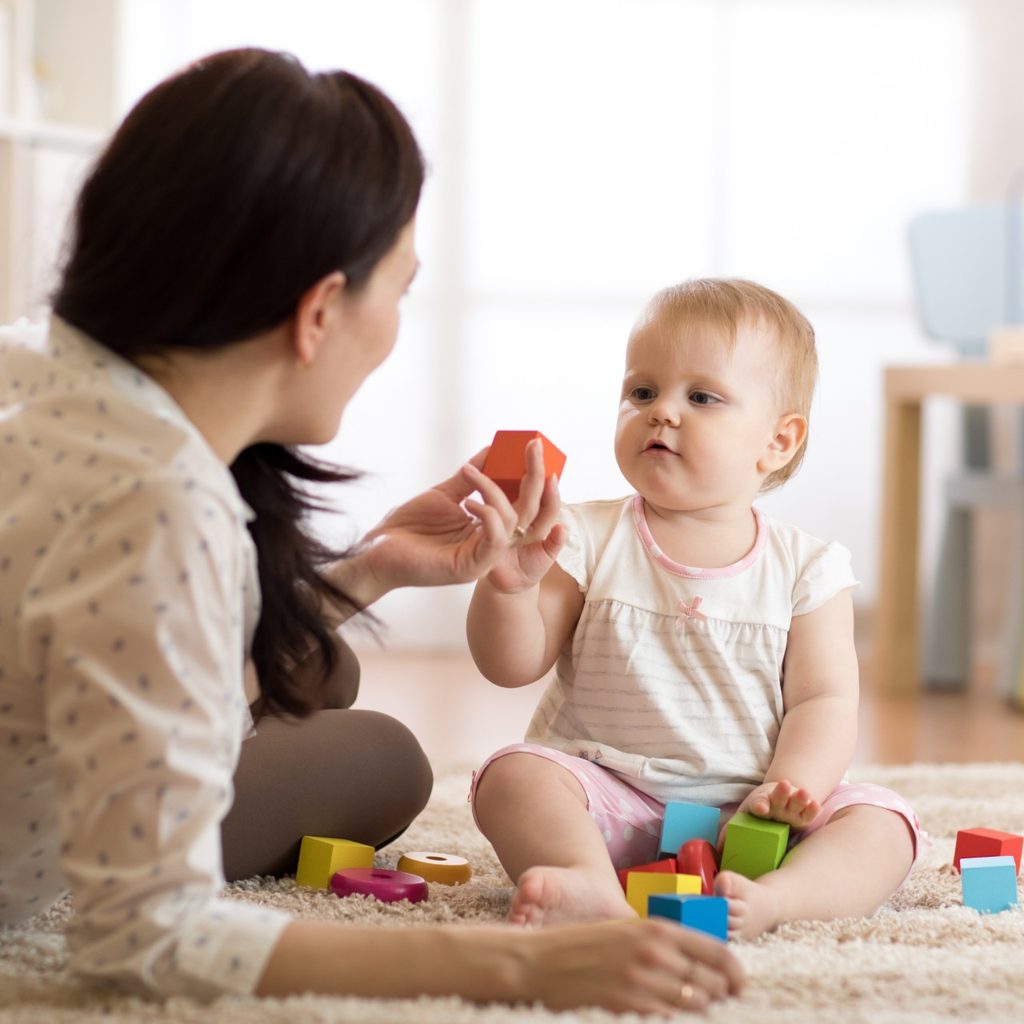
From simple wooden blocks to brightly colored Legos, building blocks come in all shapes and sizes. Babies and toddlers can spend hours building, stacking, and then toppling their blocks over.

Besides providing plenty of fun, building blocks also serve as a powerful learning tool. Figuring out how the blocks fit together can help develop hand-eye coordination, motor skills, and mathematical skills. As toddlers play, they have to decide how many blocks they have, identify patterns, and then figure out how tall their tower can be.

In pre-K or kindergarten, children can use blocks to develop social skills with other kids. When your child builds, others might wander over and want to join in on the fun.

The best part is that the skill development that comes from playing with blocks will feel natural to your child — they probably won’t even realize they’re learning something.

Musical instruments

So, you probably won’t be buying your 6-month-old a full-size drum set anytime soon, but you can start with a shaker. As soon as your kid has enough motor skills to grasp a rattle, they can start playing music. Many infants become mesmerized by the sound of music and the sounds they can create with a little bit of movement.

Once they’ve got more coordination, you can upgrade their rattle to a musical play set — like the piano or drums.
The cognitive benefits of musical instruments are endless by the time your child becomes a toddler. You’re feeding your baby’s attention span, brain growth, and language skills.

Push bikes

As your baby grows into a toddler, they’re learning to navigate the world for the first time. While their own feet might be unsteady, push bikes or “toddler bikes” can get them mobile.

The “little red tricycle” has been a signature toy for decades, and the design of these vehicles has only gotten safer. Push bikes can be safe for toddlers who are as young as 2 years old.

Toddler push bikes come as regular bicycles but also as tricycles that have a handle for parents to grab onto. With three wheels, the tricycle tends to be more stable. For tots that are still wobbly, you might want to start off with the tricycle before graduating to the bicycle.

Push bikes are also a toy that you can interact with, too. Whether you’re riding alongside your toddler or pushing behind them, it’ll be a bonding experience for both of you. And, even if you’re the one doing most of the work, cycling is a great form of cardio for your little one.

Art supplies
Mother with child using art supplies
Oksana Kuzmina / Shutterstock

If your baby is trying to draw on the wall or make marks where they shouldn’t, it might be time to head for the art aisle.
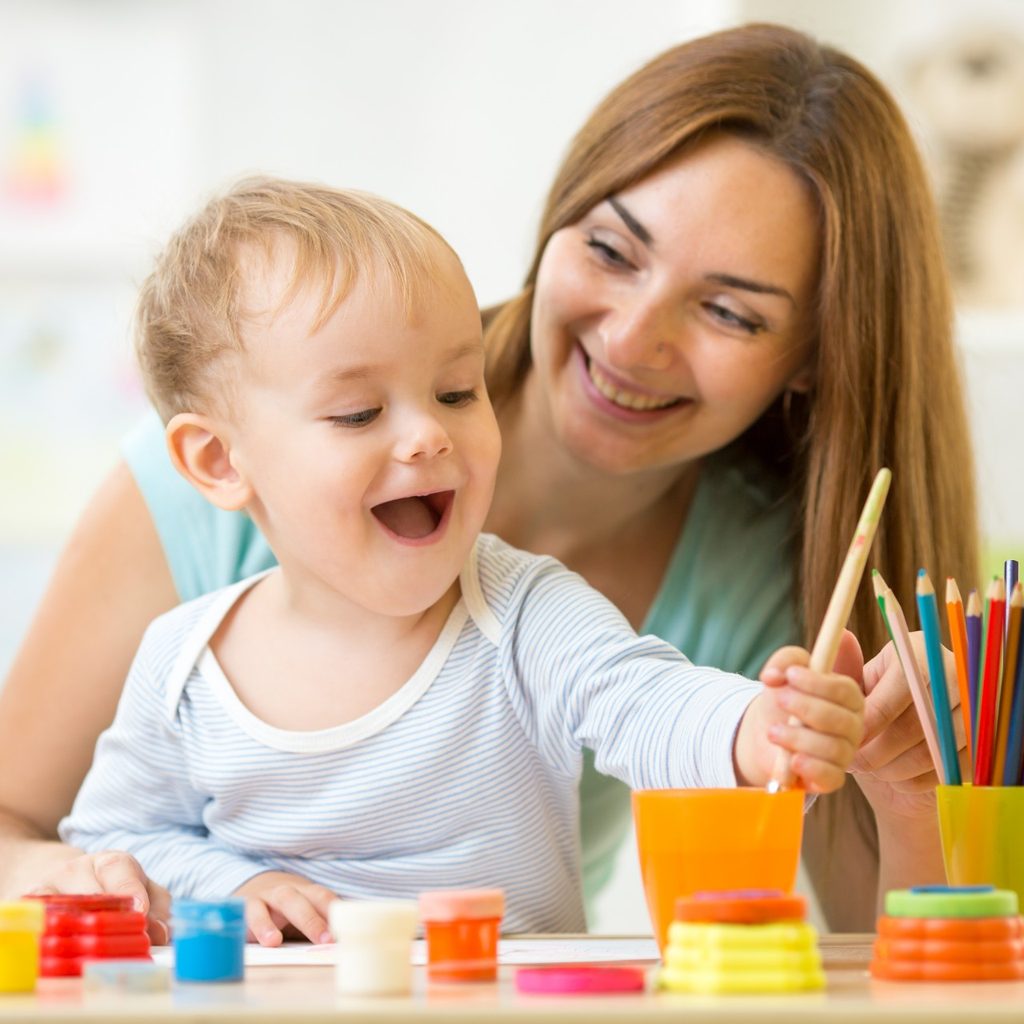
Not all kids will grow into the next Picasso or Frida Kahlo, but most toddlers still enjoy drawing. Even just scribbling with crayons or markers can develop motor skills that transfer over into other parts of your kid’s life. If they’re able to hold a crayon correctly, they might have an easier time tying their shoes or working utensils.

Art is also a crucial way for toddlers and preschoolers to express themselves. They’re creating their own work and building self-confidence that can last for years. Many art or craft projects often require time, so as your kid draws or paints, they’re slowly learning patience and discipline.

Not to mention, there’s evidence to suggest that early art education plays an important role in developing visual-spatial skills. As they work, your toddler must analyze what they’ve created and what they need to do to make it better. Kids can start drawing when they’re as young as 12 months, so you can start art education whenever you want.

Keep in mind that you don’t have to buy an expensive art set for your kid to reap the cognitive benefits of drawing. A pack of crayons, washable markers, and some colorful construction paper are usually all that toddlers need to get started. If you find that your toddler really enjoys art, you can always upgrade to more advanced supplies.

Toys are constantly changing, and it can be difficult to keep up with every new trend that makes it to the toy aisle. However, many of the best baby toys are still the classics — the ones that continue to last the test of time.

In addition, you can check out our list of the best educational baby toys to educate your baby while they entertain.

Is CoComelon ‘Good’ for Kids? Experts Cite Research Pointing to ‘Yes’
Dad brushing teeth with daughter and looking in the mirror with CoComelon

Parents navigating the landscape of kids’ media often question which content genuinely benefits their little ones. Among the most popular kids’ shows today, educational programming like CoComelon has captivated young audiences worldwide, but many caregivers wonder: beyond its ability to entertain, does this musical series offer real developmental value?

Research and child development experts have revealed many details about the educational framework behind the animated series, its potential benefits, and how caregivers can maximize positive outcomes when incorporating such content into their kids’ routines.

Read more
The best low-stimulation movies for calming toddlers
Make sure movie time does keep your toddler awake
Cute toddler watching a movie on a laptop

Screen time isn't always a bad thing for toddlers. Sometimes, when your little one isn't feeling well, watching a soothing movie is a perfect pick. Low-stimulation movies for toddlers offer better quality screen time than movies that are loud and packed with action. Sure, those are fun and can be super exciting for kids, but the impact on their cognitive development is often negative. Those overstimulating movies can be too much for toddlers, leading to tantrums, meltdowns, and an inability to fall asleep.

Think about how difficult it is to fall asleep after watching a horror or suspense movie right before going to bed. Your mind is going in different directions, making it hard to relax and drift off to sleep. Well, it's the same for toddlers. So, what are the best low-stimulation movies for toddlers to watch and what exactly are they?
Best low-stimulation movies for toddlers

Read more
When should your baby be able to stack blocks? Here’s what to know
Know when babies can nest cups and balance blocks by themselves
A child playing with stacking blocks

When you’re a new parent, the moment someone gifts your child their first set of blocks, you become obsessed with baby learning and when they should be able to turn the blocks into beautiful creations of their imagination. While stacking blocks are an important developmental milestone for babies, it’s also one of those things that evolves with time and practice. Sitting down to play blocks with your little one is an open-ended game that teaches children physics, resilience, and fun. When can a baby stack blocks and nest cups on their own without your help? Here are some general guidelines so you know how to measure your child’s development with their gift of stacking blocks and how to help your child get the hang of it on their own.
When can a baby stack blocks and nest cups? By age

By 6 months old
At this age, your baby might not be ready to stack blocks the way you want them to, and that's okay. This doesn't mean you can't play blocks with your child or that you shouldn't let your child have fun figuring out what the blocks are. It’s perfectly normal for your 6-month-old to gnaw on blocks or simply hold one, just don't expect them to build the Eiffel Tower just yet.
By 12 months old
This is the stage of banging items against each other and blocks or cups are no the exception. If you offer your child blocks, there may still not be a lot of creativity yet. But keep in mind that knocking things down is a favorite activity of 1-year-olds, so your child is right on track if that's all they do. More likely than not, they’ll be happy to destroy any block tower you build. If your little one can’t get enough of knocking down a stack of blocks, rest assured that they’re right on schedule.
By 18 months old
When can babies nest cups? By a year and a half, stacking is the name of the game. After all, your little one is now officially a toddler and proud of it. If you haven’t done so already, this is a great time to introduce baby blocks. At this point, most kiddos are able to stack two or three blocks on top of each other with ease.
By 2 years old
Don’t be surprised if your baby’s block masterpieces start to get taller by age 2. With improved coordination, your child shows better stacking skills and may be able to balance up to seven blocks on top of each other. This is the beginning of sorting for many young children. If they’re now stacking masters, go ahead and challenge your budding genius to sort their blocks by color or separate them in groups.
By 3 years old
Free play takes a life of its own by age 3. At this point, blocks are much more than meets the adult eye. Your child’s imagination is flourishing, and they’ll start to build tunnels, bridges, or forts with just a few blocks. This is the perfect moment to introduce your toddler to teamwork. If the two of you work together, it’s easier to build tall towers and solve construction problems. Get your child's imagination to full speed and see what they create with blocks of all colors and shapes.
The benefits of stacking blocks

Read more