There are few things more exciting to a child than building their own sandcastle on the beach. Sandcastles are a summer staple. Building sandcastles is a great way for kids to get their hands dirty and to work on developing those important fine motor skills. It allows them to fully enjoy the warm sand and is a wonderful family-friendly activity for children of all ages.
Sandcastles are fun, but they can be a little complicated, especially for the little ones. Before you hit the sand with your kiddos this summer, it's a good idea to have a basic idea of how to make sandcastles with kids. It's also helpful to have some easy sandcastle ideas in your back pocket for those times when your child wants to build one all on their own. This way, you'll be prepared to dig in to create sandcastles together or give your child the freedom to make their own masterpiece with little to no help from you. Either way, you and your child will end up with fun sandcastle creations to enjoy during a nice day at the beach. Remember to take pictures!

How to make sandcastles with kids
Before you can get into the different types of easy sandcastle designs, you need to learn the basics of how to make a sandcastle. There are four basic steps to every sandcastle.
Step 1: Make a large mountain of sand.
Step 2: Add lots of water to the sand pile.
Step 3: Create towers by adding on piles of wet sand using your hands.
Step 4: Using a spatula or a plastic knife, carve out the design of your castle. A paintbrush can help you brush away unwanted sand.

Tips for making a sandcastle
Building sandcastles is a great way to beat the heat and channel your creativity while at the beach. Here are some tips that will help you and your kiddos make a castle worthy of royalty.
Step 1: Pick the right location.
Too close to the water, and your sandcastle will be washed away within minutes. If you’re too far away from the water, the sand tends to be too dry and unstable, which won’t allow for a sturdy castle. Typically, the best location for your sandcastle masterpiece will be about halfway between the ocean and the top of the beach.
Step 2: Make sure the sand is a little damp but sturdy and firm to the touch.
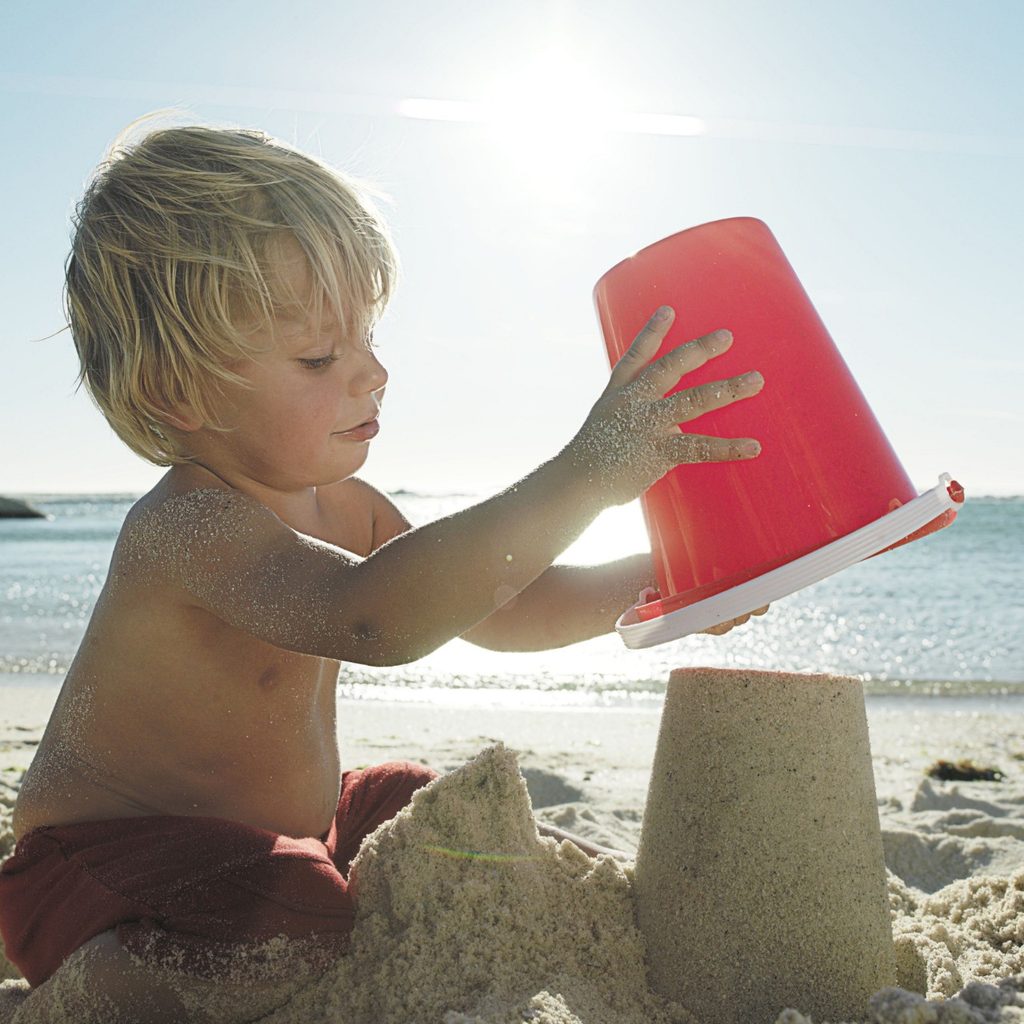
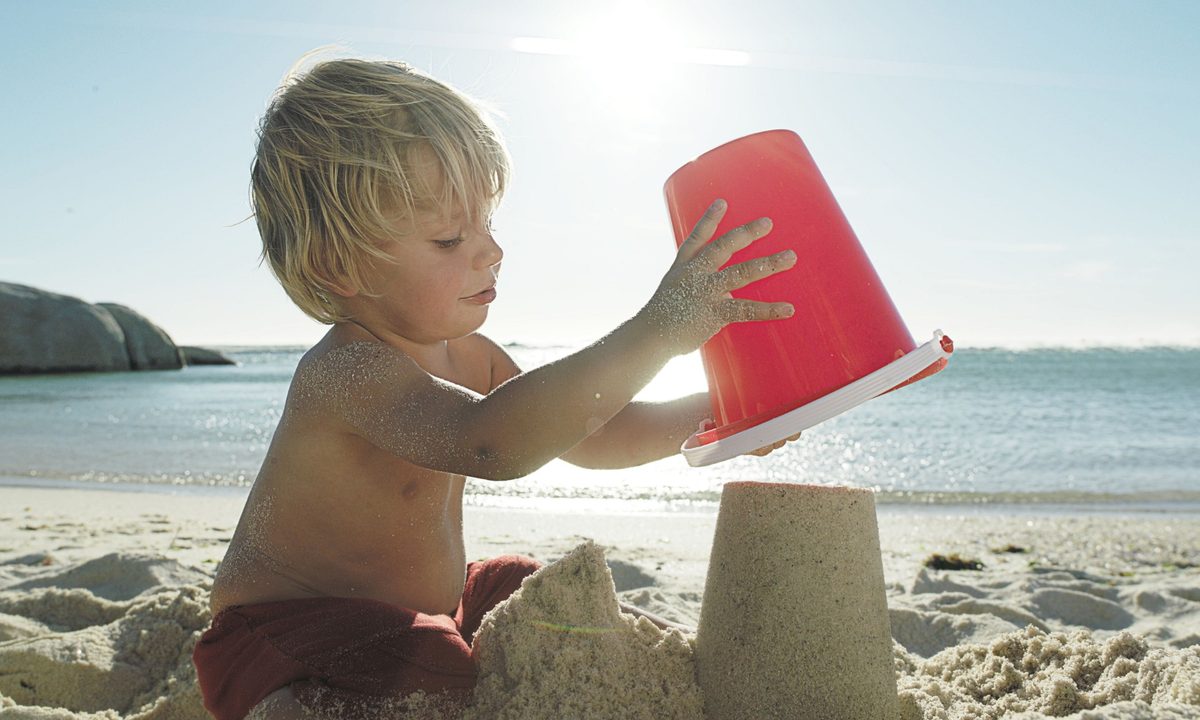
Building the classic bucket-shaped castle
Nothing is more classic in sandcastle construction than the common bucket. Your child can use nearly any bucket to achieve their desired sandcastle structure. Here's how to craft a classic bucket-shaped sandcastle.
Step 1: It is best to get your child a small bucket that is manageable for their size.
These days, there are a variety of great buckets to choose from. You can get one in their favorite color and let them choose the shape for their castle. Typically, cylindrical buckets are great for creating a basic design. For more texture and interest, look for rectangular buckets that are designed to look like a majestic castle.
Step 2: To create their sandcastle masterpiece, your child needs to fill up the bucket with damp sand, pack it down, flip it over, and lift it up to reveal their castle.
It'd best to show your child how to do this once or twice if they have never done it before. They can catch on quickly and be on their way to constructing stunning castles.

How to sculpt sea creatures in the sand
Another fun way to enjoy your day at the beach is to create sea creatures in the sand. Here's how you can create yours.
Step 1: Another great sand creation is to sculpt directly in the sand.
To do this, your child has to create a mound in the shape of their favorite sea creature and then add in the details.
Step 2: You can encourage them to sculpt basic creatures like whales or sea turtles.
To help them out, you can trace a design in the sand and let them construct the mound and add in the details.
Step 3: Encourage them to use shells and rocks to add details.
The shells could be to create sea turtles and the rocks could be the eyes of a whale.

Make a mound and add decorations
Sometimes, the simplest thing you can do with sand is to make a massive mound. Mounds are fun for kids. They can build it up as high as they want and make it as wide as they desire. Mounds are also great because they don’t have to be perfect. A mound can be lumpy and uneven, so your child can go all out with whatever design they want.
Step 1: Encourage your child to make their mound into a mountain range or a mysterious cave.
Step 2: Suggest they use sticks or other thin tools to draw details like cave openings.

How to make drip art sandcastles
Drip art is a truly fun way to decorate anything. Your kiddos can also use this simple technique to create an easy sandcastle.
Step 1: To make the sand is the right texture, fill up a bucket with half sand and half water. The sand should be fully submerged in the water in the bucket.
Step 2: Show your child how to create drip art.
Pick up a handful of sand and let it slowly drip out of your hand and onto the ground or an existing sandcastle. The drips will grab onto each other, creating blob-like and interesting designs.
Step 3: Your child can make a whole sandcastle out of this method or just use it to decorate their other sandcastle creations.
Regardless of how they use the drip art method, they will love how fun, squishy, and entertaining it is to play with dripping sand.

Build downward to make a sandcastle
When it comes to building sandcastles, there are no rules. So, if your child isn’t all about the traditional sandcastle look, encourage them to build downward. Essentially, your child is digging a hole. The edges can be built up around the hole for protection from enemies.
Your kiddo can dig a hole big enough to create a spot to play in. Fill it with water and toss in some toy boats. This interactive and simple sandcastle can keep the kids entertained for a while. It can even be expanded to include other sandcastles like the ones mentioned above.
No matter how old your child is, building a sandcastle is an excellent way for them to express their creativity and personality. Building a sandcastle though isn't always easy. That's where these basic, how-to-make-a-sandcastle-with-kids steps and tips come in. Even though children are imaginative enough on their own, these simple sandcastle ideas will help inspire them to create great sandy masterpieces in no time.
You can sit back and enjoy watching them build their easy sandcastle creations because these ideas are designed to be simple enough for your child to accomplish with little to no help. It will help them feel independent and allow them to show off their final product to you with pride. Make your next beach trip a little more unique with simple and easy sandcastle ideas that any child can master.