
  1. Home
  2. Activities
  3. Evergreens

9 fun things to do at a sleepover: A checklist for your kids

Try these fun and entertaining sleepover activities for kids of any age

Add as a preferred source on Google
Kids at a sleepover
Monstera Production / Pexels

The time has come. You have agreed to let your child invite their friends to your home for a sleepover. Now, you need to figure out how to keep a group of kids entertained for the night. There’s no need to start having a panic attack. It can be easy if you break down the activities a bit. If you need help with how to keep the kids occupied, we have a list of things to do at a sleepover, no matter what age group, so everyone is tuckered out by bedtime.

Food-related activities

Kids making their own pizza.
Kampus Production / Pexels

Make your own pizza

Who would say no to pizza? Making your own pizza at home is easier than it seems. This way, each child can create their own. You know they will eat the whole thing because kids who help cook are more likely to eat the food. You could use English muffins, flatbread, mini bagels, or whatever else as the base and let the children pick their toppings.

Recommended Videos

Put together themed charcuterie boards

From holiday to movie themes, let the kids pick out what kind of charcuterie board they want to create and gather the ingredients. Children are so creative, and everyone will love to see what the finished projects look like. You could turn it into a contest and have everyone vote on their favorites, but any activity where you get to eat at the end is a winner for everyone.

Make baked goods

Have you been meaning to make those cookies for weeks? Well, make it a fun activity for the kids to do at the sleepover. Children love to bake and be in the kitchen, and it boosts their self-esteem, but the best part is everyone gets to enjoy the baked goods. If you have any of those themed cookbooks, let the kids pick out a couple of things to bake from there.

More relaxed activities
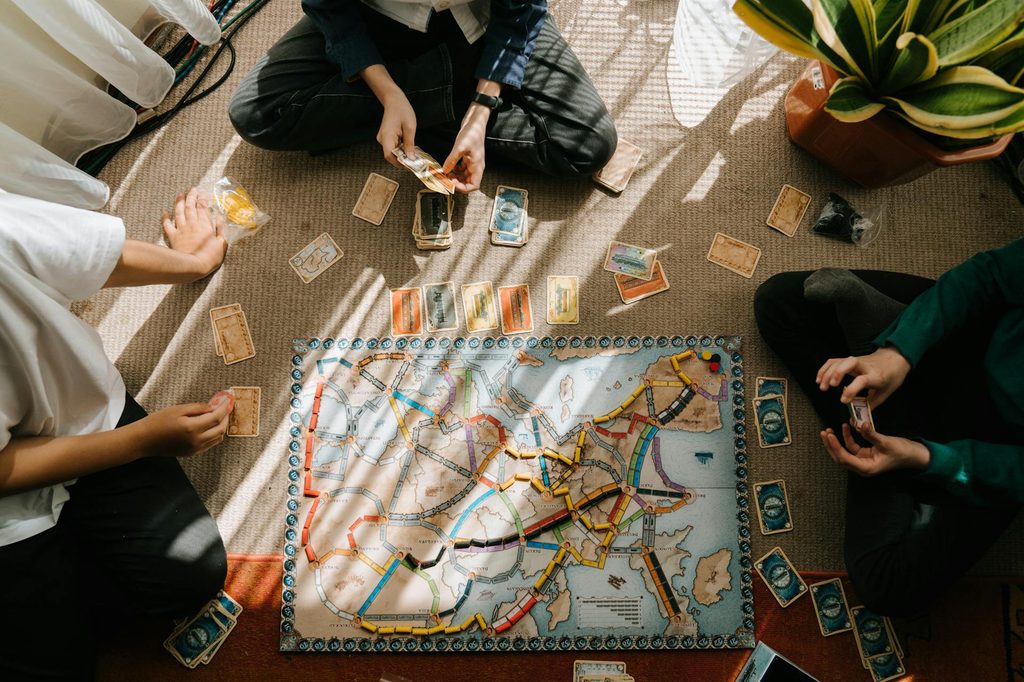
Kids playing a board game.
cottonbro studio / Pexels

Dust off the board games

Board games never go out of style. You could make it a retro night and play games like Candy Land, Chutes and Ladders, or Mouse Trap. It doesn’t matter how old the kids are, when someone brings out Hungry Hungry Hippos, everyone is out to win.

You could keep it funny and play games like What Do You Meme, Would You Rather, or Cards Against Humanity. They make family editions and have kid-friendly packs, so you don’t have to worry about those inappropriate cards.

Have a bookish sleepover

Depending on the age of the kids, you could do this a few ways. You could have a story time with the children’s favorite books, have the children bring their favorite books to read, or have the group all read the same book.

Make it special by playing the show or movie version of the book, have the kids dress up as their favorite character, or serve themed foods (or just call them by themed names). If you have time to go above and beyond, print out or look up questions for the kids to discuss at the end of the night.

Decorate a wearable item

An easy way to keep the kids entertained is to have them create a masterpiece. You could get solid socks or shirts and have them use paint, fabric markers, or puffy paint to decorate. You could always ask the kids if they have a shirt, shoes, or other clothing item from home that their parents wouldn’t mind them decorating. If the weather is nice, take this one outside with a drop cloth for easier cleanup. 

Drain-the-energy activities
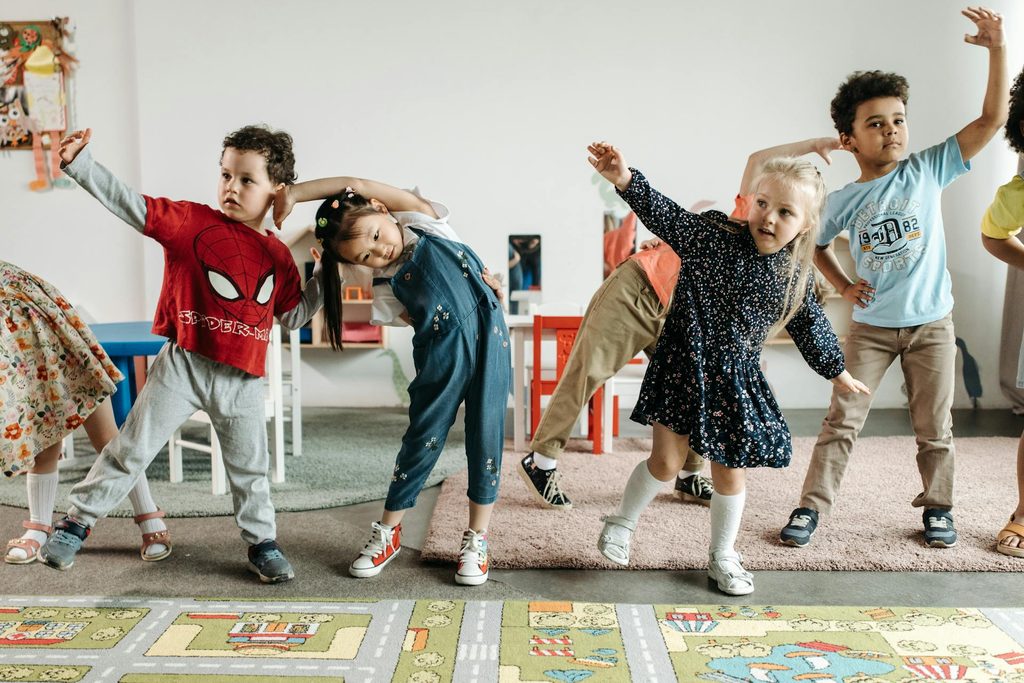
Kids dancing.
Pavel Danilyuk / Pexels

Do a dance party

Kids love to dance, and parents love activities that tire the kids out. Let the kids make a (parent-approved) playlist, and let the children dance their hearts out. You could grab glow-in-the-dark bracelets, necklaces, sticks, and other items and turn it into a glow-in-the-dark dance party.

Have a scavenger hunt

Oh, the joy parents get from watching their kids do an Easter egg hunt shouldn’t be a once-a-year thing. Create a scavenger hunt for the kids, no matter what age you’re hosting. You could hide little trinkets, toys, or candy around the house and outside for the kids to find by solving clues or do an Easter egg hunt-style thing. Let the kids use their minds and run around looking for the prizes so they are nice and tired for bed.

Sing it out

Whether you do true karaoke or put a playlist on and let the kids perform to their favorite songs, getting the group to perform to their favorite songs gets everyone in a good mood. You could let them do performances with costume changes or come up with dances, or put the music video on in the background and let each person sing along.

You don’t have to go broke creating any of these activities. Chances are, you may have a good portion of the items already around your house or could create them easily with a trip to the dollar store. And don’t be shy about asking the other parents for supplies. Many times, if they don’t have to be the one to host, they will send their child with whatever you need. No matter which things to do at a sleepover you choose to try, the kids will have a blast, and they’ll make lots of fun memories.

Is CoComelon ‘Good’ for Kids? Experts Cite Research Pointing to ‘Yes’
Dad brushing teeth with daughter and looking in the mirror with CoComelon

Parents navigating the landscape of kids’ media often question which content genuinely benefits their little ones. Among the most popular kids’ shows today, educational programming like CoComelon has captivated young audiences worldwide, but many caregivers wonder: beyond its ability to entertain, does this musical series offer real developmental value?

Research and child development experts have revealed many details about the educational framework behind the animated series, its potential benefits, and how caregivers can maximize positive outcomes when incorporating such content into their kids’ routines.

Read more
The best low-stimulation movies for calming toddlers
Make sure movie time does keep your toddler awake
Cute toddler watching a movie on a laptop

Screen time isn't always a bad thing for toddlers. Sometimes, when your little one isn't feeling well, watching a soothing movie is a perfect pick. Low-stimulation movies for toddlers offer better quality screen time than movies that are loud and packed with action. Sure, those are fun and can be super exciting for kids, but the impact on their cognitive development is often negative. Those overstimulating movies can be too much for toddlers, leading to tantrums, meltdowns, and an inability to fall asleep.

Think about how difficult it is to fall asleep after watching a horror or suspense movie right before going to bed. Your mind is going in different directions, making it hard to relax and drift off to sleep. Well, it's the same for toddlers. So, what are the best low-stimulation movies for toddlers to watch and what exactly are they?
Best low-stimulation movies for toddlers

Read more
When should your baby be able to stack blocks? Here’s what to know
Know when babies can nest cups and balance blocks by themselves
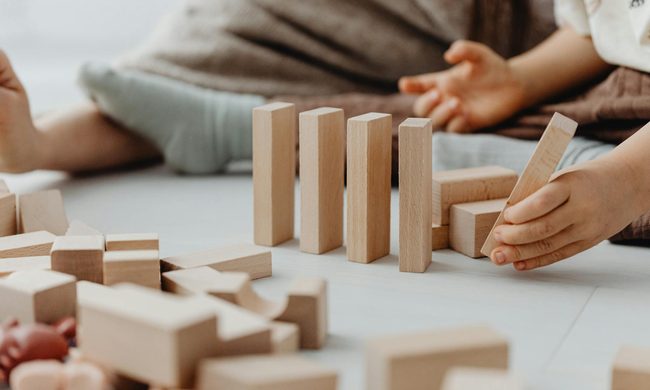
A child playing with stacking blocks

When you’re a new parent, the moment someone gifts your child their first set of blocks, you become obsessed with baby learning and when they should be able to turn the blocks into beautiful creations of their imagination. While stacking blocks are an important developmental milestone for babies, it’s also one of those things that evolves with time and practice. Sitting down to play blocks with your little one is an open-ended game that teaches children physics, resilience, and fun. When can a baby stack blocks and nest cups on their own without your help? Here are some general guidelines so you know how to measure your child’s development with their gift of stacking blocks and how to help your child get the hang of it on their own.
When can a baby stack blocks and nest cups? By age

By 6 months old
At this age, your baby might not be ready to stack blocks the way you want them to, and that's okay. This doesn't mean you can't play blocks with your child or that you shouldn't let your child have fun figuring out what the blocks are. It’s perfectly normal for your 6-month-old to gnaw on blocks or simply hold one, just don't expect them to build the Eiffel Tower just yet.
By 12 months old
This is the stage of banging items against each other and blocks or cups are no the exception. If you offer your child blocks, there may still not be a lot of creativity yet. But keep in mind that knocking things down is a favorite activity of 1-year-olds, so your child is right on track if that's all they do. More likely than not, they’ll be happy to destroy any block tower you build. If your little one can’t get enough of knocking down a stack of blocks, rest assured that they’re right on schedule.
By 18 months old
When can babies nest cups? By a year and a half, stacking is the name of the game. After all, your little one is now officially a toddler and proud of it. If you haven’t done so already, this is a great time to introduce baby blocks. At this point, most kiddos are able to stack two or three blocks on top of each other with ease.
By 2 years old
Don’t be surprised if your baby’s block masterpieces start to get taller by age 2. With improved coordination, your child shows better stacking skills and may be able to balance up to seven blocks on top of each other. This is the beginning of sorting for many young children. If they’re now stacking masters, go ahead and challenge your budding genius to sort their blocks by color or separate them in groups.
By 3 years old
Free play takes a life of its own by age 3. At this point, blocks are much more than meets the adult eye. Your child’s imagination is flourishing, and they’ll start to build tunnels, bridges, or forts with just a few blocks. This is the perfect moment to introduce your toddler to teamwork. If the two of you work together, it’s easier to build tall towers and solve construction problems. Get your child's imagination to full speed and see what they create with blocks of all colors and shapes.
The benefits of stacking blocks

Read more