Just when you get the hang of bottle or breastfeeding, your child is ready to start on solid baby food. While introducing your baby to solid food is an exciting milestone, it can also be quite nerve wracking for first (and even second and third-time parents, too). To make things more complicated, many well-known baby food brands list stages on their products that don’t always align with one another. There are varying beliefs about which foods to introduce first while the consistency go age-based foods tends to be more agreed upon. Of course, make sure to ask your pediatrician if you have any questions about what’s safe to feed your baby. The best way to make the process manageable and palatable for everyone involved is to become well informed about what baby food stages are and what’s included so you have a clear picture of what’s safe to feed your baby at every age. It’s important to note that infants under 12 months should never be fed honey due to risks associated with botulism, or overfed because it may increase abdominal discomfort, and cause crying.
Stage 1
Stage one foods are the first solid foods your baby will eat. These foods are typically introduced around the four-six month mark. Babies’ digestive systems are not equipped to eat solid food prior to this point so even if your three month old expresses interest in your lunch, it’s best to let them feast with their eyes only until they are a bit older. According to the CDC, the AAP recommends children be introduced to foods other than breast milk or infant formula when they are about 6 months old. The World Health Organization also agrees with the six month age marker for solid foods. Your pediatrician may give you the green light at four months and it’s up to you to determine whether you want to get started or wait till six months.
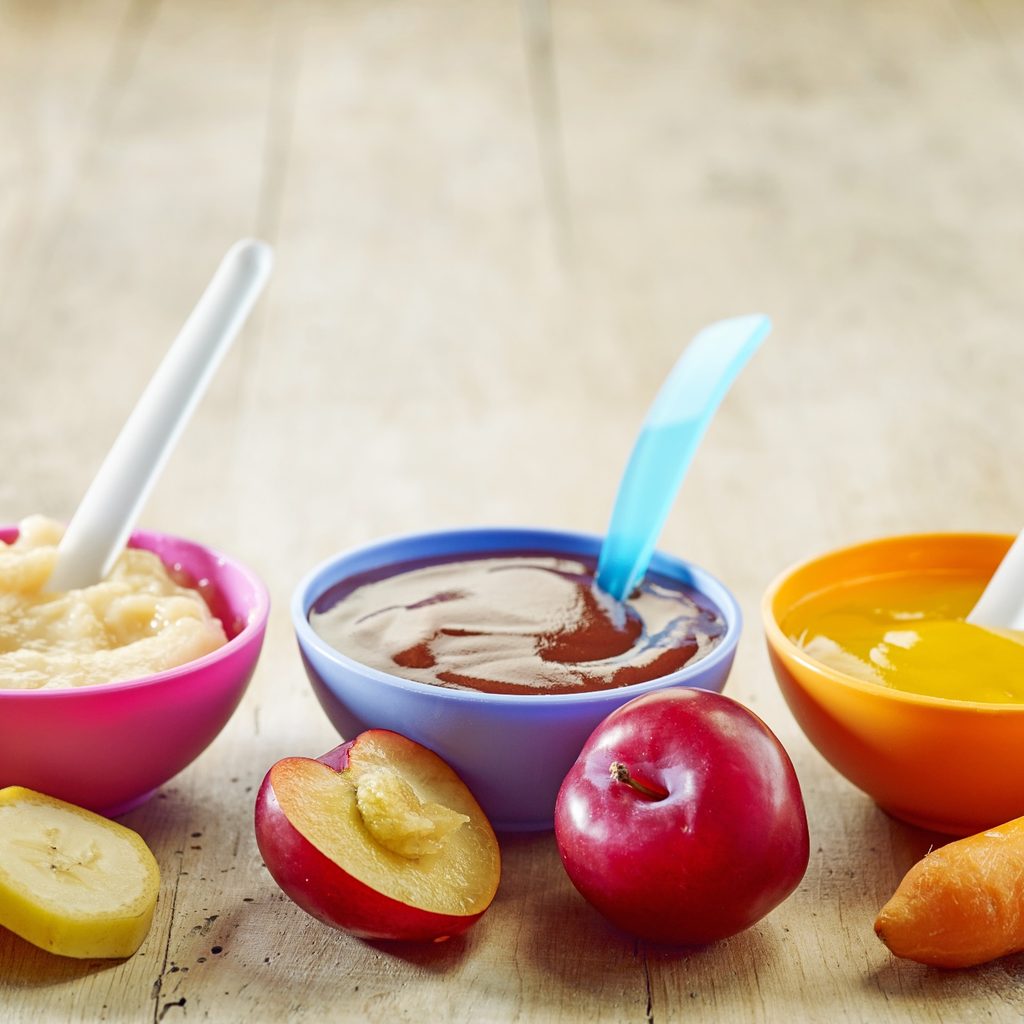
Babies store iron from their time in utero but these levels begin to drop around nine months. Many iron-fortified cereals are recommended as first foods but you can also skip these and start off with naturally iron-rich vegetable, meat, and fruit purees. Generally, the best first fruits and vegetables to feed your baby are ones that are easy to puree to a safe consistency. This includes bananas, avocados, sweet potatoes, carrots, squash, peaches, and apples. For meats, pureed turkey or chicken work well. Make sure the consistency of all stage one purees is thin and doesn’t contain any chunks. Add a little breastmilk or formula to ensure these first purees are easy for your little one to eat.
Stage 2
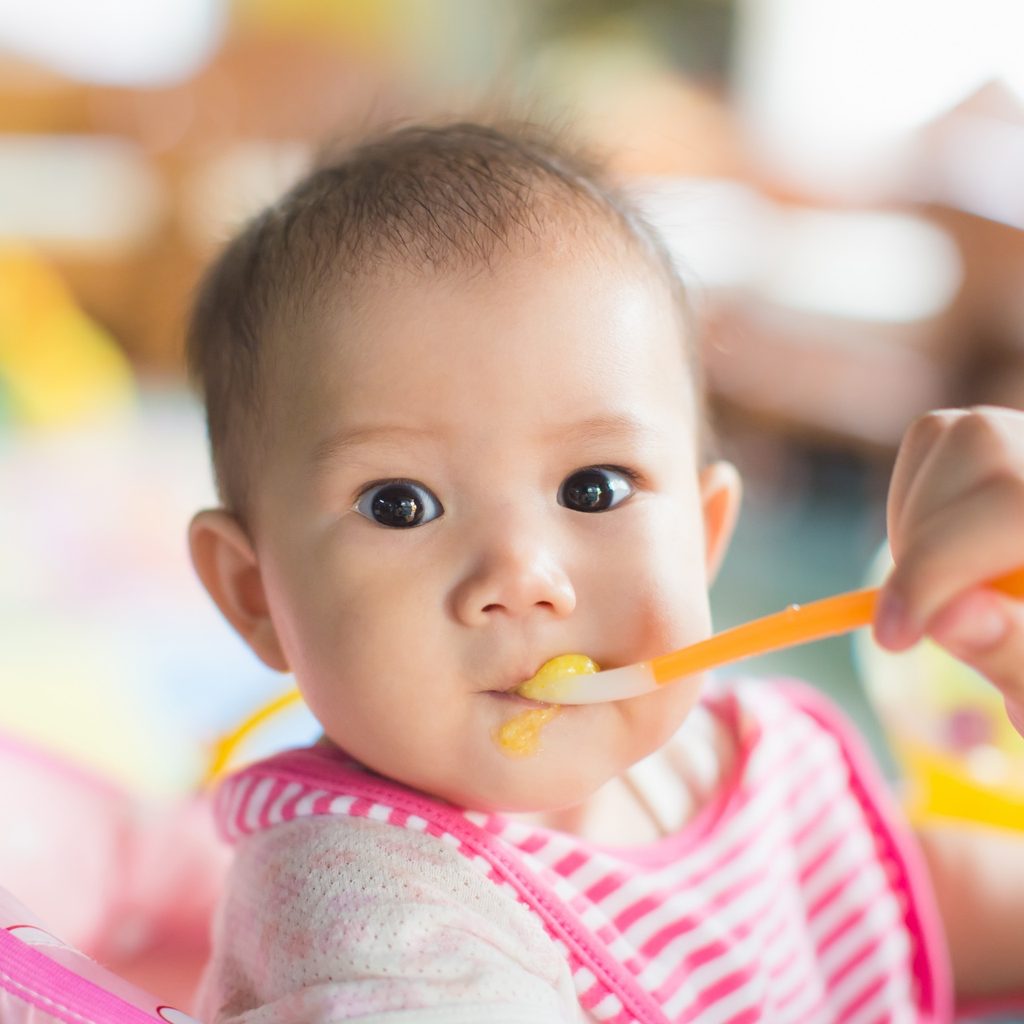
Stage two foods are typically introduced around the six to eight month mark depending on when your baby started on solid foods. How do you know if your baby is ready? If your baby is easily eating and swallowing stage 1 foods. Stage two foods include all of the stage one foods with the addition of even more fruit and vegetable options like mango, blueberries, broccoli, zucchini, strawberries, beets, parsnips, asparagus, and chickpeas. At this stage it’s advised to start introducing common allergens as well such as egg yolks, cheese, yogurt, and almond butter. Be sure to watch your baby closely for allergic reactions after feeding any new foods. The fun part is that now your baby can begin having combinations of purees rather than just one at a time.
These stage two foods can have a slightly thicker texture than stage one foods. The idea is to start to introduce the feeling of chewing and swallowing foods with a thicker consistency while being mindful that your baby is still adapting from an all-liquid diet and may not have many teeth yet. Once your baby develops the pincer grasp, it’s a sign that they are able to eat small cereals like Cheerios and puffs.
Stage 3
Stage three begins around nine to twelve months when your baby should be able to eat almost any food so long as its cut up in small enough pieces and soft enough to be easily chewed. Typically, a younger baby, like a six month old should not be eating stage three baby foods unless they are pureed to a stage two texture.
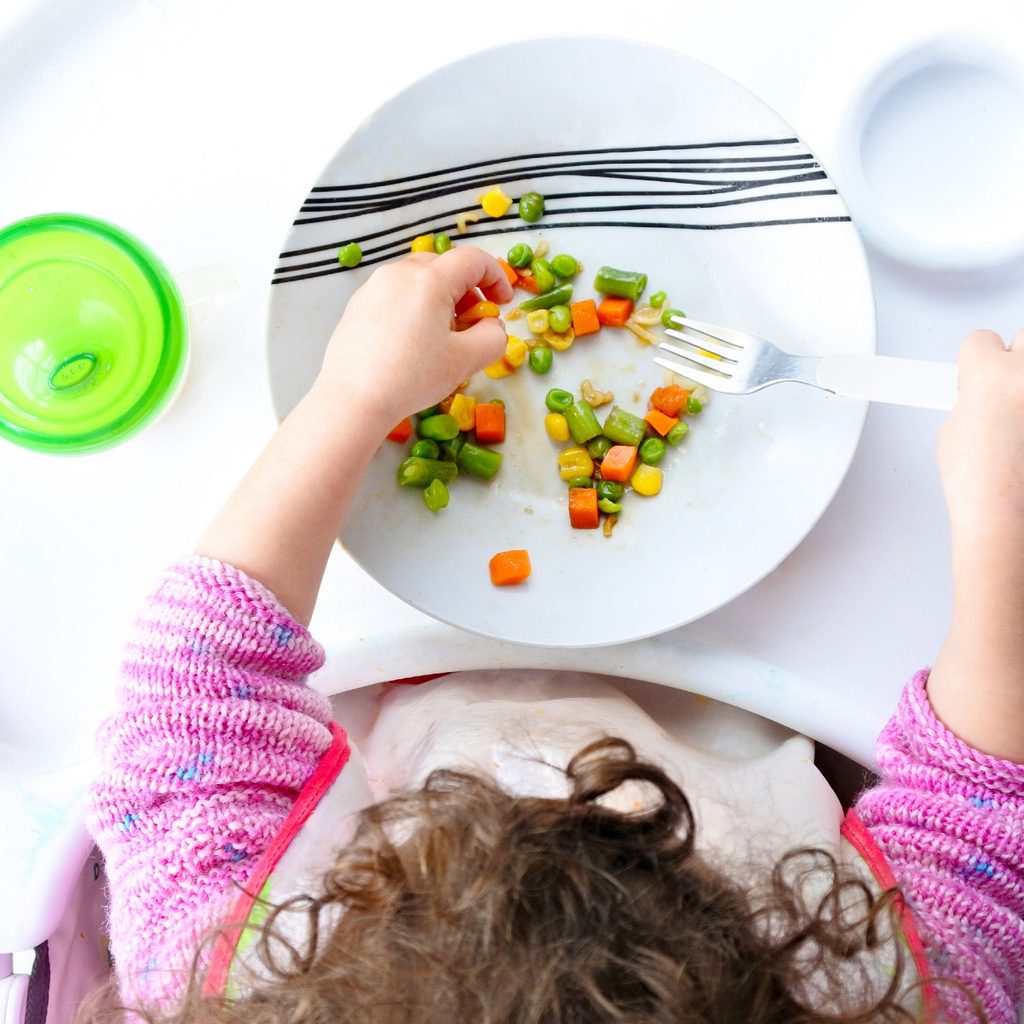
For stage three foods, babies can start eating pasta cut up into small pieces, shredded and ground meats, tofu, and scrambled eggs. The menu opens up considerably at this point and your baby should be able to eat most of the foods you are already eating as a family.