

When a woman finds out she is pregnant, part of the initial planning is figuring out maternity leave, from when it will start to how long it will be. While we immediately think of the time the mom will take off work for the baby, what about the dad? Do men get paternity leave? Here’s what you need to understand about dads taking time off work for the birth of a child.
If men get paternity leave, here’s how they can take it

There are a few options for the dad to take time off work for the birth of a baby, and it’s all pretty similar to how a mother would take maternity leave. There are types of leave dads can’t take since they aren’t the ones having the medical procedure or going through the actual birth, but there are some workarounds.
Take FMLA
FMLA (Family and Medical Leave Act) allows mothers, fathers, and non-birthing parents to take up to 12 weeks off work to care for a new child. The time off is unpaid, but your position will be there for you when you return. There are rules and stipulations to use FMLA depending on where you work and for how long, and you may not qualify to use it under certain conditions, so talk to your employer as soon as you find out your partner is pregnant to know your options. FMLA is amazing if you qualify, but please remember it is unpaid.
Use your PTO and vacation time
Another way to take some time off (and still get paid for it) is to use your PTO and vacation time. The second you know your partner is pregnant, start saving up your time. Talk with your HR department to see how much time off you can stack together and see if they will work with you on how to best use your time. If you can’t use it all at once, see about peppering days off throughout the week to get you down to only working one to three days a week so you can still be home quite a bit.
Use unpaid time
Another option is to talk to your HR department about unpaid time off. Depending on how long you have been with the company, you could be entitled to an extended unpaid leave or a sabbatical, or your work will let you take time off for certain things like a medical issue or the birth of a child. This is another unpaid way to take time off, so you need to plan appropriately.
What is paternity leave?

Let’s backtrack for a moment and define what paternity leave is. Paternity leave is the ability of the father to take time off work to stay home and care for the baby. It’s time for the dad to bond with the baby and help the mom in her initial recovery. It’s when the father and baby to get to know each other and for the dad to help in the adjustment of this new addition.
In the U.S., there isn’t a universal paid paternity leave program. There isn’t even a maternity leave program nationwide, so it shouldn’t be too much of a shock there isn’t a national paternity leave. The U.S. is one of only six other countries that doesn’t offer paid parental leave. But there are ways for a new dad to take time off work to share the load during those first few weeks to months (as we’ve described above).
We just want to say that every company and every state has its own policies when it comes to what leave is paid, unpaid, and guaranteed for the birth of a child. Check with your state and your company’s HR department for exactly what you are eligible for and how your leave would work for your specific situation.
Why dads should take paternity leave
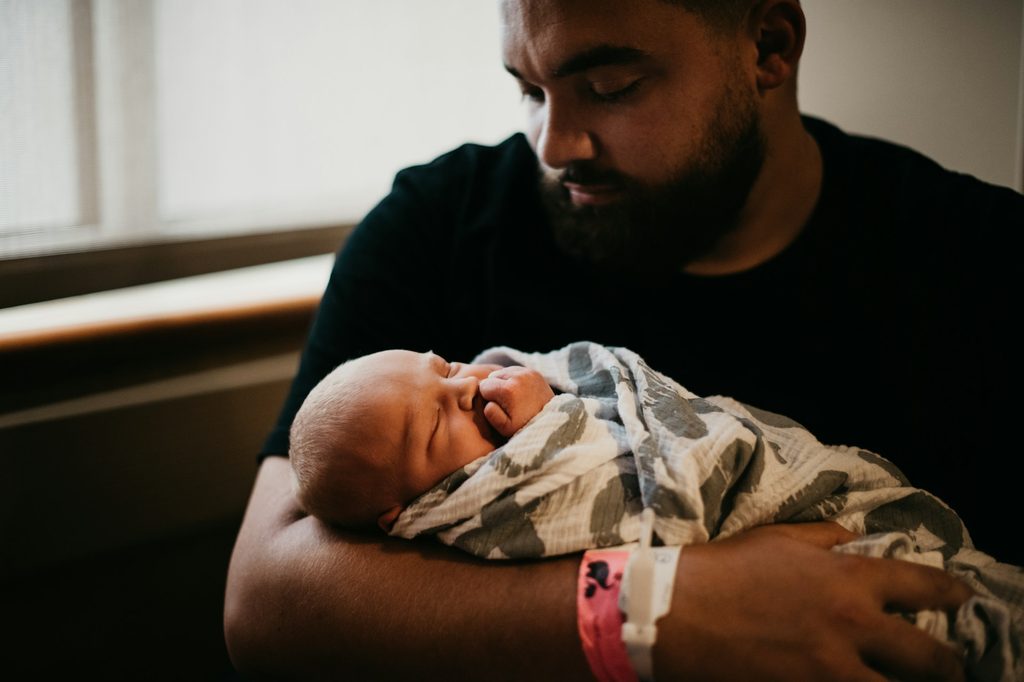
If one more person says a woman on maternity leave is on vacation, we will scream. Recovering from birthing a whole human is not a vacation. Dads should take paternity leave to be a partner to the mother and support the family emotionally and physically in a way mom can’t right now.
Most importantly, dads should take paternity leave to get to know their new child. Mom has had nine months with the baby already, so dads have catching up to do. Family time is vital, and those initial weeks and months are the most chaotic as you welcome this new person into your family, so to have one member missing will make it more difficult.
Why dads don’t take paternity leave

There are several reasons why dads don’t take paternity leave:
- Afraid of losing out on raises or promotions at work
- Don’t want both parents on unpaid leave
- Worried about bills piling up
- Job discrimination
- Dads don’t think the mom needs the help
Men don’t take paternity leave for the same reasons why a lot of mothers in the U.S. don’t take their full maternity leave. The main reasons come down to missed money, being passed for promotions, and worrying about household bills stacking up.
If Mom had to take FMLA and doesn’t have any short-term or long-term disability to bring in any money, the thought of both parents being on unpaid leave can be scary. Just like females worrying about getting pregnant and having that throw off their careers, men think along the same lines.
Women having a baby is pretty straightforward. Get pregnant, have the baby, and take off work. But the question: Do men get paternity leave? might be a bit trickier. It isn’t standard in the U.S. for dads to take time off, so people don’t even know they can. If you or your partner is going to have a baby or you know someone who is having a child, gently approach the subject of paternity leave for the dad. Money comes and goes, but those initial weeks and months when baby comes earthside never happens again, so take the time off work if you can.