
Mangoes are delicious, but they can be a bit more intimidating than other fruits to know how to cut, store and prepare. They make excellent additions to a baby’s diet because they are packed with fiber, Vitamin A, Vitamin B6, Vitamin C, folate, and iron.
For instructions on how to make mango baby food, read up on every step from the grocery store to your baby’s tummy.
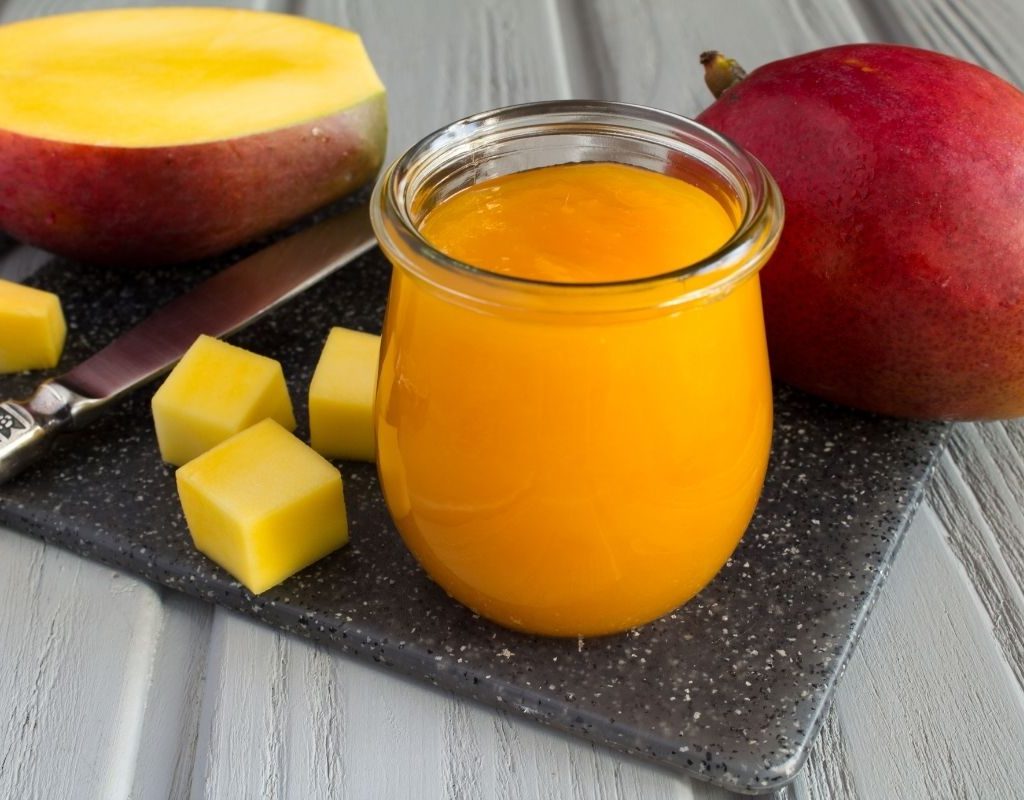
1. Get the mango
You can buy mangoes fresh or frozen. Which you choose depends on what type of food you’re making, though either one will work for most recipes.
When shopping for fresh mango, note if it feels hard (underripe) or soft (ripe). If you buy overly soft, it can become a mushy mess when trying to cut it. Mangoes that are too hard won’t work for baby food. Air on the softer, riper side for making a mango puree.
You can also freeze your own fresh mango to make it last longer. To do this, cut the mango into cubes (see below) and freeze the cubes instead of sticking a whole mango into the freezer. Don’t put a container of cubes right into the freezer either. Freeze the pieces on a piece of parchment paper on a tray so they freeze separately instead of as a blob. Once frozen, you can then combine the frozen pieces off of the tray and into a container in the freezer.
To serve mango pieces on their own to gum or chew, you can use either fresh or frozen. For a teething baby, a frozen mango cube could be excellent natural relief. If serving fresh raw mango cubes, consider “breading” the cubes by putting crumbled baby wafers on the outside so it isn’t so slippery to hold.
Frozen mango is already pre-cubed, so taking just one out is easy. Frozen mango also works well for making a smoothie.
2. Cut the mango
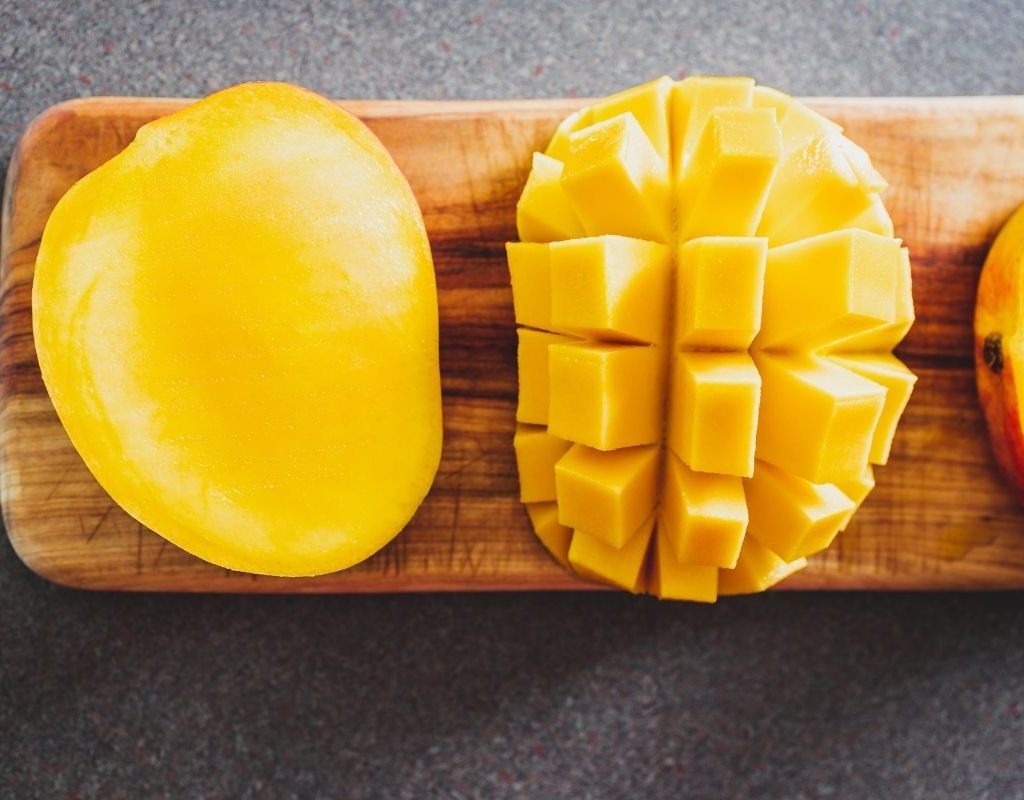
Mangoes have a pit in the middle, and you want to cut down on either side of the pit to create two almost-halves and a third piece that has the pit in it.
Hold the mango with the stem facing straight up or down and cut with a sharp knife down one side of the pit, then the other side of the pit. Take each almost-half (called “cheeks”) with the peel side down and make cuts in it in one direction and then the other to make squares without cutting into the peel. The cut segments should then look like the center mango piece in the image above.
You can remove the cubes from the peel by plucking with your fingers, scooping them out with a spoon, or by scraping them off with a knife along the peel. You can then cut a few more pieces from the middle piece with the pit.
If you’re not using the entire mango immediately, the pieces can last in the fridge for 3-5 days in an airtight container.
3. Puree the mango
If using frozen mango, first thaw out the pieces you’ll use for your puree before blending (unless making a smoothie). You can pop the pieces into the microwave very briefly, or you can let the frozen pieces thaw in the fridge or counter. Don’t worry about any water collecting in the container, as the frozen mango thaws; you can use that in the puree, too.
Add diced mango with a liquid (either water, breastmilk, or formula – water from thawed frozen mango counts!) into a blender and blend until smooth. For one cup of diced mango, use between two tablespoons and a quarter cup of liquid.
You can serve immediately or freeze the puree in an ice cube tray and pop out a cube of frozen puree to thaw whenever you want it. A serving for a baby 6-12 months is likely between half an ice cube and two ice cubes.
Serve mango puree on its own like applesauce or mix it with yogurt, baby oatmeal, or cottage cheese. Let your baby try feeding themselves with the spoon once they are 10 to 12 months old.
Mangoes are sweet but low in calories, so it’s wise to mix this puree with something with some protein to be more filling. You can also combine with other flavors of fruits and vegetables in a combination puree or smoothie. No matter how you use the puree, your baby is sure to enjoy it.