Understanding why your baby is fussy can often be a difficult task since babies are, by nature, fussy. However prolonged fussiness, especially around feeding time, can often be an indication that there is something truly bothering your baby. Although they don’t affect a large percentage of infants, milk allergies are the most common food allergen in early childhood, and they can make your little one incredibly uncomfortable.
Contrary to what some may believe, milk allergies in babies don’t only affect formula-fed babies. Babies breastfed by a person who consumes cow’s milk can also be affected. Milk allergies, lactose intolerance, and other food sensitivities can make your normally happy baby miserable, so it’s important to know how to tell that your baby might be allergic to milk and what you can do about it.

How do I know If my baby is allergic to milk?
Milk allergies, which are different from milk sensitivities and lactose intolerance, affect about 2 to 3 percent of babies, according to What to Expect. If your baby has a milk allergy it means her immune system has a negative reaction to the protein in milk. Milk proteins are found in infant formula and can also be passed through breastmilk. Some symptoms of a milk allergy in babies are:
- frequent spitting up
- vomiting
- signs of abdominal pain, or colic-like symptoms, such as excessive crying and irritability (especially after feedings)
- diarrhea
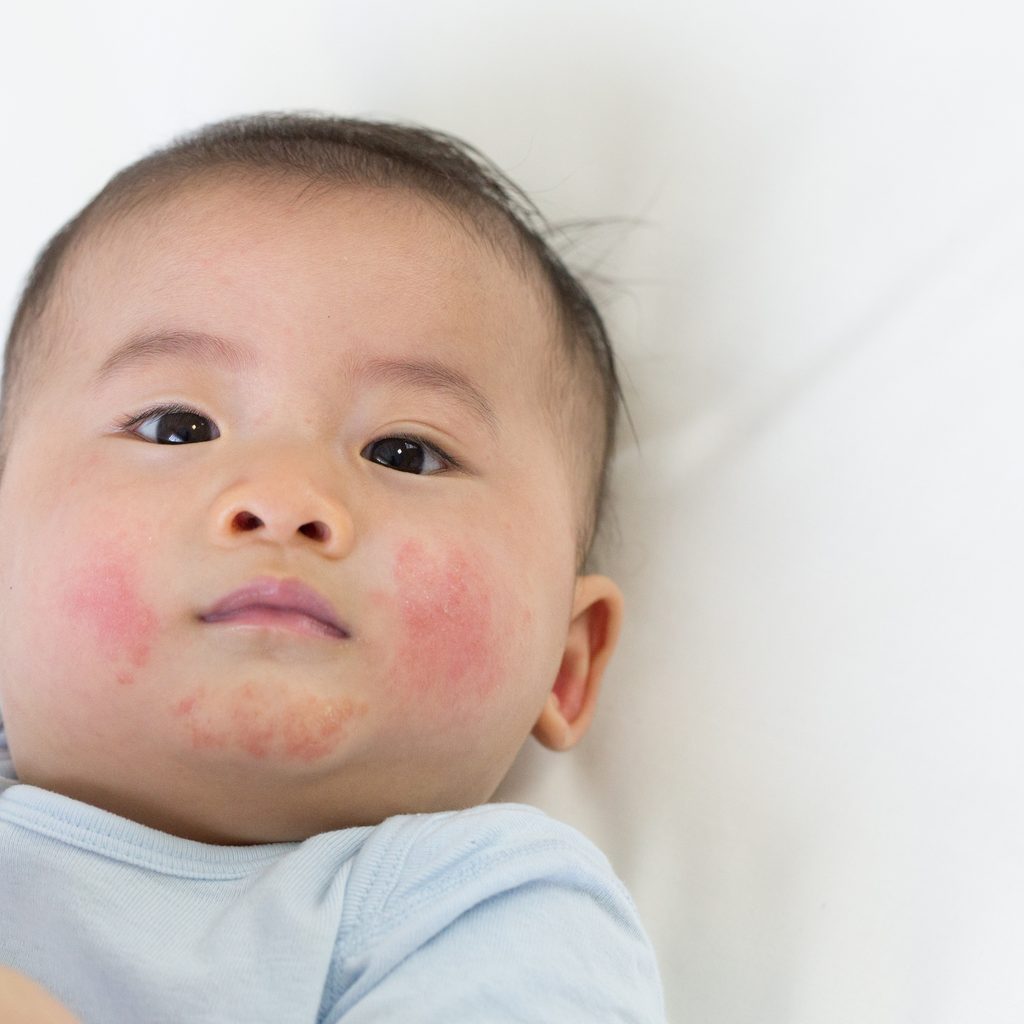
Other signs of a possible milk allergy include blood in your baby’s stool, hives, or other skin reactions like a scaly skin rash, coughing or wheezing, watery eyes and stuffy nose, trouble breathing, or bluish skin color and swelling, especially of the mouth and throat.
What does a milk allergy look like?
It’s not uncommon for babies to have loose bowel movements, so this can often be something that is overlooked by parents; however, if you notice your baby has multiple loose stools a day consistently or frequent diarrhea, it could be a sign that your baby has a cow’s milk allergy. Blood in the stool, a sign of gut inflammation, can also be a sign of a milk allergy. Your baby may also suddenly have an unexplained skin rash, hives, or eczema. Neocate notes that up to 70 percent of babies with a milk allergy have skin-related symptoms. They also note that almost half of all infants with reflux could be diagnosed with a milk allergy as well.
What does food allergy baby poop look like?
If you are the parent of a baby, there’s no doubt that you talk about baby poop a lot! Baby poop is one way parents can tell if their baby is feeling well or if they’re having digestive troubles. Camie Goldhammer, the community health center project manager with the Breastfeeding Coalition of Washington, explained to Parent Map that typically a breastfed baby will have “soft, sweet-smelling stools that are mustardy in color,” while a breastfed baby with a food allergy might have “constipation, diarrhea or foul-smelling stools that may be green with mucus.”
How is a milk allergy tested?
If you suspect your baby may have a milk allergy, you should consult your pediatrician right away. According to Nemours, your pediatrician may order blood and/or stool tests to help determine if your child is allergic to milk. He or she may also do a skin test where a small amount of milk or milk protein is placed on your baby’s skin to see if there is a reaction. Depending on the risk of a severe reaction, you may even be prescribed an epi-pen. A doctor may also ask you to eliminate all milk from your baby’s diet for one week to see if their symptoms improve, and then slowly reintroduce milk back into their diet. If your little one begins to exhibit symptoms again, your pediatrician may refer you to an allergy specialist.
The good news is that many babies who are diagnosed with milk allergies will grow out of them by the age of three, but until then it’s important to change your baby’s diet to ensure he’s comfortable and not consuming any milk proteins. If you’re formula-feeding, your doctor will advise you to change formulas to a hypoallergenic formula, while mothers who breastfeed will be advised to eliminate dairy from their diet. You should always consult a doctor if you’re concerned about a milk allergy with your baby. Nemours also notes that “if your baby has symptoms of a serious reaction (like swelling of the mouth or throat or difficulty breathing, or symptoms involving two different parts of the body, like hives with vomiting)” immediately call 911 and administer an epinephrine injector if you have it.
It can be overwhelming if you suspect your baby has a milk allergy, which is why it’s important to speak to your pediatrician to properly diagnose what may be bothering your little one. Even if your baby suffers from lactose intolerance or milk intolerance, your pediatrician can help advise you on the changes needed to ensure your baby is happy and comfortable, and how and when to begin to reintroduce milk and/or lactose back into the diet. Fortunately, most babies will grow out of their milk allergies, but because there is a risk of anaphylactic reaction with a milk allergy, it’s always best to contact your doctor if you have any concerns.