Easing back into a postpartum fitness routine after giving birth can seem daunting. You barely have time to brush your teeth let alone get to the gym, and who is going to watch the baby when you’re there? It can be stressful to leave your newborn in the care of someone else while you head to an exercise class. Not to mention, those sleepless nights might make you even less enthused about getting back into a good routine.
It can feel overwhelming, but these postpartum workout tips will help. It’s all about taking it step by step–literally. Of course, before beginning to work out again, you’ll want to get the all clear from your doctor.
Postpartum workout tips
1. Don’t push it
There may be pressure out there to “bounce back,” but your body has been through an experience it needs to rest and heal from, not be put through exercise boot camp. Your baby isn’t letting you rest, so don’t feel at all guilty to take every free minute to lie down or sleep. Feed yourself, shower, nap… Exercise does not need to be a priority in the first weeks after giving birth.
2. Start small
Think a walk around the block, not a Zumba class for your first time back to introducing movement into your life. You have to get to know your new body shape and abilities postpartum while also balancing your fatigue. Take a walk, lift one-pound weights in front of the TV, or do some stretching on the floor to start. Build up at your own pace.
3. Listen to your body
If you used to work out a lot and are itching to get back or if you never were a fan of the gym, listen to your body. If you get tired, take a break. If you have the energy or feel that some exercise could give you some energy, try it. You could injure yourself trying too much too soon, so keep taking mental stock of how you are physically feeling. If your bleeding increases, that means you’ve pushed yourself too far and need to reel it back.
4. Try yoga
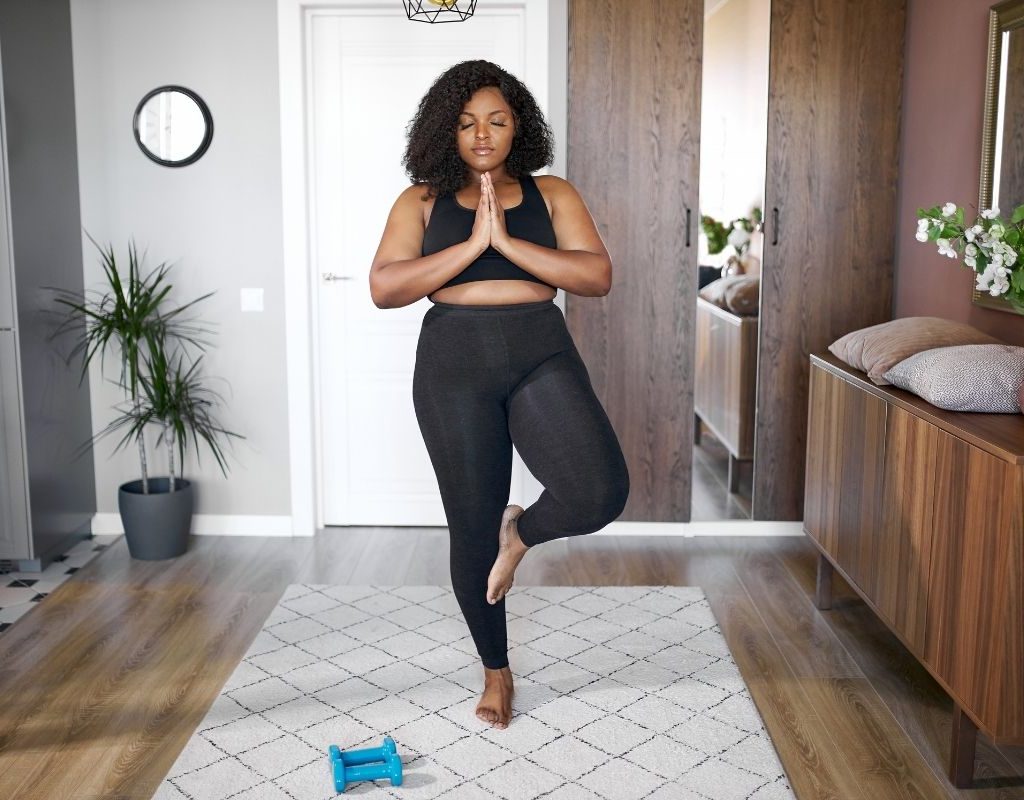
Prenatal yoga is popular for a reason, and postpartum yoga is just as helpful. You can do yoga alone at home watching a YouTube video class for free or get out of the house to take a class. Once you know some poses, you can do it on your own for just a few minutes at any free moment you get during your day, even making it part of your morning or evening routine. Yoga builds strength without any high-impact, speed, or machines, just your own body. It helps you stretch achy muscles and also quiet your mind and focus on your breathing. It’s beneficial both physically and mentally for new moms.
5. Involve your baby
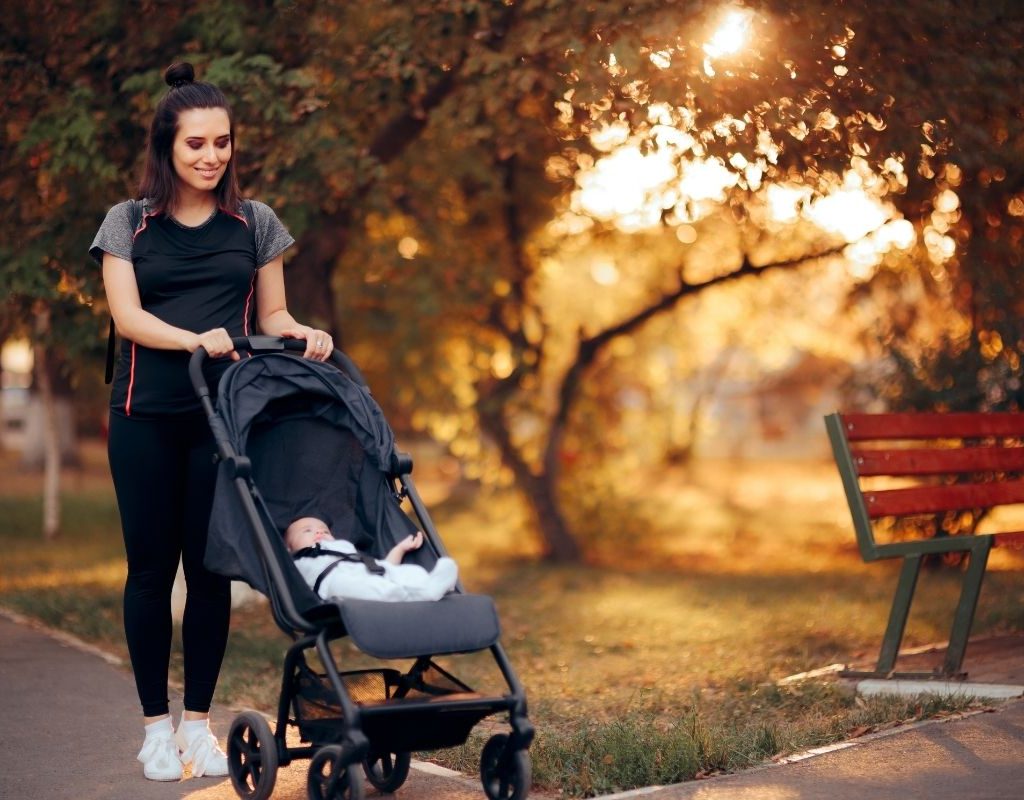
Take your baby on a stroller walk or jog or take a walk while babywearing. Lift your baby up and down 10 times in a row as if they were a weight. Put them on the floor next to you while you do yoga. This will help you extend your exercise time because your need to get back to them to attend to their needs will be erased since they’re already there, plus it’s nice bonding time.
6. Make time for yourself
While involving your baby is convenient, also take some exercise times to yourself. Taking an hour to exercise your body away from your baby is a wonderful mental break, and taking care of yourself may feel like a luxury but it is truly essential for your own mental health so that you’re able to be the best mom you can be… and also because you deserve it!
7. Set goals
The number on the scale isn’t the most effective measure of health. Set goals like being able to touch your toes, lifting your baby without your back aching, being able to walk or run for 5 minutes longer than yesterday, and other milestones unrelated to weight. Whether you want to work on self-care, feeling you again, flexibility, strength, or another fitness goal, celebrate the wins when you reach your target. Reward yourself with a book, a bath, or a treat when you reach those achievements.
Postpartum fitness doesn’t have to be a chore. Make it fit with your new lifestyle by incorporating your new baby and respecting the limits of your new body as you go. You’ll be able to build up to more and more over time, but there’s no need to rush. Focus on your health instead of weight loss, and be gentle with yourself as you go at your own pace.