
It doesn’t matter if you are first-time parents or think you’re old pros; when you have a cranky baby, you think the worst and go through the checklist of everything that could be wrong. Sometimes it’s as simple as gas or a wet diaper, but otherwise, you’ve checked the usual suspects, and the cries haven’t stopped.
When your child is an infant and they have a fever, it usually means one of two things — your baby is sick or is cutting a tooth — and they both could come with a warm little forehead. Here’s how to tell if that hot forehead is a teething fever or a sign your baby is sick.

The symptoms and how they cross over
Symptoms if your baby is sick
A sick baby makes the whole house miserable. That first sneeze or cough might get a little cute reaction, but by the second one, parents go into doctor mode.
Common sick signs
- Consistent cough
- Runny nose
- Sneezing
- Diarrhea
- Increased grumpiness
- Extra sleepy (get those cuddles)
- Warm to the touch/high fever
Symptoms if your baby is teething
Teething is not fun for the baby or the parents. But, to be fair, having a tooth rip your gums open would make anyone extra cranky.
Common teething signs
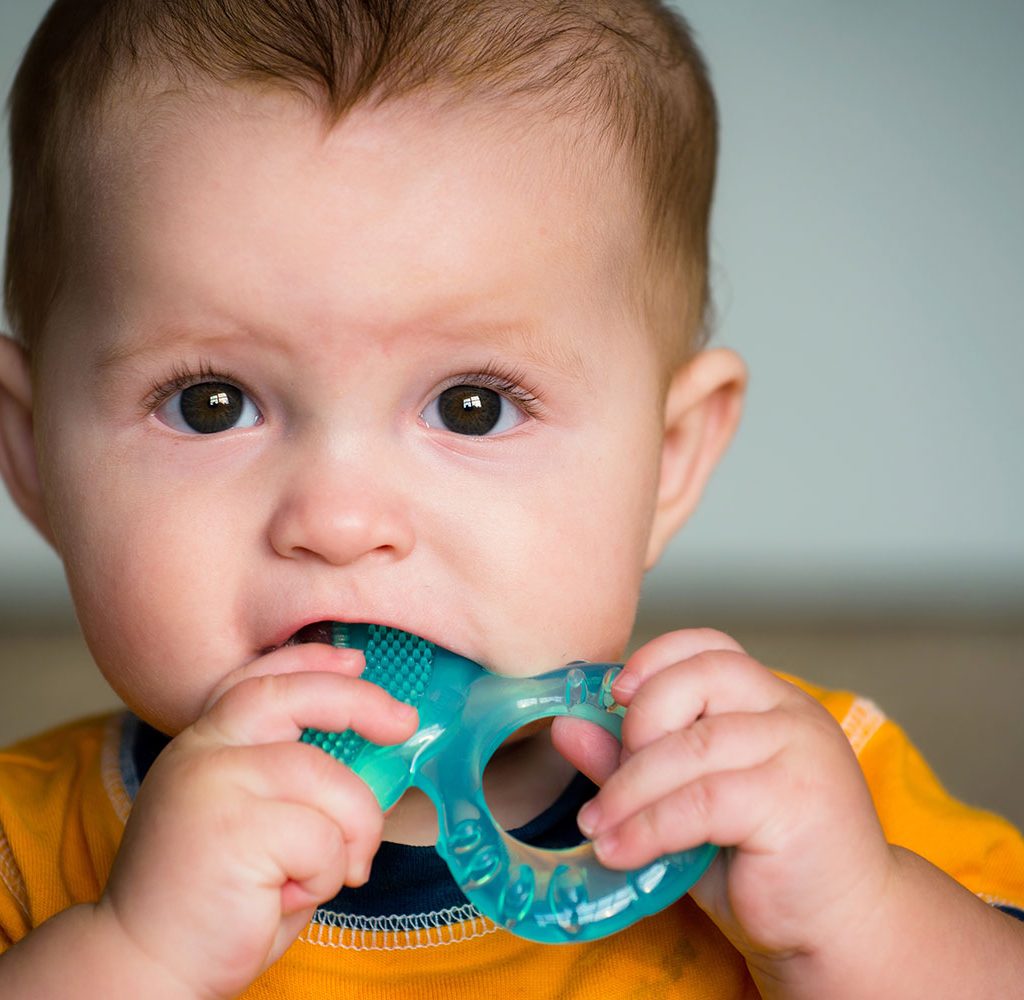
- Chewing on everything (clothing, hand, toys)
- Excessive drooling
- Touching or rubbing their face and head more often
- Not eating as much
- Not sleeping like normal
- Increased grumpiness
- Warm to the touch and low temperature
The crossover of teething and being sick
Where things get confused is a baby will have symptoms that could be either cutting a new tooth or getting a cold. The fun for you as a parent is to figure out which it is.
But not every baby is the same. Some teething babies have a runny nose and some sick babies don’t want to sleep. Since babies can’t talk and won’t be able to tell the parents what the deal is, they need to inspect that baby a little closer.
How to tell if it’s teething versus sickness
Most parents go straight for the symptoms to mean a cold or other sickness. All those new people wanting to see and hold the baby bring all kinds of new bacteria and germs. Plus, no parent wants to see their helpless baby sick, so it’s where the mind goes first.
How to check if your baby is teething
Every baby will cut their first tooth differently and at a different age. Though around the 6-month mark is when those adorable front teeth usually start to pop up, it could be as young as 3 months old or as late as 12 months old before your child has teeth.
If your baby has been experiencing teething (or sickness) symptoms, the best way to figure out if it’s a tooth is to get up in their mouth. You could use the flashlight on your phone and have a really good look around in there. An obvious eruption of a tooth where you can see it is the dead giveaway you are looking for.
If you don’t see an actual tooth, prep a finger for a potential bite, because you will have to poke around in there. If you feel any bumps or if your little one screams out or bites you when you hit a certain spot, they are teething.

Why knowing about the fever is important
An increase in crankiness and a fever could mean either, but the fever is a good indicator of which it is from the type of temperature your baby has.
The temperature difference
Teething brings about a temperature of up to 100.4 degrees. And anything over 100.4 would indicate your baby is sick. A low-grade fever alone won’t point to only teething, but if you have a baby with a small fever plus drooling plus being irritable, you will have a tooth in that little mouth soon.
If your little one is only a few weeks or months old and has a fever with symptoms like coughing or sneezing, they could still be sick and not cutting a tooth yet. As a parent, you get to play detective and figure out where the clues take you.
How to treat the fever
Whether from teething or a cold, the fever and other symptoms need to be treated to make your bundle comfortable. Adults all feel like the world is ending when we have a fever, too, so we shouldn’t be mad at an infant for it. Following the directions on the Tylenol bottle is a good place to start to get their temperature down and pain under control. If you aren’t comfortable giving them medicine due to your baby’s age (or whatever reason), never be afraid to ask the pediatrician what they recommend — that is what they are there for.
If your tiny human has a fever, check their temperature with a thermometer so you have a good handle on what the situation could be. A low-grade fever points to new chompers, and a higher fever points to a sick baby. A fever alone won’t tell you either way, but the level of fever coupled with additional specific symptoms will tell parents what is going on with that cranky little person. Teething fever or sickness — either way, your baby is going through it and needs extra cuddles and patience.