  1. Home
  2. Stages
  3. Evergreens

When can babies go in the pool? What you need to know before summer starts

Have a safe and cool summer with these pool rules for your baby

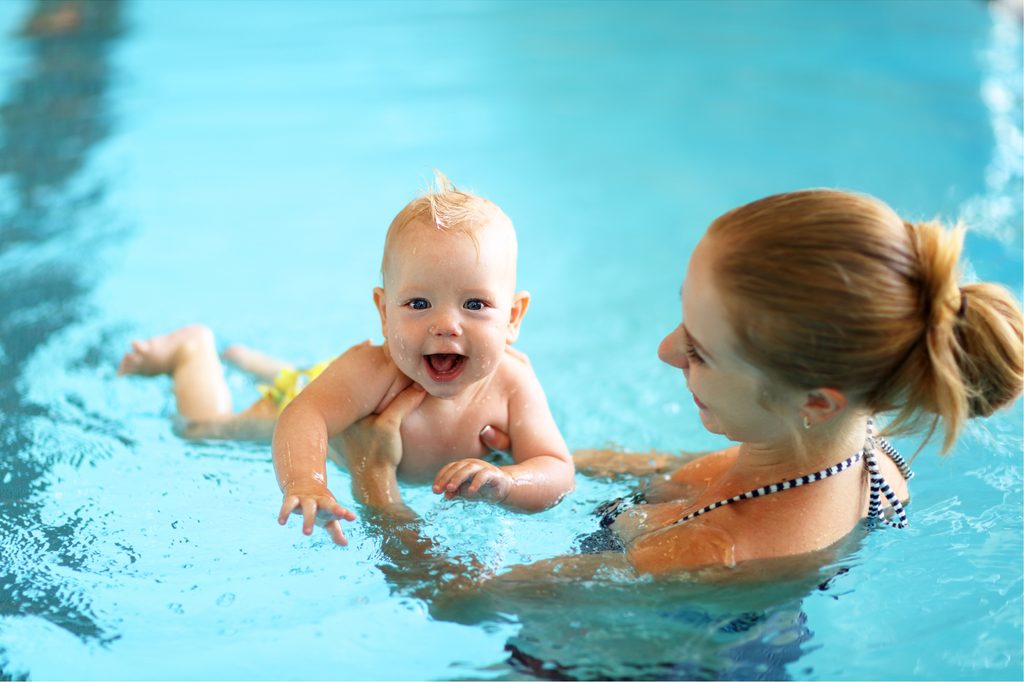
An adult teaching a baby how to swim.
Arina P Habich / Shutterstock

Once the weather gets warmer, many families are eager to hit the pool for some relief from the heat, but those with young infants at home may find themselves wondering, “When can babies go in the pool?” Whether it’s signing up for local swimming classes to teach your little one basic water safety or for recreation and relaxation on a hot summer day, taking your baby in the pool can be a lot of fun.

There are, however, some basic guidelines experts recommend about how old your baby should be before they join the rest of the family. Before you go for a dip this summer, here’s what you need to know about when babies can go in the pool.

Recommended Videos

General guidelines

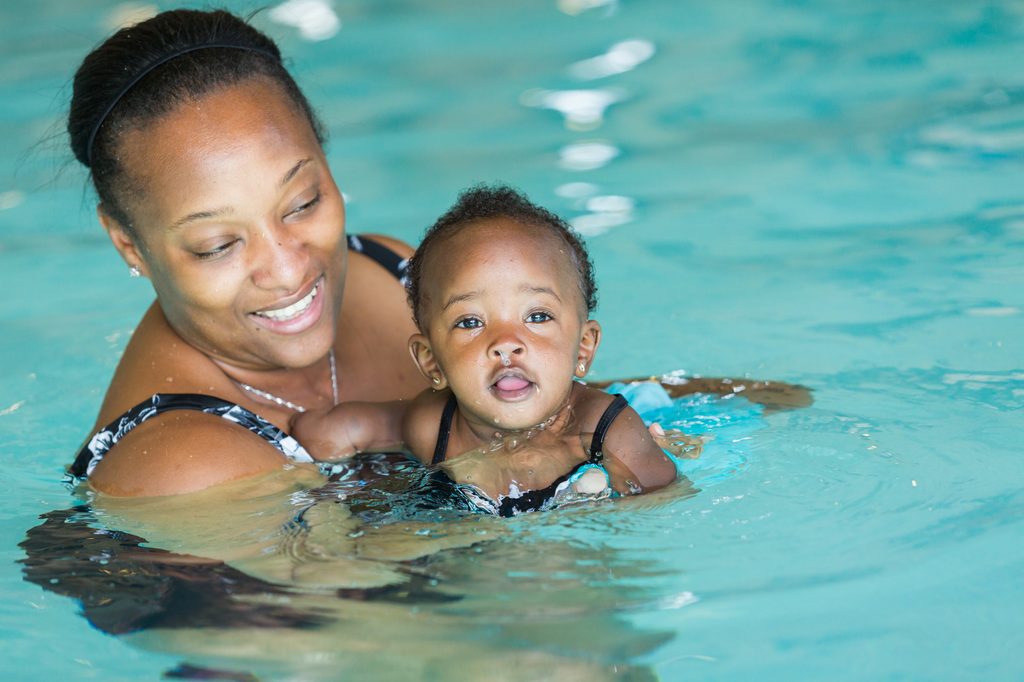
mom and baby swimming in pool
Evgeny Atamanenko / Shutterstock

Although the AAP has no official age recommendation for when babies can go in a pool, most pediatricians suggest waiting until an infant is at least 6 months old. One of the main reasons for this is that babies are typically able to hold their heads up on their own by this age, which is an important factor for their safety.

You may also want to minimize the time in the water at this young age, constantly monitoring your child to ensure they aren’t cold. If they do start to shiver make sure to take them out of the water and dry off immediately. You can also alternate time in the pool with time out to ensure your baby is comfortable and happy in the water. Chlorine typically isn’t a concern unless your baby has sensitive skin or is allergic. Just ensure you are rinsing the pool water off completely when they come out of the water.

Are infant swimming lessons necessary?
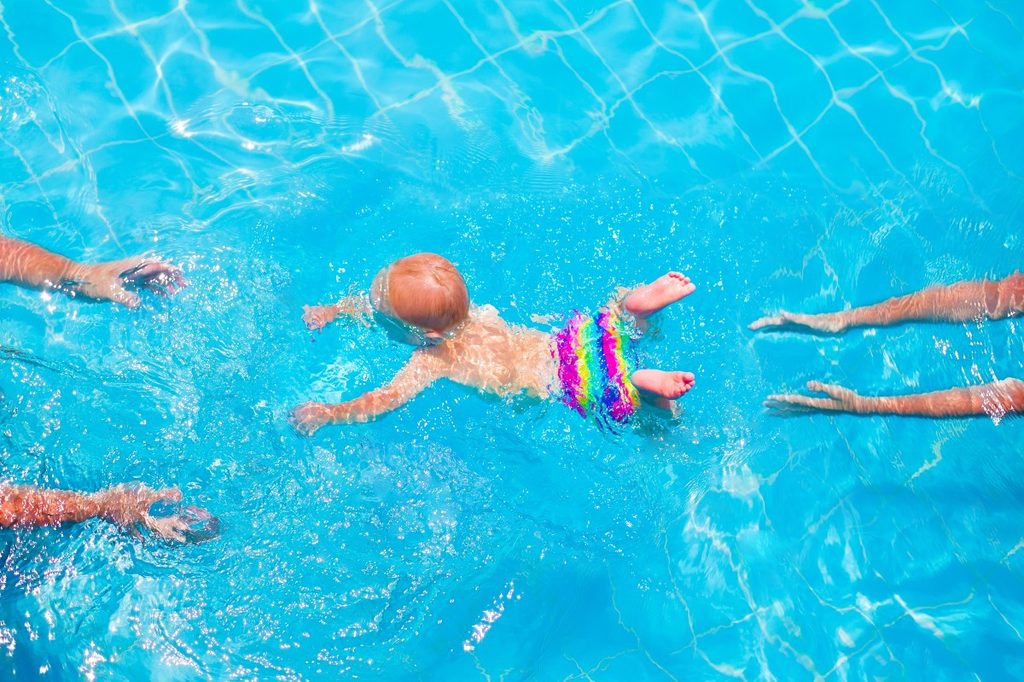
Baby swimming in a pool
FamVeld / Shutterstock

Sadly, drowning is the leading cause of death of children between the ages of 1 and 4, according to the CDC, but even with that data, the AAP still doesn’t recommend swimming lessons for any child under the age of 1 year old. They state that “there is currently no evidence that infant swim programs for babies under 1 year old lower their drowning risk,” adding that enrolling in a class that helps your child get comfortable in the water is a great idea, but it should not give parents a false sense of security.

How to keep your baby safe in the water
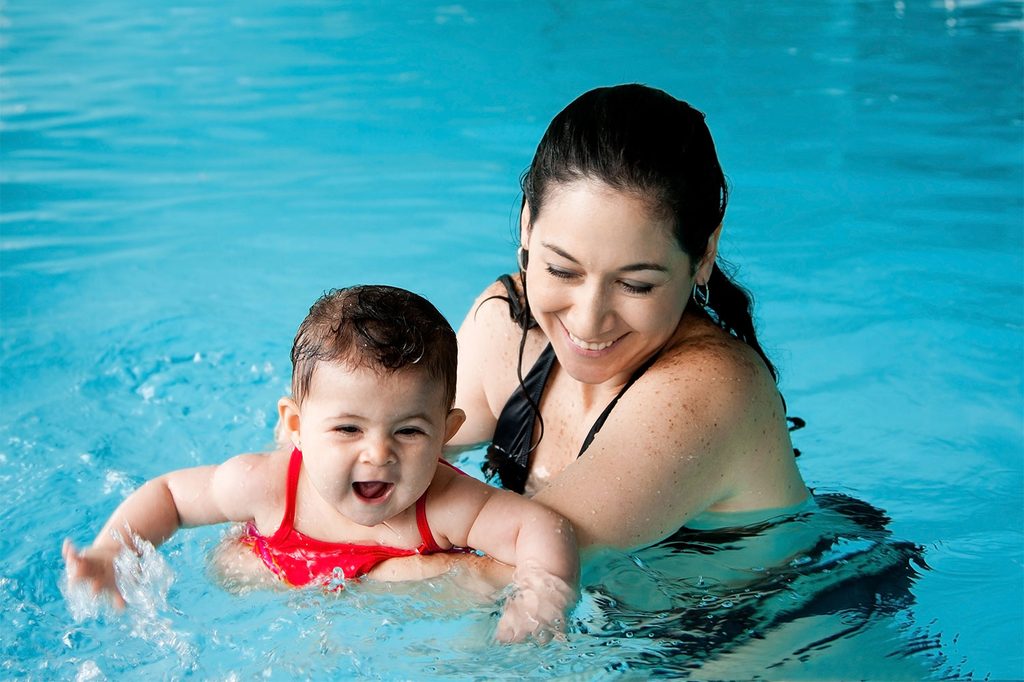
mom and baby swimming
Paul Hakimata Photography / Shutterstock

Keeping your baby safe in the pool means always being within arm’s reach of your baby, whether they’re in or out of the water. When bringing your baby into the water with you, ensure you’re in a comfortable position to be holding your child so you can have constant contact. If you’re somewhere where you could lose your footing, you could put your child in danger. Also, remember that inflatables may be fun and offer some buoyancy for your child, but anything other than a life jacket or personal flotation device should not be used as a flotation device.

Introducing your child to the water at an early age can help foster a love of swimming and splashing in the pool from as young as 6 months old. Teaching your child proper water safety and enrolling them in age-appropriate swimming lessons can help the entire family have a fun, safe summer.

Kelli Catana
Former Author
Is your newborn eating too much? What to know about overfeeding
Cues to watch out for to let you know if you're overfeeding a newborn
Mother holding baby in nursery

Every parent knows the excitement and anxiety that comes when it's time to bring their baby home from the hospital for the first time. Besides the sleep schedule, many new parents may be worried about whether their infant is getting enough to eat. But is going the other direction something parents should also worry about? Is there such a thing as overfeeding a newborn? The short answer is yes. Overfeeding a newborn is a possibility, but it doesn't happen often.

Every newborn has differences in appetite where one might drink a bottle or breastfeed longer than another. Before you stress, don't worry. There are signs to be on the lookout for when it comes to giving your little one too much food. Whether it's your first or third child, if you are concerned about overfeeding your newborn, we have the information you need to know.
Why overfeeding a newborn is something you don't want to do

Read more
Recognizing early autism signs in toddlers: 6 things to know
Which toddler behaviors are quirky and which are red flags for autism?
Toddler boys playing a party game

The Centers for Disease Control and Prevention (CDC) has found that about 1 in every 36 children has been identified with autism spectrum disorder. If your child is on the spectrum, the initial diagnosis can be upsetting, but early intervention following a diagnosis is vital. The early signs of autism in toddlers, though, can be easy to overlook. If you have a child you think might be on the spectrum, it's best to know the early signs as your toddler develops.

There is a long list of possible signs as the autism spectrum is wide and diverse. One sign may appear in one child, but not in another. Certain early signs of autism are more common than others, which is why knowing the red flags is important. The earlier a child receives a diagnosis, the better the support system will be for them.
Understanding autism

Read more
Can you use a heating pad while pregnant? Here’s what you should know
Heat pads and pregnancy work together, just follow some precautions
Pregnant woman using heating pad hot water bottle

Pregnancy is an exciting time filled with awe and wonder, but it's also painful and uncomfortable. Experiencing all. the changes your body goes through as your baby grows is magical, but it's also kind of a pain. As pregnancy progresses throughout the trimesters, so, too, does the discomfort. From backaches to sore feet and sciatica to insomnia, pregnancy can be very hard on a person's body.
Often, a heating pad can provide some much-needed relief from those pregnancy-induced aches and pains, but many wonder if it's safe to use a heating pads while pregnant. Using heating pads during pregnancy can be an understandable concern.
Despite the relief they may give, many pregnant people are hesitant to use them out of fear the heat they produce may harm their baby. Fortunately, using a heating pad while pregnant can be very safe as long as you do so carefully and take proper precautions.

Why would you need a heating pad?

Read more