New parenthood can be fraught with worry — is my child sleeping enough? Eating enough? It can be challenging to navigate your concerns on so little sleep.
Then, the subject of milestones comes up. Parents — understandably — want their babies to be on track (or advanced). It’s a sign that things are going how they should, even if life feels messy. Some of the first milestones: Smiles and laughs. The moments are priceless — get your camera ready — but often something a parent may ruminate about after a night feeding. When do babies smile? When do babies laugh?
Your Google rabbit hole ends here. Here’s what parents should know about a baby’s early social cues, including when to ask for help.
Social cues: All about baby smiles and laughs
When can you expect a little one to smile and laugh? It varies by the baby, but these are the general milestones.
When do babies smile?
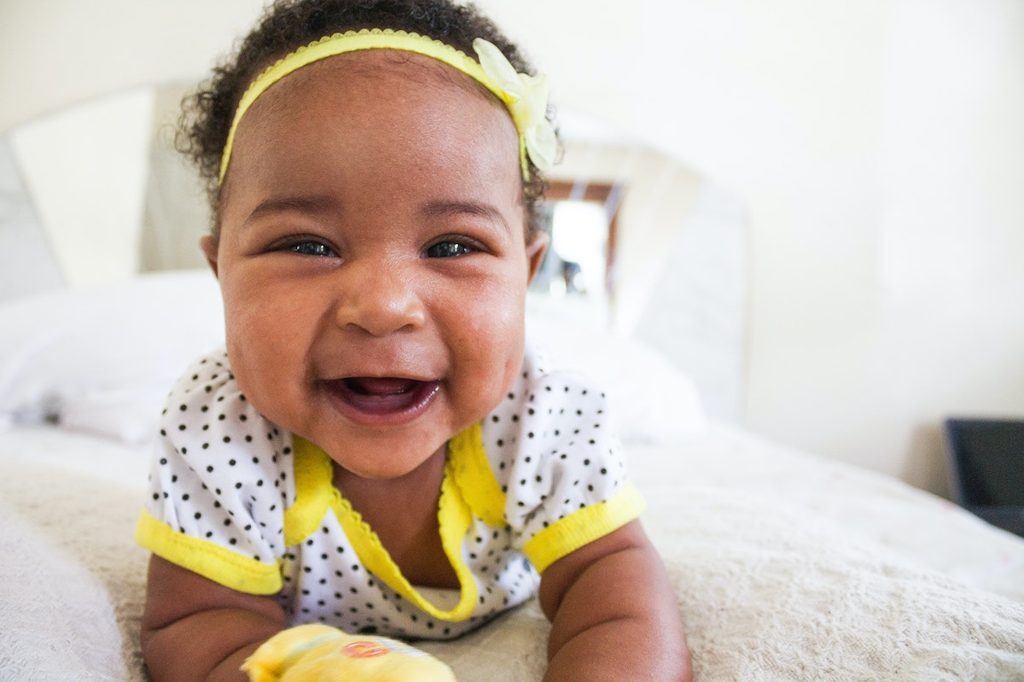
Typically, you’ll see a baby smile for the first time between 6 and 12 weeks old. A first smile can feel like a sliver of hope for parents. Until this point, your baby has likely communicated by crying (no matter the hour). Seeing those first smiles — gummy grins, if you will — is a refreshing change of pace, even for the most patient parent.
These “real” smiles are social. However, you may notice your newborn smiling at only a couple of days or weeks old. These smiles are known as “reflexive smiles,” and the baby starts doing it in utero. They’re responses to gas or urine. You may even notice the baby reflexively smiling in their sleep. Social smiles are in response to something — probably your face. They’re longer, consistent, and often include a twinkle in their eye.
When do babies laugh?
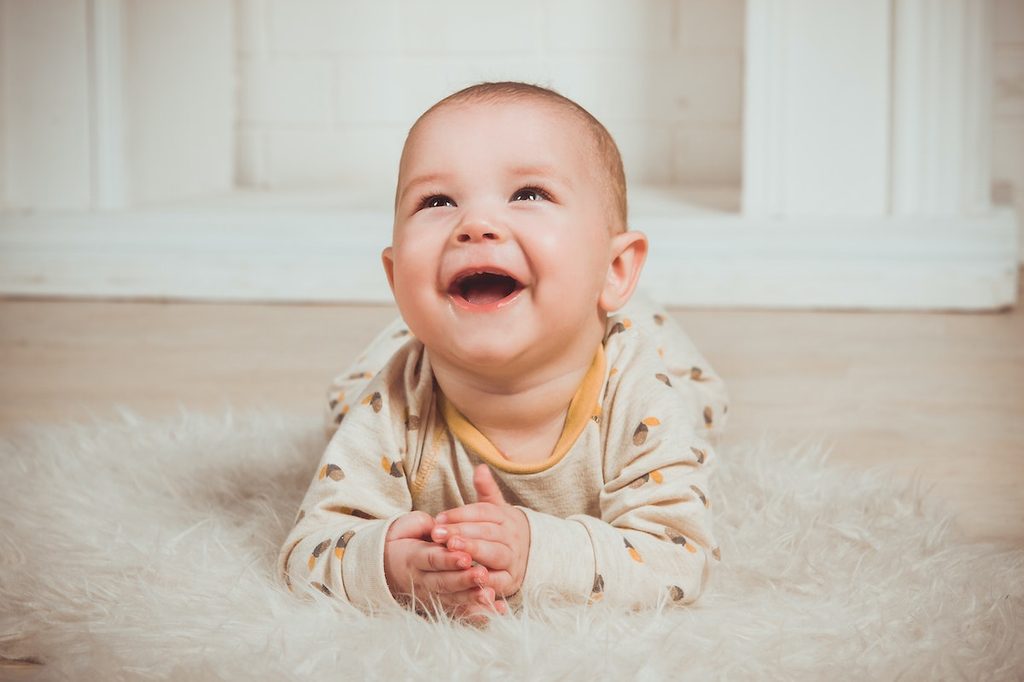
Your baby will start laughing around four to 6 months old. The laughter may start as sweet little giggles, and in time, progress to full-on belly laughs. Like smiling, laughter is a social skill. Your baby will laugh in response to something. Babies have interesting senses of humor. Once again, your face may trigger a belly laugh. Try not to take offense — it’s a sign of affection (and that your child is developing as expected).
How to encourage smiles and laughter
To some extent, babies will develop as they’re ready. However, there are absolutely things you can do as a caregiver to give them a gentle push. These tips can help your baby develop these early social skills and aid in language development later.
- Sing to your baby. Whether it’s sweet lullabies or something silly ripped off of an Elmo playlist on Spotify, your voice is music to your baby’s ears. Making silly gestures may elicit a giggle or belly laugh when your baby is old enough. Don’t worry about the key or pitch. You don’t need to be Beyonce — your baby is interested in your voice because it’s yours.
- Talk to your baby. Using parentese, or baby talk, is scientifically proven to aid in language development. Parentese involves long, drawn-out words like, “Do you want to read a boooook?” Just the sound of your voice may make your baby smile or laugh. (YouTube legend Ms. Rachel does it well, but it’s worth noting TV/YouTube viewing does not aid in language development during infancy or early toddlerhood as babies learn from face-to-face interactions and not passively.)
- Make a funny face. Being silly with your baby may make them laugh or crack a smile.
- Blow a raspberry. Make diaper time fun by blowing raspberries on their belly (then file this trick away for when they get mobile and turn diaper changes into adventures).
- Play with colorful toys. Babies begin to love colors as they get older, around 4 to 5 months. Bright-colored rattles, toys, and play mats may engage them and make them smile.
- Smile and laugh back. Reciprocating will encourage your baby to keep doing it.
What to do if you’re concerned about your infant’s development
The parenting rabbit hole is deep, and social milestones are often at the top of a parent’s list of worries. If a baby is not developing according to the expected timeline, it can trigger even more concern. On the other hand, parents may be bombarded with messages that “every baby is different” and “they’ll smile/laugh when they are ready.”
The truth is, there’s a happy medium. If your child hasn’t smiled by 3 months or laughed by 6, it’s worth mentioning it to your pediatrician. You attend wellness checks often in the first year of life, and your child’s doctor should be open to questions. Sometimes, you have nothing to worry about. However, at other times, your child may have a developmental difference; language, social, or otherwise. For example, smiles and laughter are signs that a baby’s vision and hearing are developing as they should.
Your pediatrician can help you find the resources to rule out any reason to be concerned.
As great of a resource as your child’s pediatrician may be, you know your child best. If the doctor wants to take a “wait-and-see” approach and you’d like further evaluation, you can advocate for that. If nothing else, it will give you peace of mind.