
The toddler stage begins after your baby enjoys that yummy smash cake. Ages 1 to 2 are considered the toddler years, while 3 and 4 are referred to as the preschool years. Learning how to write is an exciting milestone with the process beginning in the toddler stage.
Before a little one can pick up their first chunky crayon or marker, the toddler’s fine motor skills need to be developed. Fine motor skills are a child development term used to define the small muscles in fingers and hands that work together to do common tasks like tying shoes, zipping a jacket, and yes, writing. The best way to help a toddler form letters correctly is to provide activities that help develop those very important fine motor skills.
When do kids learn to write?
Of course, there isn’t a hard-and-fast rule as to when children begin to learn to write. Generally, the milestone occurs during the preschool years while laying the groundwork from the infancy stage, but especially during the toddler years with opportunities to work the fine motor skills in the fingers and hands.
How to teach toddlers to write correctly
It’s not uncommon for kindergarteners and first-graders to struggle with holding a pencil and learning to form letters correctly. The difficulty is typically traced back to underdeveloped fine motor skills. The best way to help a toddler learn how to write is by providing plenty of activities that help develop their fine motor skills, while showing them pencils and crayons are used to form letters that make words. The best place to start is their name.
Name recognition
To help toddlers understand the connection between letters and words, display your toddler’s name in convenient places around the home, like on the door of the bedroom, above a coat hook, or on a place mat.
Puzzles
Toddler puzzles are specifically designed for little hands and are an ideal way to hone fine motor skills. Keep puzzles in the play area and encourage your toddler to have a bit of puzzle time each day. For toddlers, a short amount of time is about 5 to 10 minutes. Have at least one toddler alphabet puzzle on hand, and if possible, a personalized name puzzle. Name puzzles are twofold because they help with name and letter recognition as well as fine motor skill development.
Finger paints
What toddler doesn’t love getting their fingers dirty with some finger paint? Sure, finger painting is messy, but it’s excellent for fine motor skill development. They don’t need to do finger painting every day, but try to work it into your toddler’s schedule at least once a week. Newspaper or a disposable tablecloth make cleanup easier, as does putting a smock on your toddler and using washable finger paint.
Play dough
Another toddler staple is play dough. This modeling compound really gets little fingers working. When using play dough with your toddler, be sure they are sitting at the table and keep an eye on them, as toddlers are still in the habit of putting their hands into their mouths. You can easily make play dough easily at home, but It’s also readily available through the popular brand Play-Doh.
Blocks
There are lots of benefits to letting your kiddo play with blocks at an early age. One is fine motor skill development. A classic set of blocks is an excellent first birthday gift. It’s the gift that keeps on giving, as toddlers manipulate, pick up, and learn to build with blocks. Traditional blocks typically have letters and numbers carved into them. As toddlers feel the blocks and the carved letters, they learn how letters are formed.
Books
Stock up the play area, bedroom, bath, and car with toddler books. These chunky books are made for young children’s hands. As toddlers handle the books and turn the pages, they’re working the muscles in their fingers and hands. Read these books at bedtime. Repetition helps toddlers begin to learn the connection between letters, sounds, and words.

Toys
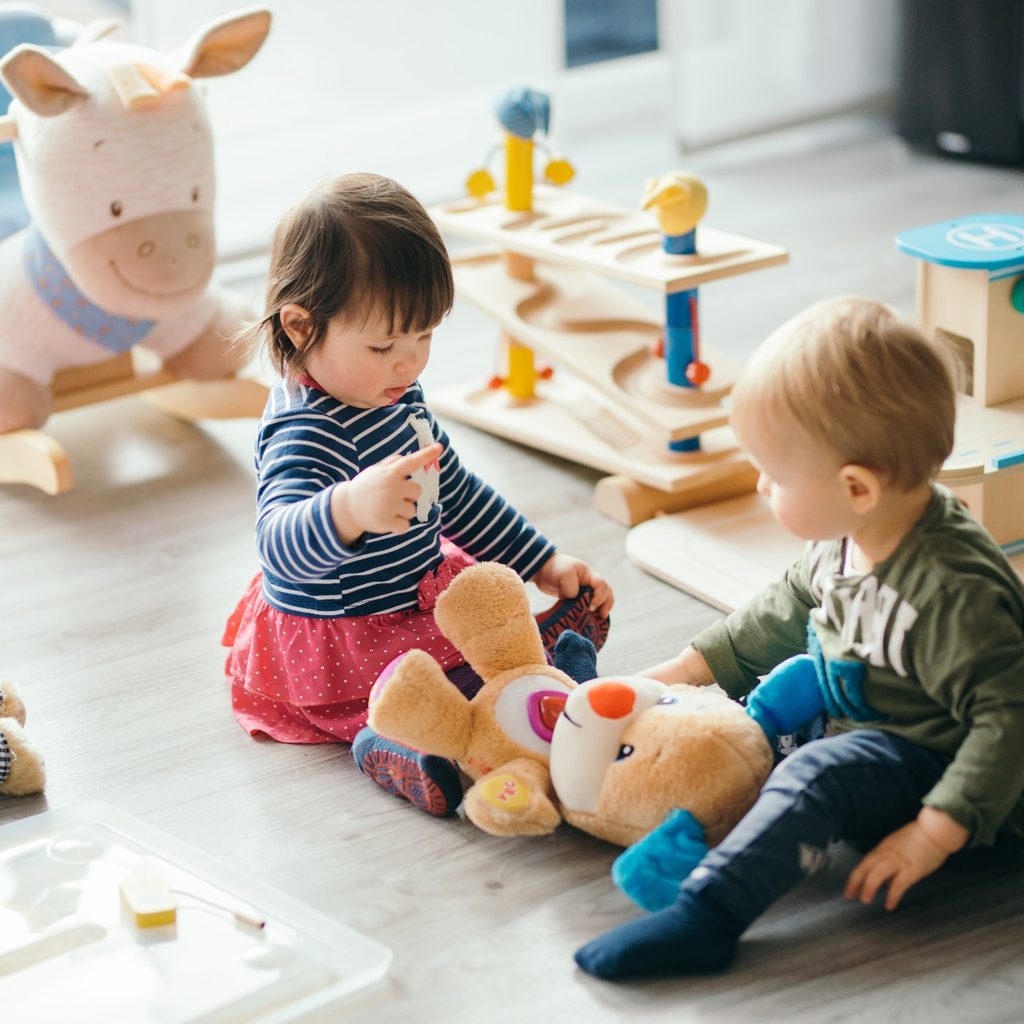
Play is how toddlers spend the majority of their days. It’s also how they eventually learn to write those letters properly. Toddlers need a lot of hands-on play to develop their fine and gross motor skills, which is why screen time is not recommended for little ones.
Drawing
Don’t invest in coloring books yet, but do have paper and toddler crayons around. Those squiggles and wiggles they put down on paper are certainly worthy of the refrigerator. It’s an important pre-writing skill for kids.
Sidewalk chalk
When the weather cooperates, take your toddler outside and let them have a go with some sidewalk chalk designed just for them. Unlike regular sidewalk chalk, toddler sidewalk chalk has easy-grip plastic handles for little ones to grasp. This is another fun way to get those hands and fingers ready to write.
The takeaway
Kids typically begin to learn how to form letters during their preschool years. The first thing a preschooler usually writes is their name, and this makes them very proud. Not all kids write in preschool though. Others may start later. The best thing parents can do to teach toddlers to write is provide a lot of opportunities each day to develop their fine motor skills. If fine motor skills are underdeveloped, preschoolers will have a difficult time holding crayons and pencils. With these nine activities, toddlers will have a blast and work those important hands and fingers.