

Water parks are making a comeback this summer as the country relaxes its COVID-19-related restrictions. It’s a toss-up who may be more excited: the kids who missed last summer and are anxious to get out of the house and back in the water, or their parents who are anxious to get their kids out of the house.
But is it safe? Even before the pandemic, water parks presented several health and safety concerns. “Just because water parks are open doesn’t necessarily mean it’s right or safe for you and your family,” says Dr. Ben Hoffman, Professor of Pediatrics at Oregon Health & Science University, and Chair of the American Academy of Pediatrics Council of Injury, Violence and Poison Prevention.
How can you tell? Here are factors that parents should consider to make sure their water park visit is fun and safe.
Just when you thought it was safe to return to the water park…
On the COVID front, the news is mostly good. The Center for Disease Control has announced that it does not consider water to be a super-spreader threat. “The CDC is not aware of any scientific reports of the virus that causes COVID-19 spreading to people through the water in pools, hot tubs, water playgrounds, or other treated aquatic venues,” according to the government agency’s website.
The operative word here is “treated.” B.J. Fisher, Director of Health & Safety with the American Lifeguard Association, notes that automated systems monitor, test, and adjust chlorine levels at most water parks, and that these are manually checked and calibrated.

It’s a different story on deck. In addition to maintaining social distancing, washing hands upon entering or leaving a facility, and showering before entering the pool area, Fisher recommends making sure that deckchairs and tables have been properly wiped down.
“Bringing disinfectant wipes is not a bad idea,” he says. “Different parents have different tolerances for cleanliness and hygiene. I think it’s smart to be cautious. I’ve seen people change their baby’s diapers on picnic tables.”
Mask mandates across the country are not uniform. Florida, for example, doesn’t have one, but Walt Disney World in Orlando does require its guests ages two and up to wear a mask indoors. In outdoor common areas and pool decks, mask-wearing is optional.
When it comes to being poolside, Fisher recommends that guests wear masks when they are not in the water. But, they should never be worn in the water, urges the CDC: “Do not wear a mask when doing activities that may get your mask wet, like swimming at the beach or pool. A wet mask can make it difficult to breathe and may not work as well when wet.”
Dr. Hoffman advises parents and caregivers to think about indoor and outdoor water parks differently in terms of ventilation and air circulation. “I would err on the side of an outdoor water park,” he said, and underscored that “even though the CDC guidance on masks has been loosened, I would think about a mask and certainly avoiding unnecessary close contact with other folks.”
“To be quite frank,” he continued, “I’m not sure that if I had little kids, I would take them to the water park quite yet. Every family needs to do their own risk assessment. Though we may be able to start vaccinating down to 12-year-olds, it’s going to be a while before we’re vaccinating younger kids. Even though it’s outdoors, there will still be a risk for person-to-person transmission of COVID, and parents need to be really careful about that until enough people are vaccinated and, certainly, until we can start getting kids vaccinated.”
Safety concerns go beyond COVID-19
While COVID-19 may be the immediate concern when considering whether to patronize a water park this summer, the fundamentals of water park safety still apply. These are paramount:
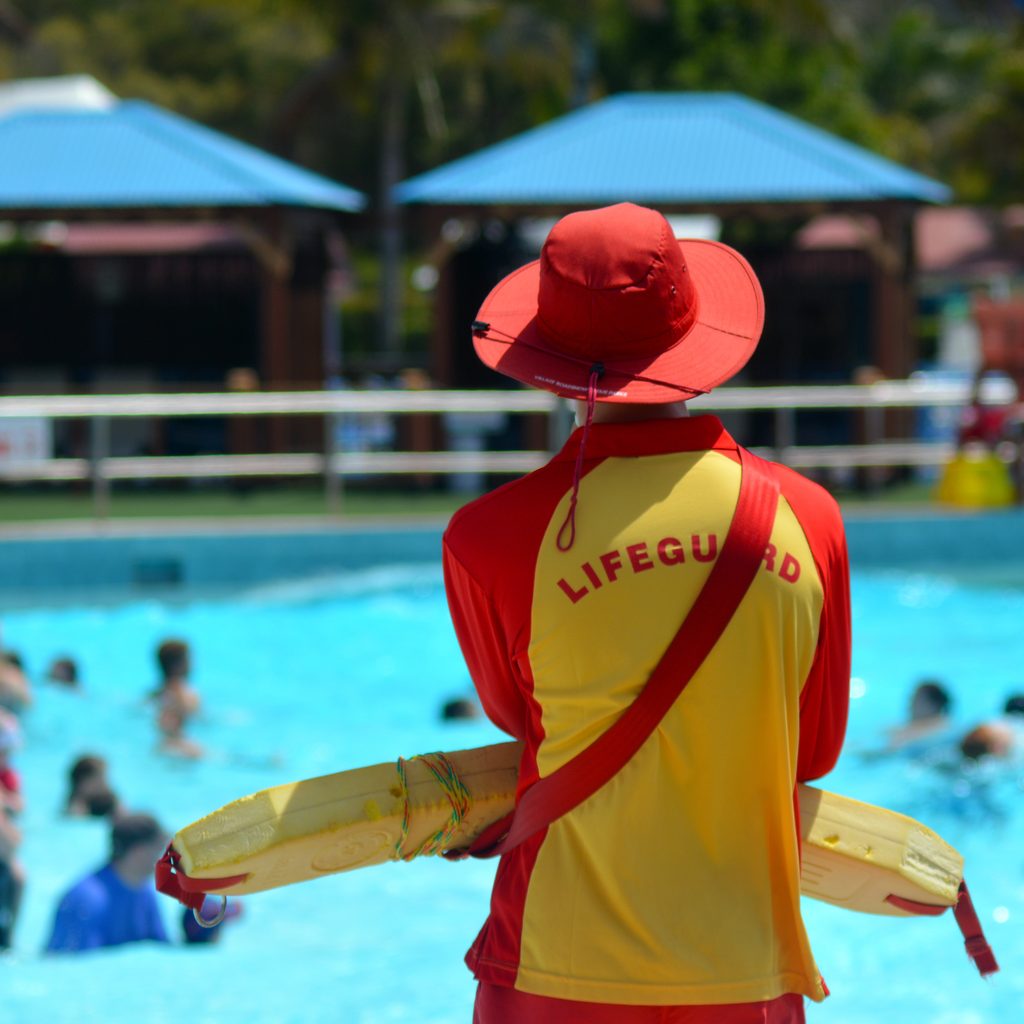
Don’t think of lifeguards as babysitters
Lifeguards, Fisher says, “are considered to be first responders. They are there to enforce the rules, and one of the major rules is that children need to be accompanied by a responsible adult. The purpose of that is they are supposed to be keeping a watchful eye at all times on their children.”
Be vigilant
“Drowning is the leading cause of death for 1-4-year-olds,” Dr. Hoffman says. “Even though water parks have trained lifeguards, there is no substitute for close, constant adult supervision. If kids are not able to protect themselves in the water, a parent or caregiver needs to be at arm’s length at all times. There can be a tendency to let your guard down because you assume there are a lot of people around and there are lifeguards and staff, but things still can happen.”
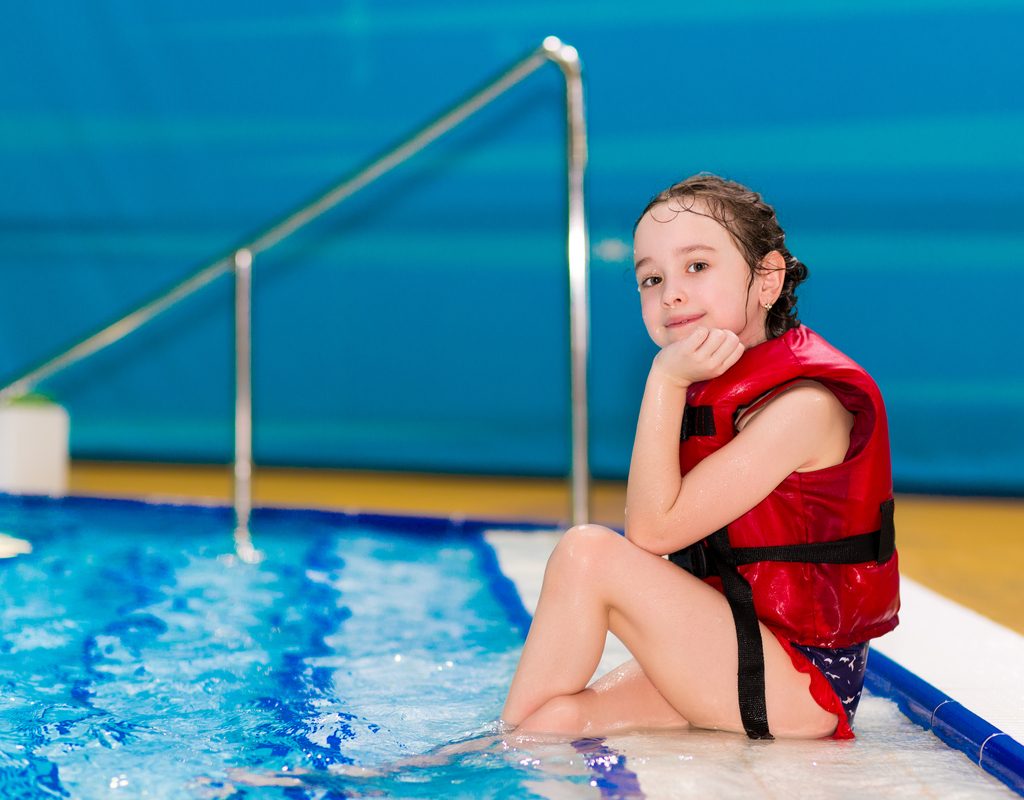
Use Coast Guard-approved life jackets for children who cannot swim
“Anything that inflates,” Dr. Hoffman says, “is not a safety device; it’s a toy.”
Don’t forget the sunscreen
After missing the summer of 2020, Fisher cautions that people may have forgotten the routine of applying sunscreen when at the water park. It is preferable for a sunscreen to have an SPF of at least 30 and protect from UVB rays, which produce sunburn, and UVA rays, which promote wrinkles and premature skin aging. Both types of rays play a role in skin cancer formation.
“Sunscreen should be reapplied often, every two to four hours,” Fisher says.
Make sure water park activities are age-appropriate
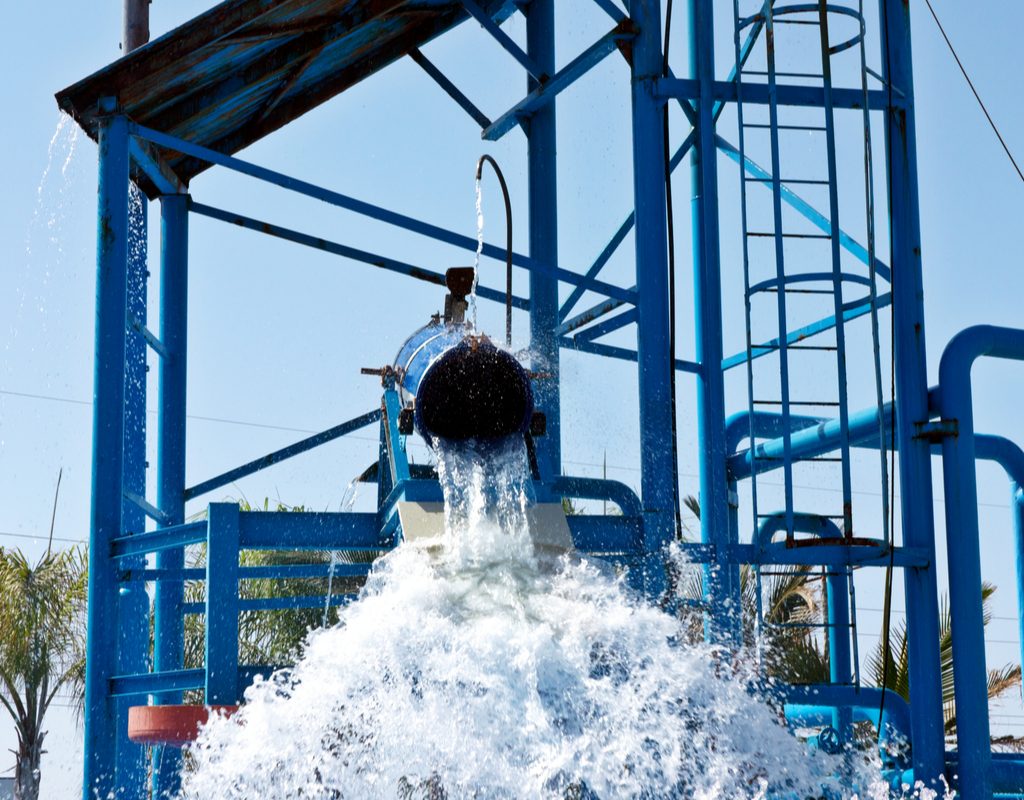
Water park play areas feature amenities that may not be appropriate for every child. What smaller child can resist the temptation to do what “the big kids” do? Parents need to make sure their kids are participating in age-appropriate activities. “Not every slide or play area is going to be good or safe for all age groups,” Dr. Hoffman says. “If an amenity has limits for age and height, it’s for a reason.”
Follow the rules of the water park
This seems too obvious to mention, but “walk, don’t run on deck” is usually the first rule that children ignore (full disclosure: this is written by a former lifeguard). Two other common water park rules are no diving in the shallow end and no roughhousing in the water or on amenities such as tall slides.
“We think about water as a source of fun and recreation,” Dr. Hoffman says, “but drowning is the leading cause of preventable death and the second leading cause of injury or death for teenagers ages 15-19.”

Teach water competency skills
Learning to swim is an essential life skill,” Dr. Hoffman says. “Swimming lessons for children over the age of one can decrease drowning risk. This should be on a parent’s radar. Drowning prevention is all about layers of protection; there is never just one thing that is going to work. These three things will be most impactful when visiting a water park: Constant, close, capable supervision; some degree of water safety skills; and making sure kids can’t get to water when they’re not supposed to be around water.”
With more and more people being vaccinated, everyone is looking forward to resuming normal activities — and for a lot of families in the summer, this means trips to the water park. However, parents should be aware that, despite loosening restrictions, there still is a COVID-19 risk, particularly for unvaccinated people (which most children are). Weigh your options carefully to decide the best choice for your family. And if you do decide to go to the water park, remember that even before COVID-19, there were (and still are) important safety considerations for parents to keep in mind.