It’s a parent’s job to be prepared. Scrapes, scratches, and bruises will happen, and you will want to be ready to wipe tears, bandage boo-boos, and kiss those cutie-pie kiddos off as they toddle back to the playground. This is also why you need to have a first-aid kit handy. Better yet, have one that stays in your car, one that goes in your diaper bag, and a larger, more robust option at home. Want to know everything you’ll need in a basic kit tailored for babies? Read on to peruse our checklist of must-haves and read through our top tips.
The basics of building a first-aid kit
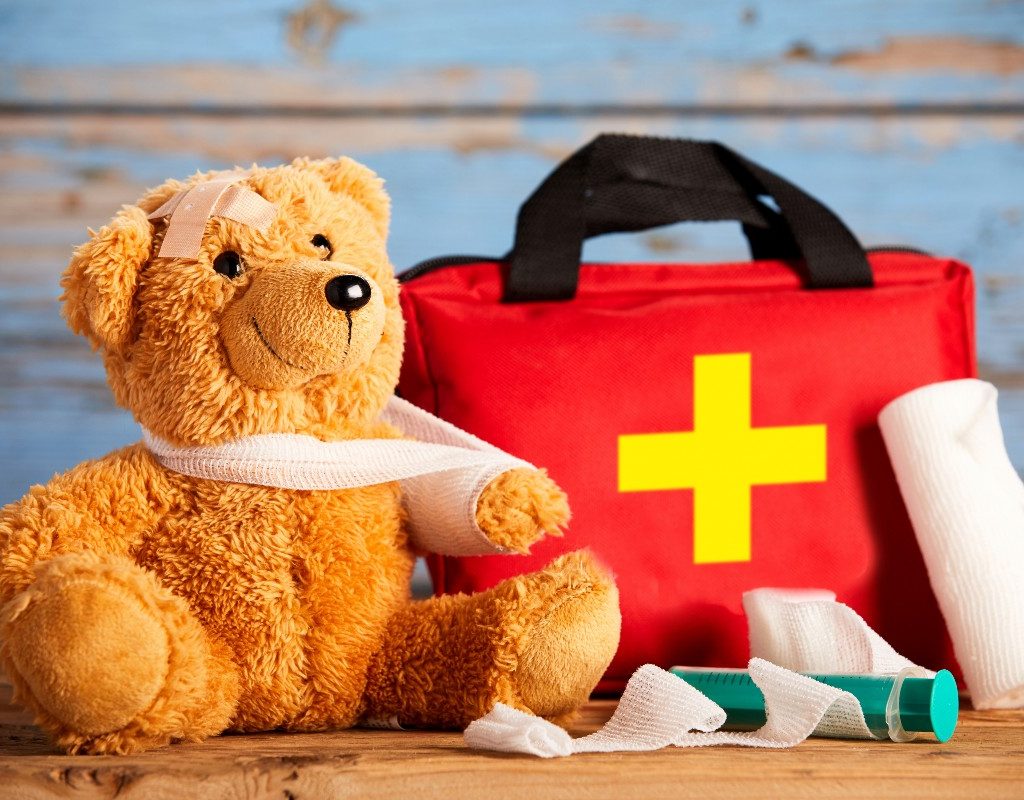
There are some basics you’ll definitely need — plus a few extras you will want in any baby first-aid kits that you keep handy. If you have multiple kids of different ages, you’ll need a bigger bag or case with even more options. For now, let’s break down the essential items for babies and toddlers:
- Band-Aids: You’ll want to stock up on a variety of bandages of different shapes and sizes to accommodate all sorts of cuts. If you have a toddler, consider getting options that feature their favorite characters. Somehow, Mickey Mouse can help make an ouchie hurt a bit less.
- Alcohol wipes: In a pinch, you can use alcohol wipes as an antiseptic. Do note that if you have access to a sink, you are better off washing a small cut with running water and a bit of soap. (Still, an alcohol wipe can also take away the nagging itch of a newly acquired mosquito bite!)
- Antibiotic ointment/cream: Note that some options may not be appropriate for newborns and infants; you’ll want to read the packaging carefully to double-check dosage — or speak with your pediatrician.
- Petroleum jelly-type product (i.e., Vaseline, Aquaphor, etc.): If your wee one is too young for antibiotic ointment, a little Aquaphor will do the trick on cuts and scrapes; it’s also great on dry, itchy patches of skin.
- Baby thermometer: When Baby feels hot to the touch, there’s no time to waste. This is why a baby thermometer has a rightful place in your first-aid kit. While rectal thermometers give the most accurate readings for newborns, you could also consider an in-ear or forehead-scanning option as an on-the-go alternative.
- Infant Acetaminophen (Tylenol) and/or infant Ibuprofen (Advil or Motrin): It’s smart to have a pain reliever at the ready in case your little one spikes a fever or is actively teething. To this end, you’ll also want to keep a medicine dropper packed.
- Simethicone drops/Mylicon: If your itty-bitty tends to get tummy troubles or is frequently fussy after feedings, consider keeping gas drops or gripe water packed; these two options can help resolve discomfort-causing bubbles to help your baby feel content again.
- Nasal aspirator: You never know when you’re going to have to suction a boogie or unclog some infant congestion; being prepared with a nasal aspirator can ensure that your sniffly sweetheart gets relief fast.
- Nail clippers/emery boards: Newborns’ nails grow incredibly fast — and can be shockingly sharp. Keep nail clippers and/or emery boards packed in your kit in case you need to trim or file a jagged little pinky.
- Emergency-contacts card: While you probably have your pediatrician’s number programmed in your phone, it’s advisable to keep a card stashed away with emergency-contact phone numbers.
After a few initial uses, you’ll learn to customize your first-aid kit for your family’s specific needs. You might find you need extra items for your delicate newborn — or you may realize that a toddler has a tendency to stumble, trip, or fall more often; thus, you’ll want extra Band-Aids and other injury items. The point is, your first-aid kit should evolve and grow with your family.
Should you buy a ready-made kit or build your own?
You might be tempted to buy a ready-made first-aid kit online or at the store. These are certainly nifty, but they won’t include everything you need or want (i.e., they typically don’t come with medicine). You can, of course, get one and use it as an initial building block — then purchase some à la carte extras.
Be aware that, generally, these prepacked options are more expensive. Moreover, you might not be able to shove all your additional purchases into a small, compact kit. To this end, it’s probably easier and more budget-friendly to build your own. However, a small ready-to-go kit like the American Red Cross Deluxe Health and Grooming Kit is a good backup option.
Baby health-care kits come in handy for all sorts of purposes. Whether your little newbie suddenly falls ill or your toddler stumbles off the slide, you can take action quickly when you have everything you need within arm’s reach. Pack your first-aid kit with thought and care, and you can feel confident that you are more than adequately prepared. Boo-boos are a fact of childhood; fortunately, a Band-Aid and a kiss from Mom or Dad will help.