Feeding your newborn is pretty straightforward. They only need human milk or formula for the first six months of their life to thrive. Once your baby is ready to start trying new foods, things can get a bit more complicated.
Parents shift to making or buying purees as they begin to introduce their little ones to solid foods. Cue caregivers pretending a spoon is an airplane and feeding their little child some version of oatmeal or pureed peas and sweet potatoes. These days, some parents are taking a different approach and introducing solids straight away. It’s known as baby-led weaning.
What is baby-led weaning? The method, developed by former public health nurse Gill Rapley, involves adults giving babies solid foods in their natural form and allowing them baby to self-feed. If a parent makes spaghetti, meatballs, and broccoli for dinner, the baby will eat it, too. Proponents say it respects a baby’s independence and food autonomy and may reduce picky eating.
It can also be a ton of food. Here’s what to know about baby-led weaning.
When do I start baby-led weaning?
The American Academy of Pediatrics’ (AAP) most recent policy statement recommends exclusive breastfeeding for six months, with complementary foods introduced around that time. People who can’t or don’t wish to breastfeed or give donor milk can use formula as a nutritious alternative.
Signs your baby is ready to start baby-led weaning include:
- The ability to sit in a highchair for the duration of the meal (this safeguards against choking)
- The ability to pick up food and bring it to their mouth
- Interest in solid food, such as grabbing at it while an adult caregiver eats
Premature babies typically wait until their adjusted age is 6 months. Speak with your pediatrician or a pediatric dietician if you have questions.
How do I start baby-led weaning?

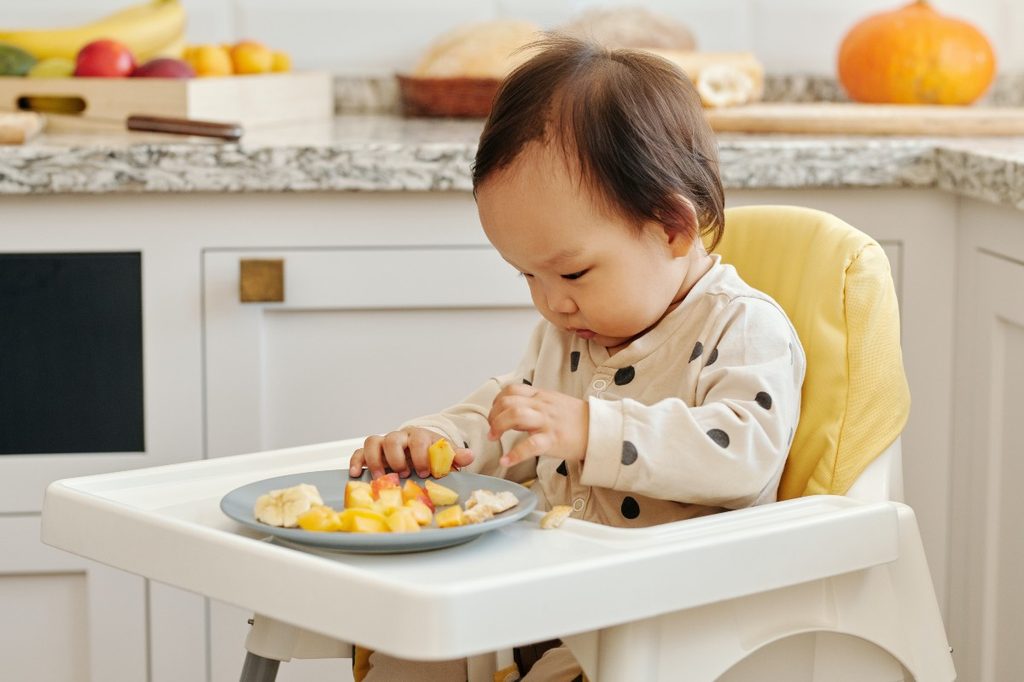
One of the benefits of baby-led weaning is that you don’t need as much. There’s no need for a food processor or jars. Instead, the baby eats what you eat without texture modifications. A high chair, bib, and small infant utensils (you can preload spoons with items like yogurt and cottage cheese) are all your baby requires to start their journey.
Baby-led weaning families like to say that their children didn’t have first foods but first meals. Most items qualify as baby-led weaning foods. Exceptions include honey, which no child should have until their first birthday; however, experts recommend avoiding it until the age of 4. Keep salt to a minimum, and try to avoid added sugar. The AAP doesn’t suggest introducing that until 2 years old and that parents should use their judgment.
Otherwise, it’s about cutting. At 6 months, most foods are easy to cut into finger-length strips. Grapes should be quartered. Same for blueberries (you can smoosh those, too). You don’t have to cook foods like apples, but some parents feel more comfortable, fearing choking risks.
What are the disadvantages of baby-led weaning?
Baby-led weaning is a valid way to introduce solids to a baby. The evidence on purported benefits, such as improving a child’s relationship with food through feeding autonomy and reduced pickiness, is limited. Like many aspects of parenting, you have to do what works for your family, and baby-led weaning isn’t for everybody. Some disadvantages include:
- Gagging. Gagging also happens with purees but can be scarier with baby-led weaning, when adults may be hyper-concerned about choking. Taking a CPR class and learning the difference between the signs of choking and gagging may make you feel more at ease.
- Judgment. Other family members may have gone the more traditional puree route and not understand this method. No one knows what’s best for your baby better than you.
- Less information. Pediatricians can often walk you through introducing purees and cereals, but many aren’t as informed about baby-led weaning. You may feel confused and on your own. Resources such as Kids Eat in Color and Solid Starts are full of advice from feeding pros.
- Personal preference. Parents may be more comfortable with purees, and that’s valid.
Is baby-led weaning healthy?

Baby-led weaning is a safe and healthy means of solid introduction. Many parents love it because:
- It allows families to enjoy meals together without having to feed the baby and make airplane noises.
- It respects the baby’s independence and hunger cues. No one is forcing that last spoonful of pureed peas into their mouth.
- It’s super cute to watch your 6-month-old nosh on a celery stick.
- Your fridge will be full of real food rather than jars.
What is baby-led weaning? If you don’t spend much time in mommy Facebook groups, you may be unaware of this method of introducing solids, but it’s rising in popularity. Baby-led weaning allows babies to self-feed. They control the pace of the feed, which foods they eat, and how much they consume. It’s like a feeding version of the trending Montessori method.
Do babies eat less with baby-led weaning?

While researchers insist that more information is needed on baby-led-weaning, studies have shown that babies who follow the baby-led-weaning method were “significantly underweight, compared to spoon-fed children.” Researchers suggest that part of this may be due to the fact that these infants tend to drink more milk during the weaning process than those who are being spoon-fed, and they may also take in more fat and saturated fat than babies who are spoon-fed traditional purees.
It may just take your baby a bit longer to get the hang of eating solid foods, which could result in them eating less in the beginning. If you’re concerned they are not eating enough, reach out to your pediatrician.
Most foods qualify as baby-led weaning foods, but you’ll need to cut them appropriately. From 6 to 9 months, you should cut foods into finger-length strips, which is easy. Some foods, such as grapes and blueberries, should be quartered or smooshed to avoid choking, and no child should have honey until a year old. There’s no real evidence to promote baby-led weaning over purees, but both are valid ways of introducing solids. If the method works for you and your baby, that’s great.