

There is nothing more exciting for a parent than watching as their child reaches new milestones in their development, and nothing more worrying than when they feel their child might be falling behind. It can be easy to start comparing your child to their peers and worry if you think they’re not developing as quickly as others. Language skills develop at different times for all children, but if you suspect your child isn’t on track developmentally, there are expert-recommended exercises for speech delays in toddlers.
According to Nemours Kids Health, your child might have a speech delay if, by the age of 2 years, they are only imitating sounds and noises and not speaking spontaneously, only says certain sounds and words and can’t communicate with you verbally, can’t follow simple directions, and have a raspy or nasally voice. If you suspect your child has a speech delay, it’s important to speak with your doctor, but there are some exercises you can do at home to help your child.
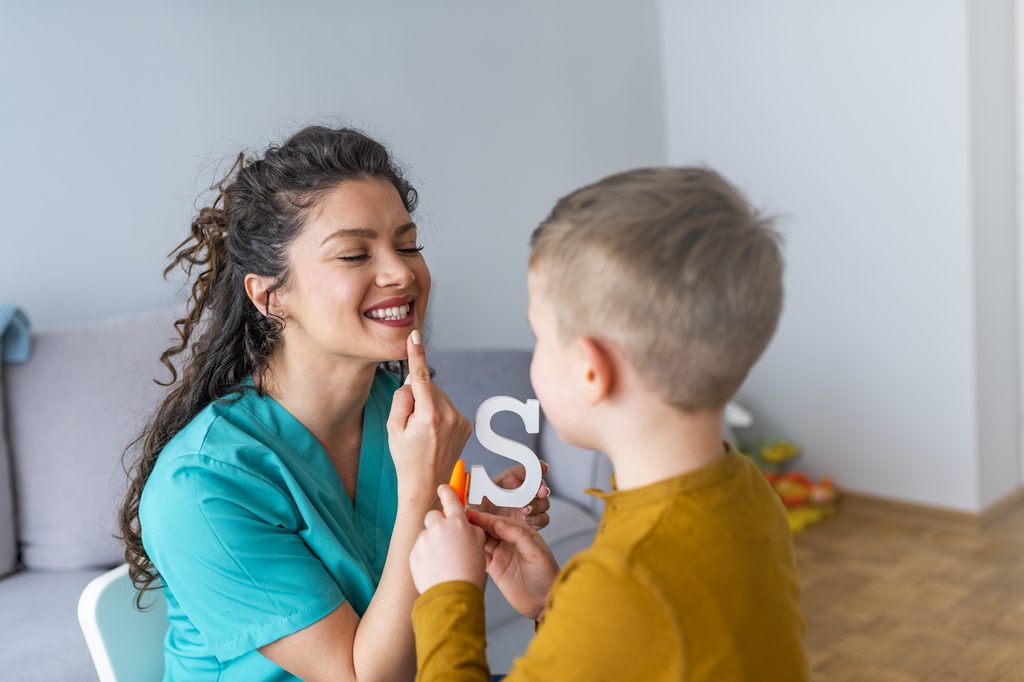
Exercises for speech delays in toddlers
Although speech delays in toddlers can often be something your child grows out of, it doesn’t make it any less worrying if you are the parent. Luckily, there are ways you can help your toddler if you feel they are falling behind their peers. Here are five exercises experts swear by to help with speech delays in toddlers that you can do at home.
Read to them
One way to help your toddler with a speech delay is to read to them every day, as often as you can. Children learn to speak and make sounds often through imitation and interaction. Read age-appropriate books with your child and allow them to practice ‘reading’ along with you.
Speak with them
You can also help improve your toddler’s speech delay by practicing speaking with them, according to Reid Health. They suggest practicing working on sounds or words your toddler may be struggling with, and even making a game out of it to make it more fun. As your child begins to master different sounds, you can then help them incorporate their new skills into learning words that have that same sound.
Encourage singing
Did you know that your toddler might be able to sing a song before they can speak a full sentence? Singing is actually a great way to help a toddler who is experiencing a speech delay because singing can help enhance a toddler’s vocabulary. According to a recent study, “informal musical experience at home contributes to the development of grammar.”
Model self-talk
Stamurai suggests using self-talk as a way to help improve a toddler’s speech delay. This basically means that when you’re with your child, you are always talking about what you’re doing and naming the different objects or items around you. If you’re at the grocery store, you can name each item and talk about it as you put it in the cart, or if you’re at home and playing with toys, talk about the toy and how you’re playing with it. Again, repetition is key to helping toddlers develop their language skills.
Use drinking straws
Reid Health also suggests using drinking straws to help your toddler develop the muscles in their mouth that can assist in their language skills. They can use the straws to drink with or simply blow air out to help strengthen those muscles. They suggest getting a ping-pong ball or something similar to make a game out of it, seeing if your toddler can blow through the straw and move the ball through a makeshift goal.

Can a toddler outgrow a speech delay?
It is possible that a toddler might outgrow their speech delay. Speech Buddies suggests there are three factors that can help determine if a toddler will outgrow a speech challenge; the age of the child, the severity of the child’s speech challenge, and a child’s and/or family history of a speech challenge.
The Hanen Center also notes that the majority of children who experience a speech delay that only involves speaking and not comprehension or use of language have a 70 to 80% chance of outgrowing their language delay. If you’re concerned about your toddler’s language development, it’s always best to consult with a medical professional to see if speech therapy is needed or if they think your child will outgrow the speech delay.
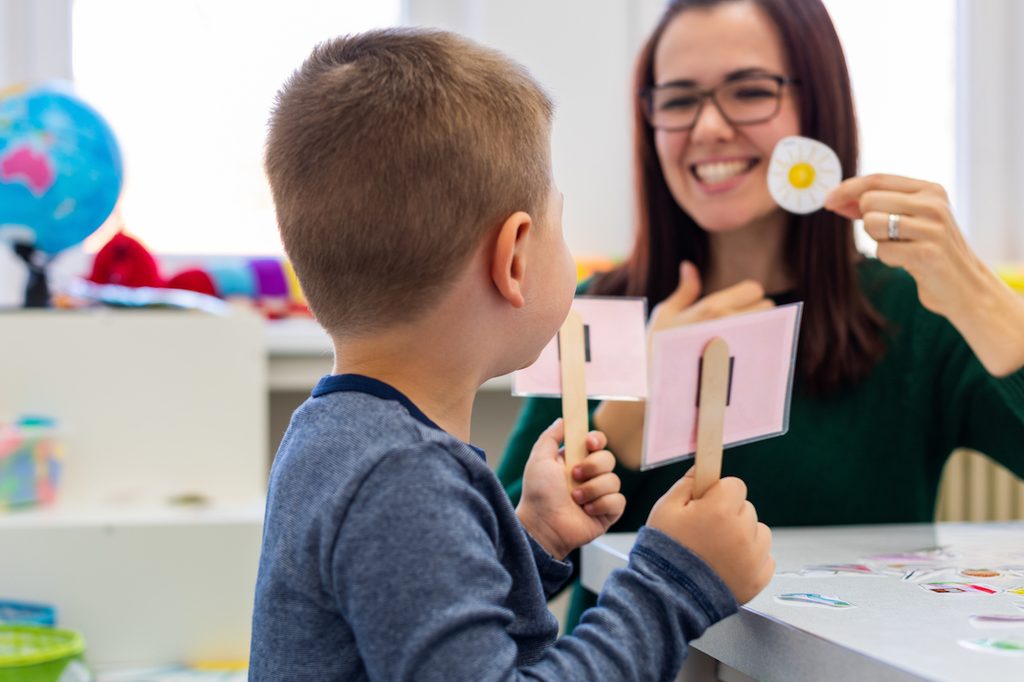
How can I help my 2-year-old with speech therapy at home?
Parents can help their 2-year-olds at home by encouraging them to use their words. Pediatric speech therapist Alyssa Gusenoff explained to Verywell Family that anticipating what a child wants or needs isn’t encouraging them to speak. Instead, she suggests waiting for them to ask for what they want so they can practice speaking. She also suggests offering choices to a child, such as asking. “Would you like milk or juice?” instead of “What would you like to drink?” This gives the child the word they need to say instead of relying on them to come up with the word.
Other experts suggest minimizing background noise and distractions and not having a television on while working with your child. It can be hard for a child to concentrate when there are distractions, so having an area where they can focus is conducive to a better learning environment.
Gusenoff also recommends lots of repetition when speaking to your child, including repeating how they incorrectly pronounce something. She says that many children don’t understand that they’re mispronouncing words until they hear them spoken back to them. She also notes that parents need to know their toddlers’ limitations, and if it doesn’t seem that their child is benefitting from help at home, it might be time for professional guidance and intervention.

What are some causes of speech delay in toddlers?
Developmental guidelines are just that — guidelines — but if you notice your toddler isn’t speaking at the rate you think they should be, they may have a speech delay. There are a number of causes of speech delays in toddlers. Although sometimes your toddler may just be developing on their own timetable, sometimes a speech delay is the result of something else.
Problems with your toddler’s mouth, including their tongue and palate, can result in a speech delay, according to Healthline, as can some developmental delays and physical disorders. Hearing loss, lack of stimulation, neurological disorders, such as cerebral palsy and muscular dystrophy, and autism spectrum disorder can all cause speech delays in toddlers.

Speech delays are common
It can be very easy to panic when your child misses certain developmental milestones, but it’s important for parents to know that speech delays in toddlers are actually quite common. In fact, Nemours notes that 20% of children will “learn to talk or use words later than other children their age.”
Speech delays can also lead to other behavioral issues stemming from your toddler’s frustration at not being able to communicate their wants and needs, which is why you’ll want to address this issue quickly. It’s important to reach out to your pediatrician to determine the cause of your toddler’s speech delay so your child can be properly evaluated and intervention prescribed, if needed.

Can a child have a speech delay and not be autistic?
Although speech delays are common in children diagnosed with autism, many children without autism also experience them. According to Verywell Health, children with autism spectrum disorder often face social communication challenges as well as speech delays, whereas other children not on the spectrum may experience speech delays but are still motivated by those social cues from other people.
Every child is different. and every child reaches milestones at different stages of development. If you’re worried your toddler may have a speech delay, you should consult with your pediatrician who will determine if your child needs to see a speech therapist or if it’s nothing to worry about.