
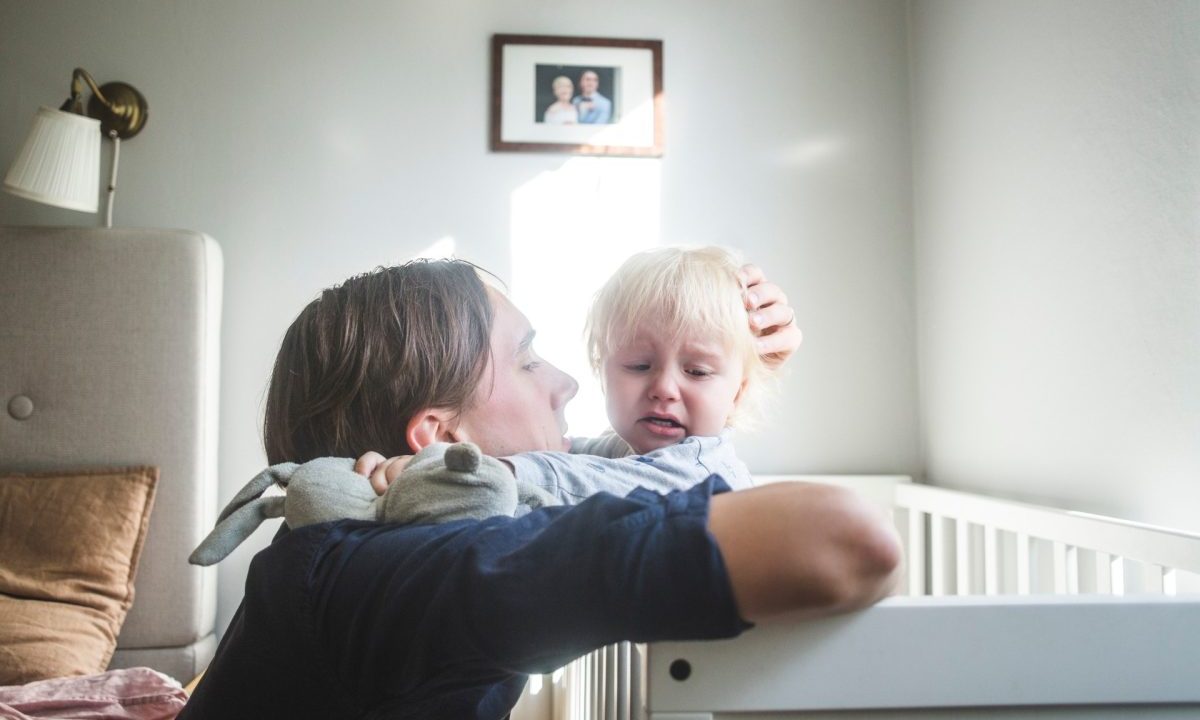
Parents of toddlers know that it isn’t uncommon for their little ones to wake up in the middle of the night crying, but if this is something that’s becoming a habit, it can be a bit unsettling. If you’re a parent going through it now, we feel you. Sleep disturbances can wreak havoc on your night and your morning. Thankfully, these instances are normally a one- or two-night ordeal, and they’re usually caused by a disruption to your child’s sleep routine.
A young tot that consistently wakes up crying is concerning for any parent. Not only does this disrupt your own routine, but it creates a difficult and sometimes frustrating environment for everybody else in the home. There are a few reasons why toddlers wake up crying, and there are steps for parents and guardians to take to try to remedy this predicament. Let’s dive into a few of those underlying issues so parents can work out the kinks of their child’s teary times so everyone in the house can get a restful night’s sleep.
Your toddler is still tired

We know this seems like an obvious reason why your toddler is flailing around each morning, but the number one reason toddlers are cranky post-sleep is that they didn’t receive enough of it.
You may be wondering exactly how much sleep toddlers need and if your little one is getting the recommended quantity. According to the National Sleep Foundation, toddlers require 11 to 14 hours of sleep per night. We know, we’re just as jealous.
An example of hours broken down
- 11 hours – bedtime at 7 p.m. and up at 6 a.m.
- 12 hours – bedtime at 7 p.m. and up at 7 a.m.
- 13 hours – bedtime at 7 p.m. and up at 8 a.m.
- 14 hours – bedtime at 7 p.m. and up at 9 a.m.
So, if your toddler is waking up crying or unusually fussy, it’s likely because their body didn’t get enough rest. We know it’s hard to stick to a set schedule for a number of reasons, but those with special schedules are encouraged to stick to a similar routine every night when possible. The proper length of rest each night is what’s key for your child to wake up and not choose violence for the day.
Your toddler is confused

Every parent has carried a sleeping child and gently put them to bed so they don’t wake them. But that’s just it — that child’s last memory was being held by their parent, nursing from their mother, or lying on the couch. When a child wakes in a different environment from where they fell asleep, what happens is known as confusional arousal.
The American Academy of Sleep Medicine defines pediatric confusional arousal as “a sleep disorder that causes you to act in a very strange and confused way as you wake up or just after waking.” Children who were put to bed asleep, and otherwise happy, may display erratic behavior in the morning by crying and screaming before, immediately, or just after waking if they get up in a different spot.
Sarah Ockwell-Smith, a revered pediatric psychologist and child development expert, offers suggestions on making changes to a child’s routine, including adding a few key items to the room to allow for a more relaxed sleep environment for the child. Additionally, many experts believe, and often recommend, that parents take their children to their beds while in a state of drowsiness, yet remain conscious enough of their surroundings to avoid pediatric confusional arousal.
Your toddler may have developed learned hunger
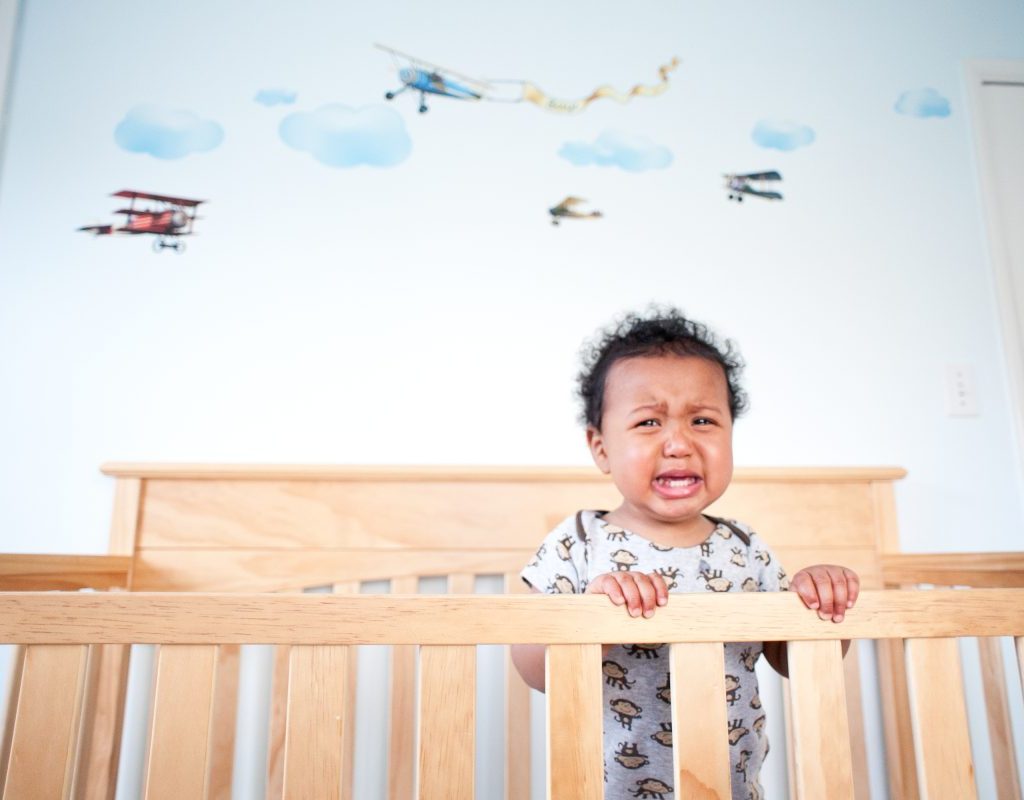
Dr. Craig Canapari, the director of Yale’s Pediatric Sleep Center, loosely defines his theory of learned hunger as, “Imagine I woke you up every night at 2 a.m. and gave you an ice cream sundae. One week later, I stop feeding you at night. But you still would wake up hungry. This is what happens to some kids. It is unclear why this is the case. I suspect some parents get in the habit of responding to any nocturnal awakenings with feeding. Just like you might feel sleepy after having that ice cream sundae, they go back to sleep. Over time, the pattern gets reinforced.”
This learned pattern of night feeding can be difficult to break. For parents, the recommended way to avoid this is to refrain from any night feedings after 6 months of age. If your baby is healthy and developing, as they should be, night feedings don’t need to continue as they are receiving adequate nutrition throughout the day.
They’re under the weather

If your toddler is suddenly waking up crying, it may be a sign that they’re under the weather. Discomfort or general feelings of unwellness caused by anything from the common cold to an ear infection can cause your little one to wake in the middle of the night. Congestion and the aches and pains that come with flu season can also be the culprit.
Your little one may have felt fine during the day, but their symptoms may be preventing them from getting some rest, which can make them upset. If your toddler is coming down with something, it’s completely normal for them to cry out in the middle of the night. The good news is that their illness will hopefully pass quickly. and some rest and TLC from Mom and Dad may be all they need to start feeling better.
What else to look for

These are just some of the reasons why your toddler may wake up crying, but there are other concerning factors to check when your tot won’t wake up without screaming.
Others include:
- Medical issues such as GERD (acid reflux) or other digestive discomforts
- Night terrors or parasomnias
- Environmental disturbances such as loud neighbors, barking dogs, or distracting room elements
Children are creatures of habit and learn new things at such a rapid pace. Set schedules are important to allow their brains an opportunity to rest and recoup new information processed on a daily basis. If a parent wants outside guidance, discuss concerns surrounding the child’s sleep patterns with support members (partners, significant others, grandparents, and the child’s physician), as they are excellent resources.
What causes night terrors?

Fortunately, night terrors are quite rare, but if your toddler is suffering from them, they can be very disruptive and scary for your little one. According to Nemours, night terrors are caused by “over-arousal of the central nervous system (CNS) during sleep,” and often occur in kids who are:
- Overtired, ill, or stressed
- Taking a new medicine
- Sleeping in a new environment or away from home
- Not getting enough sleep
- Having too much caffeine
Night terrors typically happen somewhere between two and three hours after your child falls asleep, and for most children, they will grow out of them as their nervous system matures.
How to settle a crying toddler

If your toddler is waking in the middle of the night or early morning in tears due to sleep regression, getting them back to sleep without disrupting the house is key. It’s important to check on your toddler to ensure there is nothing wrong, and if they are crying because they don’t want to be in bed, soothe them with words but do your best to avoid picking them up.
Assure them that it’s time to sleep, and leave the room. Wait approximately five minutes before returning if they’re still crying. Around the age of 2, many toddlers go through a period of sleep regression, which is when your once angelic sleeper decides that they no longer want to stick to their typical sleep routine. It’s very common, and hopefully, by creating a calm and regular sleep routine, your little one will be sleeping like a baby again in no time.
We know your toddler is going to wake you up early, but we want to help keep the noise in the morning to a minimum. We also know no one terrorizes a house quite like a toddler. But if yours keeps waking up the whole home with wails that aren’t the normal toddler variety every single morning, make sure the things we discussed are looked into, for the sake of everyone’s sanity.