  1. Home
  2. Activities
  3. Stages
  4. Evergreens

The best chores for kindergartners: Teach responsibility in an age-appropriate way

Kindergarteners aren't too young for chores — give them responsibility with these tasks

Add as a preferred source on Google
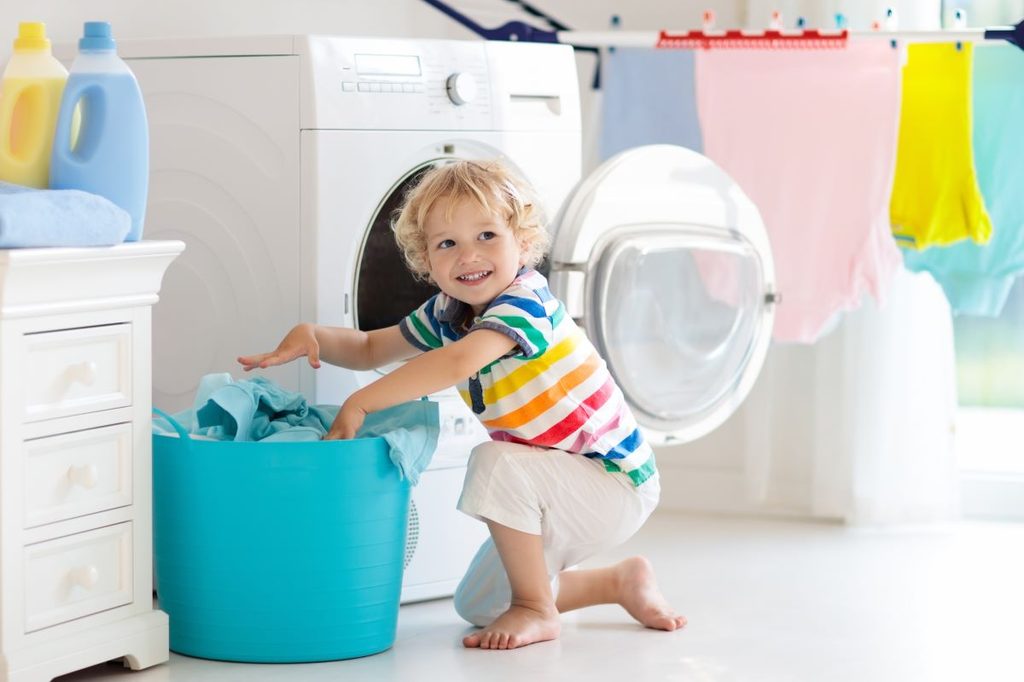
Young boy helping unload the dryer
Image used with permission by copyright holder

Are kindergarteners too young for chores? Absolutely not. If you haven’t already started giving your 5-year-old simple chores around the house, now is the perfect time to start. Having chores for kids to do is more than just giving busy parents a hand.

Chores go a long way toward teaching children important life skills. Doing chores actually has a lot of benefits for kids. These household chores teach children responsibility and give them a sense of belonging. Helping with simple tasks around the house also works to improve a child’s confidence and self-esteem. Getting kids used to completing those everyday tasks like making the bed and doing laundry will most certainly be prudent when they’re ready to head off to college or get out on their own. So, what are the best chores for kindergarteners and young children?

Recommended Videos

Chores for kindergarteners

Kindergarten is a wonderfully fun age. At the ages of 4, 5, and 6, kids are curious about everything and love to spend time with their parents. Kindergarteners also want to do the things they see their parents doing, which is why it’s the ideal time to introduce them to chores.

When deciding on chores for your kindergartener or young child, remember to keep the tasks simple. Be sure to give clear and uncomplicated directions. Remember, it’s OK to add an element of fun, too. Music is a great way to inject enthusiasm into chores for kids and adults as well. Now, let’s get to work.
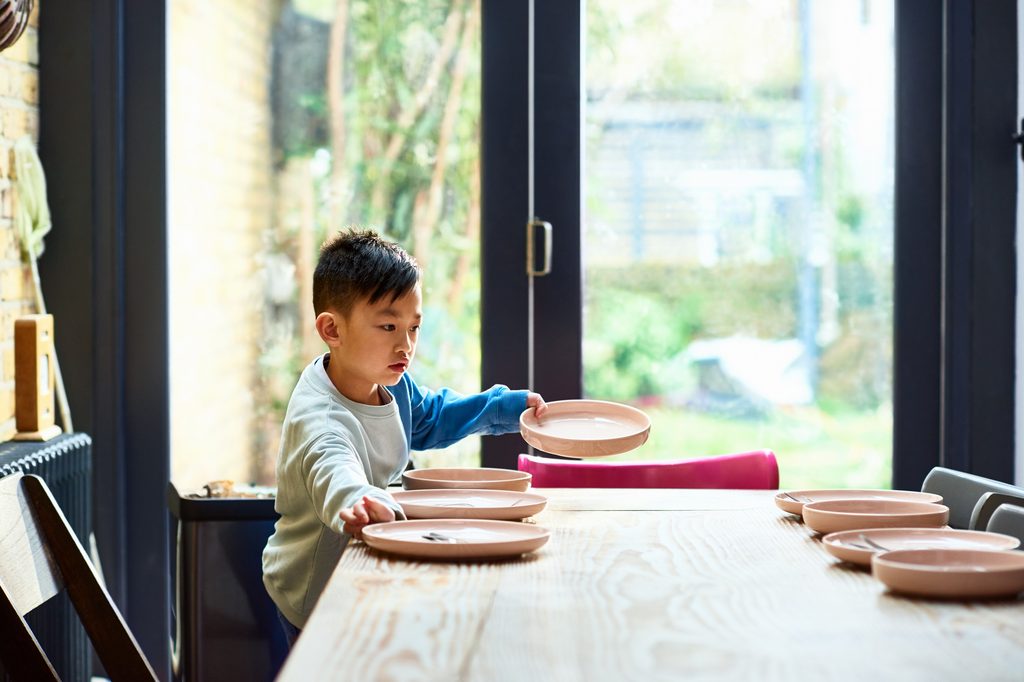
Young boy setting table for lunch

Best chores for kindergarteners

When you’re making up the to-do list around the house, these are the top chores for young children and kindergarteners to get busy with.

Cleaning up books and toys

If your child has been to preschool, they’re already familiar with cleanup time. Cleaning up in school is an all-hands-on-deck chore. It also works well in a classroom because all the shelves are accessible to kids. If your child isn’t already pitching in to clean up the toy room or their bedroom, it’s time. Make sure the toys and books have a place your little one can reach with containers they can carry and put away.

Helping in the garden

Watering plants in the house and outside is a perfect chore for kindergarteners. They, of course, love water. The key to caring for plants is giving kids a watering can they can carry. Show them how to fill the watering can, being careful not to overfill. Then, be sure to demonstrate how much water is enough. Kids can also help with weeding. Just be nearby to ensure they’re not pulling plants out. Another kid-friendly outdoor chore is helping with the planting. Kids enjoy digging holes and putting seeds in the ground. Gardening is a fun chore you and your kindergartener can do together.

Emptying the dryer

Parents never have enough hands to do all the chores around the house, which is why it’s wonderful to have kindergarten helpers. Emptying the dryer can be a pain if you’re in the middle of dinner, but it’s an easy one for 5- and 6-year-olds.

Setting the table

Another simple chore when you’re trying to get a meal ready is setting the table. Kindergarteners can put out placemats and napkins. They can even do the plates and silverware if you get them down from the cabinet and within reach to put out. Remember to teach kids to wash their hands first and to put plates out one at a time. If your youngster isn’t ready for dishes yet, that’s fine. Start with placemats and napkins. Even something small will give them a sense of accomplishment.

Picking up dirty clothes

Save yourself the headache when the kids hit the teen years and get little ones in the habit of picking up dirty clothes and putting them in the hamper. Kindergarteners can also lend a hand when sorting clothes for the laundry.

Making the bed

Another chore that will go a long way in later years is learning how to make the bed in the morning. In the beginning, kids will definitely need a hand, but it won’t be long before they can straighten their bed out in the morning and sit up all their stuffed animals on their own.

Putting away groceries

This is a chore a lot of adults dread, but kindergarteners won’t. Young children can help bring light grocery bags in from the car and put away the non-breakables. Kids can also help wash the produce with supervision.

Dusting

What adult doesn’t hate this chore? Put a pair of old socks on your kindergartener and show them where to dust. They will enjoy seeing how much dirt they’re pickup up on the socks and you’re getting a tedious chore done.

Parent and child with piggy bank

Should you give an allowance?

Some parents use an allowance as an incentive to encourage kids to complete chores. Earning an allowance has benefits very similar to chores. Kids learn responsibility and get a taste of independence. They can use allowance money for extra things they want, which teaches children money management skills. Kindergarten is not too young to begin giving kids an allowance for completing chores. How much is up to you, though a good rule of thumb is a dollar for each year of your child’s age. You can give them their allowance weekly, biweekly, or monthly.

Family unloading groceries at home

Chores for kids

Sure, sometimes it’s easier and quicker to do the chores yourself. Unfortunately, that isn’t always the best idea when it comes to kids. Having children complete age-appropriate chores helps teach responsibility and important life skills. There are a lot of benefits to having chores for kindergarteners to do inside and outside of the house. These eight chores for kids are ideal to start with.

Is CoComelon ‘Good’ for Kids? Experts Cite Research Pointing to ‘Yes’
Dad brushing teeth with daughter and looking in the mirror with CoComelon

Parents navigating the landscape of kids’ media often question which content genuinely benefits their little ones. Among the most popular kids’ shows today, educational programming like CoComelon has captivated young audiences worldwide, but many caregivers wonder: beyond its ability to entertain, does this musical series offer real developmental value?

Research and child development experts have revealed many details about the educational framework behind the animated series, its potential benefits, and how caregivers can maximize positive outcomes when incorporating such content into their kids’ routines.

Read more
The best low-stimulation movies for calming toddlers
Make sure movie time does keep your toddler awake
Cute toddler watching a movie on a laptop

Screen time isn't always a bad thing for toddlers. Sometimes, when your little one isn't feeling well, watching a soothing movie is a perfect pick. Low-stimulation movies for toddlers offer better quality screen time than movies that are loud and packed with action. Sure, those are fun and can be super exciting for kids, but the impact on their cognitive development is often negative. Those overstimulating movies can be too much for toddlers, leading to tantrums, meltdowns, and an inability to fall asleep.

Think about how difficult it is to fall asleep after watching a horror or suspense movie right before going to bed. Your mind is going in different directions, making it hard to relax and drift off to sleep. Well, it's the same for toddlers. So, what are the best low-stimulation movies for toddlers to watch and what exactly are they?
Best low-stimulation movies for toddlers

Read more
When should your baby be able to stack blocks? Here’s what to know
Know when babies can nest cups and balance blocks by themselves
A child playing with stacking blocks

When you’re a new parent, the moment someone gifts your child their first set of blocks, you become obsessed with baby learning and when they should be able to turn the blocks into beautiful creations of their imagination. While stacking blocks are an important developmental milestone for babies, it’s also one of those things that evolves with time and practice. Sitting down to play blocks with your little one is an open-ended game that teaches children physics, resilience, and fun. When can a baby stack blocks and nest cups on their own without your help? Here are some general guidelines so you know how to measure your child’s development with their gift of stacking blocks and how to help your child get the hang of it on their own.
When can a baby stack blocks and nest cups? By age

By 6 months old
At this age, your baby might not be ready to stack blocks the way you want them to, and that's okay. This doesn't mean you can't play blocks with your child or that you shouldn't let your child have fun figuring out what the blocks are. It’s perfectly normal for your 6-month-old to gnaw on blocks or simply hold one, just don't expect them to build the Eiffel Tower just yet.
By 12 months old
This is the stage of banging items against each other and blocks or cups are no the exception. If you offer your child blocks, there may still not be a lot of creativity yet. But keep in mind that knocking things down is a favorite activity of 1-year-olds, so your child is right on track if that's all they do. More likely than not, they’ll be happy to destroy any block tower you build. If your little one can’t get enough of knocking down a stack of blocks, rest assured that they’re right on schedule.
By 18 months old
When can babies nest cups? By a year and a half, stacking is the name of the game. After all, your little one is now officially a toddler and proud of it. If you haven’t done so already, this is a great time to introduce baby blocks. At this point, most kiddos are able to stack two or three blocks on top of each other with ease.
By 2 years old
Don’t be surprised if your baby’s block masterpieces start to get taller by age 2. With improved coordination, your child shows better stacking skills and may be able to balance up to seven blocks on top of each other. This is the beginning of sorting for many young children. If they’re now stacking masters, go ahead and challenge your budding genius to sort their blocks by color or separate them in groups.
By 3 years old
Free play takes a life of its own by age 3. At this point, blocks are much more than meets the adult eye. Your child’s imagination is flourishing, and they’ll start to build tunnels, bridges, or forts with just a few blocks. This is the perfect moment to introduce your toddler to teamwork. If the two of you work together, it’s easier to build tall towers and solve construction problems. Get your child's imagination to full speed and see what they create with blocks of all colors and shapes.
The benefits of stacking blocks

Read more