Skiing is a fantastic way to spend a cold winter’s day outside, enjoying the fresh air and getting in some exercise at the same time. The best part about skiing is that it’s an activity the whole family can enjoy and there are hills and instruction for children and adults of all ages and skill levels.
If you love spending the day at the ski hill but are thinking your toddler is just a bit too young to join you, you may want to think again. Even toddlers can learn how to enjoy their time on the slopes. Keep reading to see how you can help your toddler safely learn how to ski.

When should I teach my toddler to ski?
While there’s no right or wrong answer to this question, there seems to be a consensus among ski professionals that the age of 3 is a great age for toddlers to begin learning to ski. REI notes that most ski schools will teach children beginning at that age and that within just a few days they can be skiing on their own. Although many schools may not take toddlers until the age of three, that doesn’t mean that parents who ski can’t begin to teach their children the basics before that. The Points Guy also points out that some ski schools are beginning to take kids as young as two and a half years old in a hybrid ski/play program.
Can a 2-year-old start skiing?
We know that all children are different, so while one 2-year-old may be more than ready to begin skiing, others may be more reserved. Only you know your child and whether or not they’re ready to learn how to ski, but for the most part 2-year-olds who are content being outside in the colder weather and who are showing interest are fully capable of safely learning how to ski. Bloggers Bring the Kids wrote that they’ve been skiing with all five of their kids since they were about 18 months old, with four of their children skiing since they were just one. If you and the rest of your family are avid skiers and you want to share the love with your toddler, there’s no need to wait until they’re older.
How do I teach my 2-year-old to ski?
One of the most important parts of teaching your 2-year-old how to ski is patience. Toddlers are going to take time to learn to ski safely so you shouldn’t rush them onto certain hills or trails until they’re fully ready. John Guay, director of ski services at Deer Valley, explained to Salt Lake Magazine why it’s better to keep younger children on more gentle terrain when they’re learning to ski, ensuring the focus is on teaching control, turning, and stopping. “One of our biggest challenges is communicating with parents as to why we keep children on easier terrain and to encourage them to turn more with their feet and less with their body,” he noted.
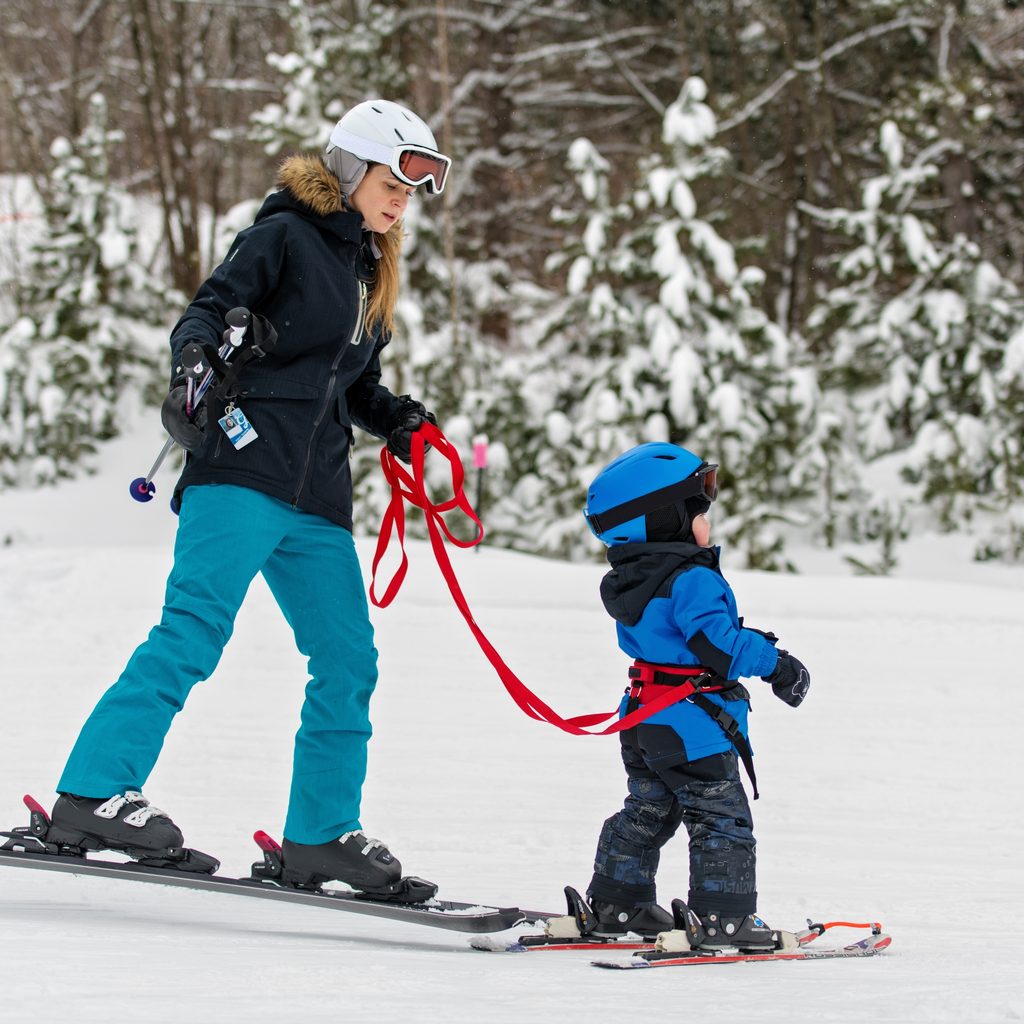
The Ski Renter also suggests getting toddler skis that velcro strap onto their snow boots so they can practice by wearing them around the house to get comfortable in them. Next, take them outside onto flat ground and let them walk around in the snow so they can get a feel of what skis feel like as they slide on snow. They also suggest using ski toe clips that keep the toes of the toddler’s skis together, using a harness with a leash so you can stay behind them, or skiing next to them, allowing them to hold onto a ski pole while you also hold on to it.
How do I teach my 3-year-old to ski?
At the age of three, your toddler can take lessons from most ski schools, but if you’d like to teach them to ski by yourself you should at least be a pretty confident skier. Skiing Kids suggests first taking your child into your backyard or somewhere snowy where they can practice just getting a feel for the snow and putting their equipment on and taking it off. After the kids have spent a few hours getting comfortable with their equipment, they recommend teaching children how to get up after falling. Falling is a part of all sports and learning how to get up and recover is important. This is something that can take some time, so it’s important that parents be patient with their children. Ski harnesses with a handle on the back can also be great for parents who need to quickly help their child up after a fall.
The next important skill Skiing Kids suggests teaching your toddler is how to stop on their skis. The snowplow stop, also known as the wedge stop or pizza slice stop, is the most popular way to teach kids to stop. There are even some tools you can purchase to help your toddler learn how to stop. But once your toddler is comfortable moving around on their skis and has learned how to stop and get up once they fall, you can start to enjoy some time on the smaller hills.
What not to do
If you’re not a confident skier yourself, you may be better off leaving the teaching to the professionals. Ski instructors are trained in how to teach young children to safely ski, so if your child is ready to learn this is a great option. Most ski hills will have programs for younger children that vary in length and age ranges. If you’re confident you can teach your child, be patient and make sure they’re fully prepared for a day in the cold and snow, including wearing weather-appropriate gear. Most experts warn against skiing with your child between your legs, using a harness with a leash before they can stop and turn on their own, and expecting more out of your toddler than is realistic.
A day on the slopes can be fun for the whole family, including your toddler, as long as you remember to go at their pace and not expect too much out of them when they’re small.