
Many new parents dream about building their children the ultimate nursery — but spending thousands of dollars on new carpeting or custom furniture adds up quickly. You have countless inspired plans and ideas – you want to maximize your small nursery space, you want to redo the walls and the floors, you want to recreate a specific theme. If you’re looking to remodel your nursery without breaking the bank, we’ve got a list of budget-friendly projects.
Paint the nursery a different color
If that dark purple or deep blue is making the nursery feel a little claustrophic, it might be time to try out a new color. Depending on the size of the nursery, repainting the walls yourself usually costs between $100 and $400.
Lighter colors like off-white or pale pink can make a small nursery feel bigger, especially if you’ve got tons of natural light already. If your nursery lacks windows, brighter shades like grassy green or pastel yellow can play well off artificial light.
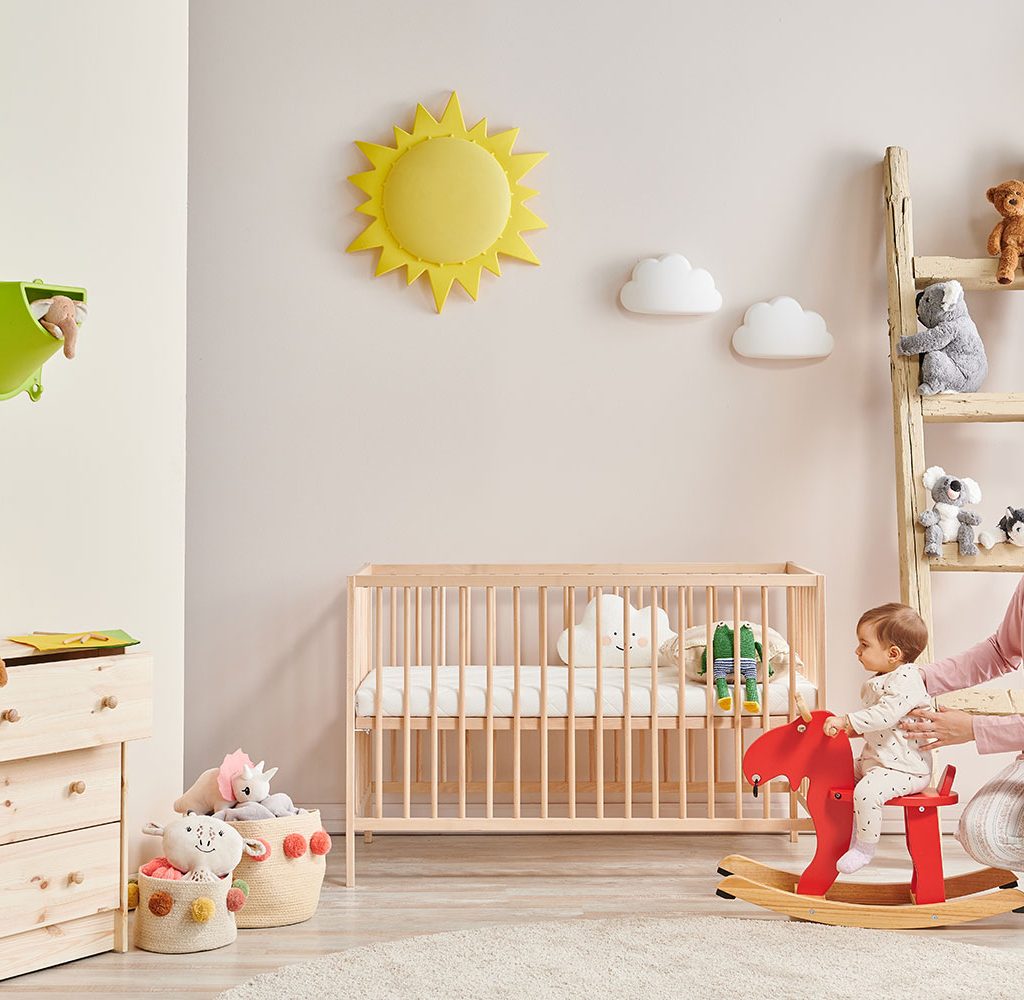
However, you might want to steer clear of bright yellow or bold red, which can put a negative spin on your little one’s mood.
Try washi tape or wall decals
Painting a nursery can make the room feel totally different, but it’s also only an option if you own the house you live in. If you rent, most landlords aren’t a fan of remodeling projects that begin with a can of paint.
Or, if you just don’t have time to paint, you can always opt for wall decals. These decals adhere to your wall but should be simpler to pull off than wallpaper. Some decals are large enough to fit across an entire wall, much like a nursery mural. Keep in mind that you run the risk of chipping the paint when you peel these wall decals off.
Many large wall decals cost around $100 or a little more — which is still more cost-effective than loading up on paints and primers (or hiring an artist for a mural).
An even cheaper alternative is using washi tape to decorate your nursery walls. This adhesive tape is decorative, so it shouldn’t stick permanently to the walls or cause tearing when you pull it off. You can find rolls of it with bright designs or cute patterns for less than $15, depending on where you shop.
Repurpose used furniture
Once you’ve taken care of the walls, you can move on to remodeling furniture and accessories in your nursery. Custom furniture can cost thousands of dollars for a single piece, and even buying a couple of new dressers or chairs can start racking up the bills.
While it does require a bit of DIY work, repurposing used furniture can be much lighter on your wallet — and a lot of people can’t tell the difference after a fresh coat of paint. Websites like Craigslist, eBay, or Facebook Marketplace are usually chock-full of old furniture, but you can also check out your local thrift store, too.
The downside to used furniture is that it probably won’t be in the best shape, but even a secondhand chair or table can last for years.

A little bit of paint or a new set of knobs probably won’t seem like such a steep investment if you only paid $50 to $60 to begin with.
Look for durable items
If you’re not a fan of secondhand furniture, another option is to buy new, but look for items that will grow with your kids. A dresser that’s going to last for a decade might be worth the initial cash investment. You don’t have to buy everything new, but nightstands and bookshelves are something your child will likely still need when they’re older.
As long as you don’t go for custom or designer furniture, you can usually get the right dresser or chair for under $500.
Of course, if you are looking for furniture that’ll last a while, you probably want to avoid kiddy patterns and specific themes. Your kid might be into Disney princesses and butterflies now, but they might not be in five years. Stick to subtle patterns that won’t go out of fashion or neutral colors that fit with multiple color schemes.
Stick to inexpensive storage
Storage is a crucial part of your nursery’s layout. Whether you’re converting an empty room to a nursery or repurposing an old nursery, you’re going to need somewhere to store toys, children’s books, or other knick-knacks your kid picks up.
Shelves can be a hassle to put in, even if you install them yourself, and they offer limited space for toys. Instead, opt for colorful baskets or containers that come with more space and are easy on the budget.
If you aren’t careful, nursery decor can cost you upward of $10,000 — especially if you’re looking at new furniture, flooring, and a paint job. However, with a little resourcefulness and the tips above, you can save thousands, and put that money toward childcare.