Your baby has been rocking and rolling on hands and knees for months. And by the determined look on his or her little face, you can tell that the crawling stage will soon arrive. So, we bring you some tips to get your baby crawling faster along with some valuable info on what to expect when children graduate from rolling to crawling.
At what age do babies crawl?
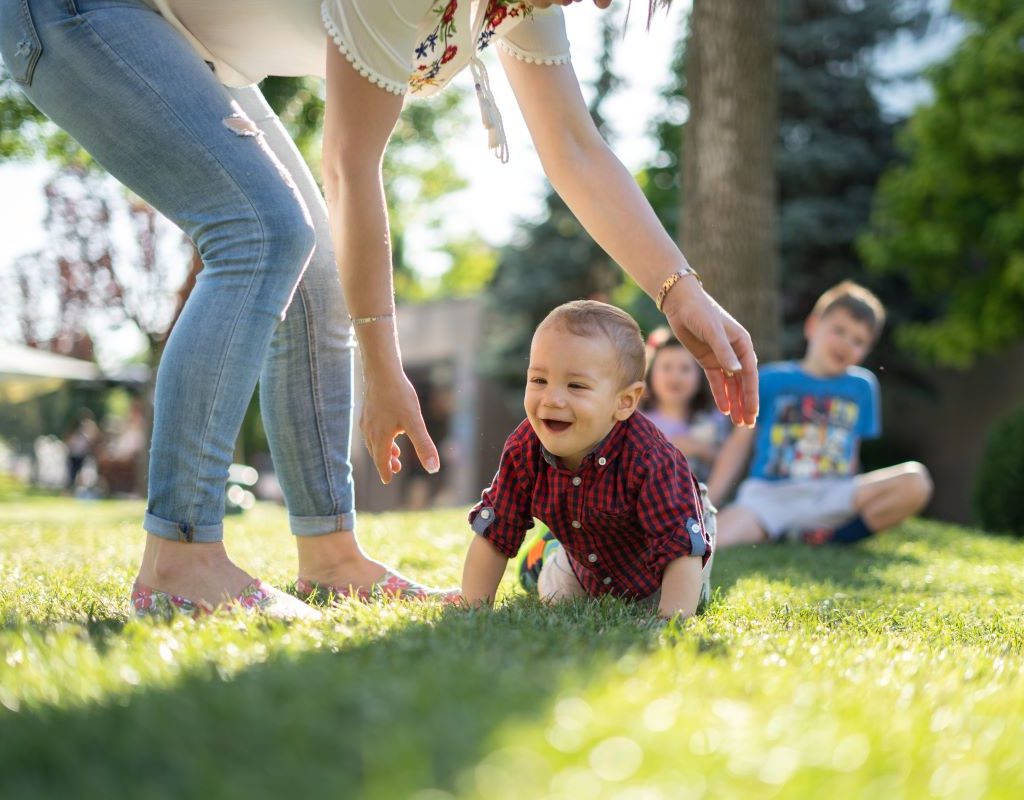
Between the age of 6 and 10 months, you can look forward to this adorable, exciting milestone. Up until now, your baby has relied on rolling over to move from one destination to the next. From here, you can watch for signs that your baby is ready to start crawling. However, don’t be too alarmed if you don’t see your baby crawling right away. Children move (literally) at their own pace, so patience is key.
What are the steps toward baby crawling?
In the meantime, you can watch for the telltale signs that your baby is getting ready to crawl. What might seem like a repetitive action or simple play is actually your child building up strength and acquiring new skills. These signs include:
- Sitting up without help
- Rolling over multiple times
- Pushing him or herself up onto all fours
- Rocking on all fours
- Scooting on his or her tummy.
You might remember that your baby may perform a few or all these actions. Or some babies skip the rocking and go straight to crawling, while others decide that crawling backward gets them to where they want to be.

A little help from you
While your little one is starting off with these actions, you can also give some encouragement along the way. Here are a few tips that will get your baby crawling faster.
Lots of tummy time
From Day One, you can give your baby a lot of time on his or her tummy. This helps your child to build muscle strength in the upper back, shoulders, and trunk. The “training” proves to be quite necessary for sitting up and eventually crawling.
Toys to reach for
You can also give your baby an extra incentive to reach for. By placing a favorite toy in front of your little one, you’re offering encouragement to scoot forward and reach for the prize. One thing to remember is to keep the toy close by.
A little extra support
Another trick to getting your baby crawling is to place the palms of your hands on his or her little feet. When the baby is on all fours, he or she can push off from your hands. However, you’ll need to be careful not to push, as this can cause a face-plant into the carpet.
Drop and give 50
Yes, we are referring to push-ups, but not that many. The whole idea is to model the movement your baby will need to make if he or she is still learning to elevate the upper body.
When your baby sees you pushing up, then he or she will eventually imitate the same movement.
Remove all obstacles
Yet another factor to keep in mind is to ensure a clear, safe area for your baby to crawl and explore. This might involve some slight rearranging, like getting the coffee table out of the way.
Plus, you’ll need to start babyproofing the house since your child will soon gain mobility. These safety measures include:
- Securing cabinet doors with child safety locks
- Getting house plants, cleaning products, electric cords, and any other hazard out of reach
- Padding the corners of tables and other furniture
- Placing baby gates on stairways and other points of entry that poses a danger
- Keeping bathroom doors closed
By securing all areas of your home as much as possible, you’ll provide a more worry-free environment for your baby to explore.
Avoiding the common mishaps
Finally, when your baby gets closer to 5 months old, you’ll need to provide as many opportunities for movement and strengthening as possible. This includes:
- Not keeping your child in the highchair or carrier for long periods of time
- Avoiding walkers, which can hinder muscle development
- Rushing your child into crawling when he or she may not be ready
Moreover, you shouldn’t be too concerned if your baby is not crawling at 6 months or if he or she moves in a different manner like scooting on his or her bottom or crawls with one knee and the other leg extended. Likewise, if your baby was born prematurely, then some milestones might arrive a bit later. As always, if you have any concerns or questions, your pediatrician will direct you to the answers you need.
As babies get curious, they also gain more motivation to move and discover what their surroundings have in store for them. So, the best thing to do is enjoy this special time of exploration and have your camera ready to go. After all, those cute expressions and giggles of joy make the wait worthwhile.