
  1. Home
  2. Stages
  3. Evergreens

Have a 5-year-old? Then you may need help dealing with those big emotions

Teaching your child to cope with the ups and downs

A parent having a talk with their child.
Ketut Subiyanto / Pexels

If you have been around 5-year-olds for any length of time, you know their emotions constantly run on all cylinders. It’s frustrating to try to help a small child regulate their emotions while they are screaming at you, but how you handle it is so important to their development. Instead of saying your child is just having a tantrum and leaving them to it, approach those big feelings another way.

Teach your child the language to use

If you want your child to communicate, they need to know the words to use. Toddlers have their emotional releases so loudly because they don’t have the language to tell you what’s going on. With a 5-year-old, your kiddo should be armed with the vocabulary to say how they feel.

Recommended Videos

Whether you use books, videos, or flashcards, by 5 years old, your child should know the proper language to express their feelings. This starts with you as a parent, as your kid is always watching you. Talk out your emotions as you feel them, and you’ll have a child who is used to talking out their emotions, too.

Create a calm-down kit

  • Build your own
  • Order one
  • Have your child help you put one together

When your little firecracker isn’t calming down, help them get regulated before you talk it out. A calm-down kit is the perfect way to distract your child until they reset enough to talk about their feelings.

What’s in the box

  • Pop Its
  • Fidget spinners
  • Bubble wrap
  • LEGOs
  • Kinetic sand
  • Sucker/gum

The key is to make sure their calm box contains things they like. If they are over kinetic sand, take it out and swap it with bubbles. You need to update this as often as needed.

Offer three options

Children love making decisions for themselves. Young kids want to be in control and to feel like their voice matters. Pick three options and let your child dictate how they’ll work through their emotions.

Activities to pick from

  • Sing a song
  • Dance it out
  • Go for a walk
  • Do an exercise video/yoga
  • Paint/draw/color
  • Play a board game/card game
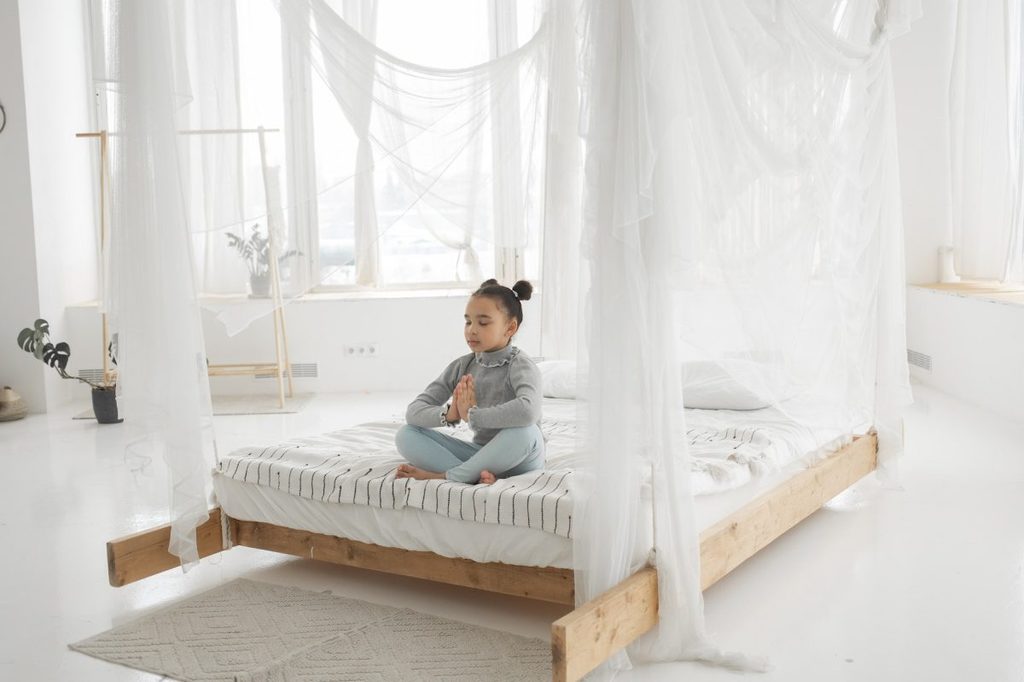
A young child calming down by meditating.
Image used with permission by copyright holder

Create a peaceful and safe space for emotional releases

This goes for anyone, but it’s important to have a safe space to let emotions out. Your child needs a secure spot where nothing they feel is bad or wrong. The space is for them to be heard and have their feelings validated.

You could use their room where you work it out together, or let your kid pick where in the house or yard they want to go. It could even be a corner of their room set up for the emotional talks. There was a time when one child wanted to have every big emotion talk in the car, so that’s where the emotions lived for a bit.

Teaching your child safe ways to express their emotions — and that every emotion matters — will get your 5-year-old on the way to dealing with their emotions properly as an adult. 

Is your newborn eating too much? What to know about overfeeding
Cues to watch out for to let you know if you're overfeeding a newborn
Mother holding baby in nursery

Every parent knows the excitement and anxiety that comes when it's time to bring their baby home from the hospital for the first time. Besides the sleep schedule, many new parents may be worried about whether their infant is getting enough to eat. But is going the other direction something parents should also worry about? Is there such a thing as overfeeding a newborn? The short answer is yes. Overfeeding a newborn is a possibility, but it doesn't happen often.

Every newborn has differences in appetite where one might drink a bottle or breastfeed longer than another. Before you stress, don't worry. There are signs to be on the lookout for when it comes to giving your little one too much food. Whether it's your first or third child, if you are concerned about overfeeding your newborn, we have the information you need to know.
Why overfeeding a newborn is something you don't want to do

Read more
Recognizing early autism signs in toddlers: 6 things to know
Which toddler behaviors are quirky and which are red flags for autism?
Toddler boys playing a party game

The Centers for Disease Control and Prevention (CDC) has found that about 1 in every 36 children has been identified with autism spectrum disorder. If your child is on the spectrum, the initial diagnosis can be upsetting, but early intervention following a diagnosis is vital. The early signs of autism in toddlers, though, can be easy to overlook. If you have a child you think might be on the spectrum, it's best to know the early signs as your toddler develops.

There is a long list of possible signs as the autism spectrum is wide and diverse. One sign may appear in one child, but not in another. Certain early signs of autism are more common than others, which is why knowing the red flags is important. The earlier a child receives a diagnosis, the better the support system will be for them.
Understanding autism

Read more
Can you use a heating pad while pregnant? Here’s what you should know
Heat pads and pregnancy work together, just follow some precautions
Pregnant woman using heating pad hot water bottle

Pregnancy is an exciting time filled with awe and wonder, but it's also painful and uncomfortable. Experiencing all. the changes your body goes through as your baby grows is magical, but it's also kind of a pain. As pregnancy progresses throughout the trimesters, so, too, does the discomfort. From backaches to sore feet and sciatica to insomnia, pregnancy can be very hard on a person's body.
Often, a heating pad can provide some much-needed relief from those pregnancy-induced aches and pains, but many wonder if it's safe to use a heating pads while pregnant. Using heating pads during pregnancy can be an understandable concern.
Despite the relief they may give, many pregnant people are hesitant to use them out of fear the heat they produce may harm their baby. Fortunately, using a heating pad while pregnant can be very safe as long as you do so carefully and take proper precautions.

Why would you need a heating pad?

Read more