
Using cloth diapers can sound daunting and leave you asking a lot of questions. How many cloth diapers do you need? How often do you change cloth diapers? How do you clean cloth diapers? How much do cloth diapers cost? Getting started can seem so tough that you might just go disposable for convenience. Discovering the answers to these questions may reveal that cloth is the better choice for you.
There is a lot to learn when preparing for a new baby and deciding between cloth and disposable diapers is one big decision worth researching. Thankfully, we’ve put all of the answers to your questions in one place. Once you get started with cloth diapers, you don’t have to keep buying new diapers over and over again. Let’s dive into the honest answers to all of your cloth diaper questions.
How many cloth diapers do I need?
You’ll see a range of advice out there, and it depends on how often you’re willing and able to do laundry as well as the age of your child. You’ll need different amounts depending on whether you’re starting with a newborn or throwing in the towel on disposable with your 6-month-old. For a newborn, assuming you can do laundry every 2-3 days, you’ll need anywhere between 20 and 36 cloth diapers for full-time cloth diapering. You’ll probably want to err on the side of 36 to have plenty to be safe. They’re not something you want to run out of!
Does that sound like a lot? It is! But newborn babies go through 10-12 diapers per day, whether disposable or cloth, so you’d be buying and throwing away just as many disposable diapers. With a stash of 36, you have enough for 3 days with some wiggle room for extra blowouts. (You can always have one box of disposables on hand for emergencies.)
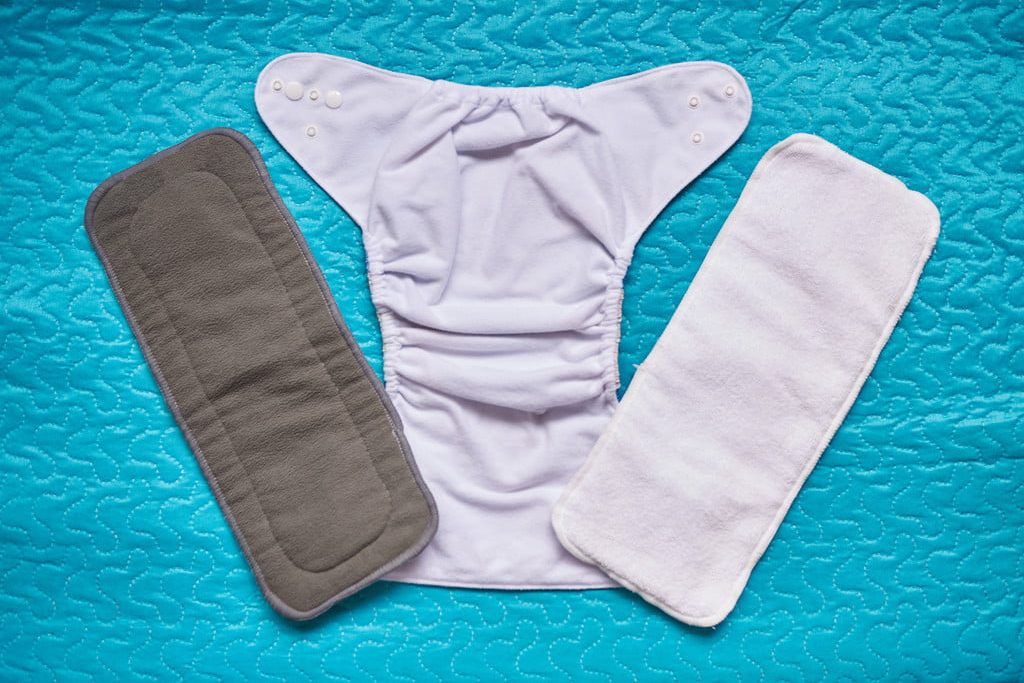
With cloth, diapers means both inserts and covers. In the picture above, you can see the rectangle inserts. The item in the middle is the cover. Typically, the inserts go into the diaper cover. You may choose to place 1-2 inserts into the cover.

How often do you change cloth diapers?
You change cloth diapers as often as you change disposable diapers–whenever the baby goes pee or poop in the diaper. You’ll want to keep the baby dry so they don’t get diaper rash or cry from discomfort. Because disposable diapers are more absorbent and can wick away moisture, you may be able to get away with not changing them for a few pees. But you do need to change a baby in a cloth diaper after every pee.
You’ll need a place to keep the soiled liners (just like you would have a diaper pail for dirty disposable diapers). For cleanup, you’ll just put the poop in the toilet and keep the dirty liners in the hamper. Put a load of the dirty ones through the laundry on the hot or the sanitize setting every other day. If you wait longer, not only will smell be an issue, but so could staining.
What do I need to know about cloth diapers before getting started?
Cloth diapering expert Ashley Wilson told The Bump that the total cost of cloth diapering a baby is around $800, whereas disposable diapering can be $2,000 to $3,000. While your cost upfront might be $800 instead of $50, in the long run, you’ll save money. You can also resell your cloth diapers when you are finished with them.
Besides budget, the main reason to get started is the environmental impact. While the 40 or so total items you’ll use on your baby will eventually end up in a landfill after they potty train, that’s nothing compared to the approximately 7,000 separate disposable diapers you’d likely throw away if you went that route. That’s also a lot of trash to take out, diaper pail liners to buy, and the dirty diapers waiting to be taken to the dumpster stink just as much as the dirty liners waiting to be washed.
No matter what you choose, the most important thing is that it works for you and your baby. If your baby is crying all the time in one type or the other, saving some money might not seem as big a perk as it once did.