  1. Home
  2. Activities
  3. Evergreens

Why you should celebrate Valentine’s Day with your kids, especially if you’re single

Single for Valentine's Day? Your kids should still see you celebrate the holiday

Add as a preferred source on Google

Other than sending your kids to school with the required Valentine’s Day cards for the class, you may not want to do anything on the day of love if you’re a single parent. But that’s why you should celebrate it, even more so than if you had a partner. Don’t let your kids grow up to hate celebrating love if they don’t have a partner.

Celebrating Valentine’s Day with kids puts a whole new spin on the holiday that single parents everywhere need to embrace. We all need more love and less bitterness about being single. Start with yourself by modeling for your children that loving yourself is the best reason to enjoy this holiday.

Hands holding up the letters to spell out the word "love,"
Image used with permission by copyright holder

You have to set the tone for Valentine’s Day

Once your kids are at that age where crushes and childhood boyfriend/girlfriend status start to pop up in class, they could feel lonely on a holiday like Valentine’s Day. If they go home and see you being miserable about being single, it will add to their sadness when the holiday rolls around.

Recommended Videos

How to embrace the day

  • Decorate the house
  • Exchange homemade or store-bought family Valentines
  • Watch cute family movies together
  • Treat it like a special day just for your family
  • Get/make a special dinner and don’t skip the dessert

Having your children see you just as happy on a day like Valentine’s Day as a single person will perk up their own confidence. And you might have fun and enjoy it more than you’d thought then if you pretended it didn’t exist. So, start hyping up Valentine’s Day to get your children excited. Turn the day on its head and make it special for you and your family.

A group of friends having fun
Image used with permission by copyright holder

Who else could be your Valentine besides a partner

Valentine’s options

  • Friend
  • Parent
  • Other family members
  • Pet
  • Neighbor

Valentine’s Day is overly pushed as a holiday to love only if you have a partner. Little kids don’t quite get it, but as your children get older, especially into high school, the idea of having to have a Valentine becomes overwhelming. Go over with your kids who else could be someone’s Valentine.

Don’t forget yourself

You are your best Valentine. Get something special for you, no matter what it is you’ve had your eye on. Being kind and taking yourself out on a date or buying something nice shows your children that taking care of and loving yourself is something that everyone should do.

Two friends hanging out on the swings at a park.
Image used with permission by copyright holder

Celebrate friendships

Valentine’s Day is a day of love — all types of love! If you’re lucky enough to live near your friends, celebrate your friendship with a Valentine’s date or act of kindness. Meet up for a coffee, grab their favorite candy or chocolate, and bring a smile to their face in person. If you don’t live close to your friends, a paper Valentine sent the old snail mail would brighten up anyone’s day.

Have your kids send Valentine’s cards to any friends or family they would like to, and ask if they have a close friend they’d like to pick up a small something for. On a budget? Homemade items from kids are the most adorable thing ever. 

A woman showing another woman and her kids how to cook in the kitchen.
Image used with permission by copyright holder

Show love toward others

Ideas on how to spread the love

  • Find a local volunteer opportunity
  • Visit an animal shelter
  • See if the local retirement community would like visitors
  • See if any patients at the hospital would like a visit
  • Pay it forward at your local coffee shop
  • Bake goodies and take them around your neighborhood

Using Valentine’s Day as an opportunity to pay it forward will not only give you something to do on the day, but it shows your kids that doing it out of love for others is always the way to go. If you have older kids or teens, have them come with you. If you can’t bring your kids with you, take pictures and talk about your experience when you get home.

A sign that says "love yourself" with roses by it
Image used with permission by copyright holder

Show and display platonic love

Leave the lovey-dovey couple-type stuff out of it. Do all the platonic things you want to do with your friends and kids, but never find the time to do. Play board games together, go for walks and talk about life or just enjoy the scenery, see that movie, paint each other’s nails, do facials, go to a museum, or cook food together.

Adults relieve stress by doing things they loved to do as kids. Depending on the weather, go to a park or ride bikes with a friend. Color, have a dance party with single anthems only, and play games like Hide and Seek, Heads Up 7 Up, or Red Light, Green Light. Whatever you do, it’s all about reconnecting with each other and strengthening that bond between you and the people in your life that you love.

Instead of trying to stay off your phone to dodge social media all day to not see a million proposals and date night posts, embrace the love in a different way. You don’t have to hide in the house, and you don’t have to be grumpy when your children brings home their class Valentines. Enjoy Valentine’s Day with your kids and with your friends and celebrate you. Because you are pretty amazing just the way you are.

Is CoComelon ‘Good’ for Kids? Experts Cite Research Pointing to ‘Yes’
Dad brushing teeth with daughter and looking in the mirror with CoComelon

Parents navigating the landscape of kids’ media often question which content genuinely benefits their little ones. Among the most popular kids’ shows today, educational programming like CoComelon has captivated young audiences worldwide, but many caregivers wonder: beyond its ability to entertain, does this musical series offer real developmental value?

Research and child development experts have revealed many details about the educational framework behind the animated series, its potential benefits, and how caregivers can maximize positive outcomes when incorporating such content into their kids’ routines.

Read more
The best low-stimulation movies for calming toddlers
Make sure movie time does keep your toddler awake
Cute toddler watching a movie on a laptop

Screen time isn't always a bad thing for toddlers. Sometimes, when your little one isn't feeling well, watching a soothing movie is a perfect pick. Low-stimulation movies for toddlers offer better quality screen time than movies that are loud and packed with action. Sure, those are fun and can be super exciting for kids, but the impact on their cognitive development is often negative. Those overstimulating movies can be too much for toddlers, leading to tantrums, meltdowns, and an inability to fall asleep.

Think about how difficult it is to fall asleep after watching a horror or suspense movie right before going to bed. Your mind is going in different directions, making it hard to relax and drift off to sleep. Well, it's the same for toddlers. So, what are the best low-stimulation movies for toddlers to watch and what exactly are they?
Best low-stimulation movies for toddlers

Read more
When should your baby be able to stack blocks? Here’s what to know
Know when babies can nest cups and balance blocks by themselves
A child playing with stacking blocks

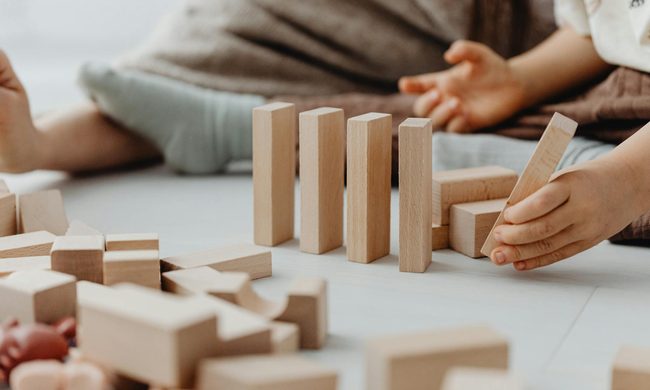
When you’re a new parent, the moment someone gifts your child their first set of blocks, you become obsessed with baby learning and when they should be able to turn the blocks into beautiful creations of their imagination. While stacking blocks are an important developmental milestone for babies, it’s also one of those things that evolves with time and practice. Sitting down to play blocks with your little one is an open-ended game that teaches children physics, resilience, and fun. When can a baby stack blocks and nest cups on their own without your help? Here are some general guidelines so you know how to measure your child’s development with their gift of stacking blocks and how to help your child get the hang of it on their own.
When can a baby stack blocks and nest cups? By age

By 6 months old
At this age, your baby might not be ready to stack blocks the way you want them to, and that's okay. This doesn't mean you can't play blocks with your child or that you shouldn't let your child have fun figuring out what the blocks are. It’s perfectly normal for your 6-month-old to gnaw on blocks or simply hold one, just don't expect them to build the Eiffel Tower just yet.
By 12 months old
This is the stage of banging items against each other and blocks or cups are no the exception. If you offer your child blocks, there may still not be a lot of creativity yet. But keep in mind that knocking things down is a favorite activity of 1-year-olds, so your child is right on track if that's all they do. More likely than not, they’ll be happy to destroy any block tower you build. If your little one can’t get enough of knocking down a stack of blocks, rest assured that they’re right on schedule.
By 18 months old
When can babies nest cups? By a year and a half, stacking is the name of the game. After all, your little one is now officially a toddler and proud of it. If you haven’t done so already, this is a great time to introduce baby blocks. At this point, most kiddos are able to stack two or three blocks on top of each other with ease.
By 2 years old
Don’t be surprised if your baby’s block masterpieces start to get taller by age 2. With improved coordination, your child shows better stacking skills and may be able to balance up to seven blocks on top of each other. This is the beginning of sorting for many young children. If they’re now stacking masters, go ahead and challenge your budding genius to sort their blocks by color or separate them in groups.
By 3 years old
Free play takes a life of its own by age 3. At this point, blocks are much more than meets the adult eye. Your child’s imagination is flourishing, and they’ll start to build tunnels, bridges, or forts with just a few blocks. This is the perfect moment to introduce your toddler to teamwork. If the two of you work together, it’s easier to build tall towers and solve construction problems. Get your child's imagination to full speed and see what they create with blocks of all colors and shapes.
The benefits of stacking blocks

Read more